Mulher expõe condição masculina que pode sabotar o casamento e não há humor que resolva
That day I got furious because he had forgotten to stop by Target AGAIN, and get the ingredients for my cake. It was for our son’s birthday and I planned to make a cake the day before. I gritava e chamava-lhe nomes, e reparou que a sua cara estava toda enrugada but he didn’t say anything.
After a few weeks, his colleague’s wife told me they had a very upsetting situation at work. He was stressed out and disappointed but wouldn’t say a word about it. Se ao menos ele me tivesse contado o que aconteceu. Eu compreenderia e apoiá-lo-ia.
It’s a well-known fact: men are incapable of speaking about their emotions. A male vocabulary doesn’t contain words that describe their inner impressions e sentimentos.
Gurl, pay attention – lack of verbal exchange creates a crack in your relationship!
As relações são uma eterna dança física, verbal e emocional (são precisos dois para dançar o tango!) Pelo menos, é assim que deve ser. Quando há um desequilíbrio na troca, pode fazer com que a relação se torne pouco saudável, onde um lado sofre em silêncio e o outro age com dureza.
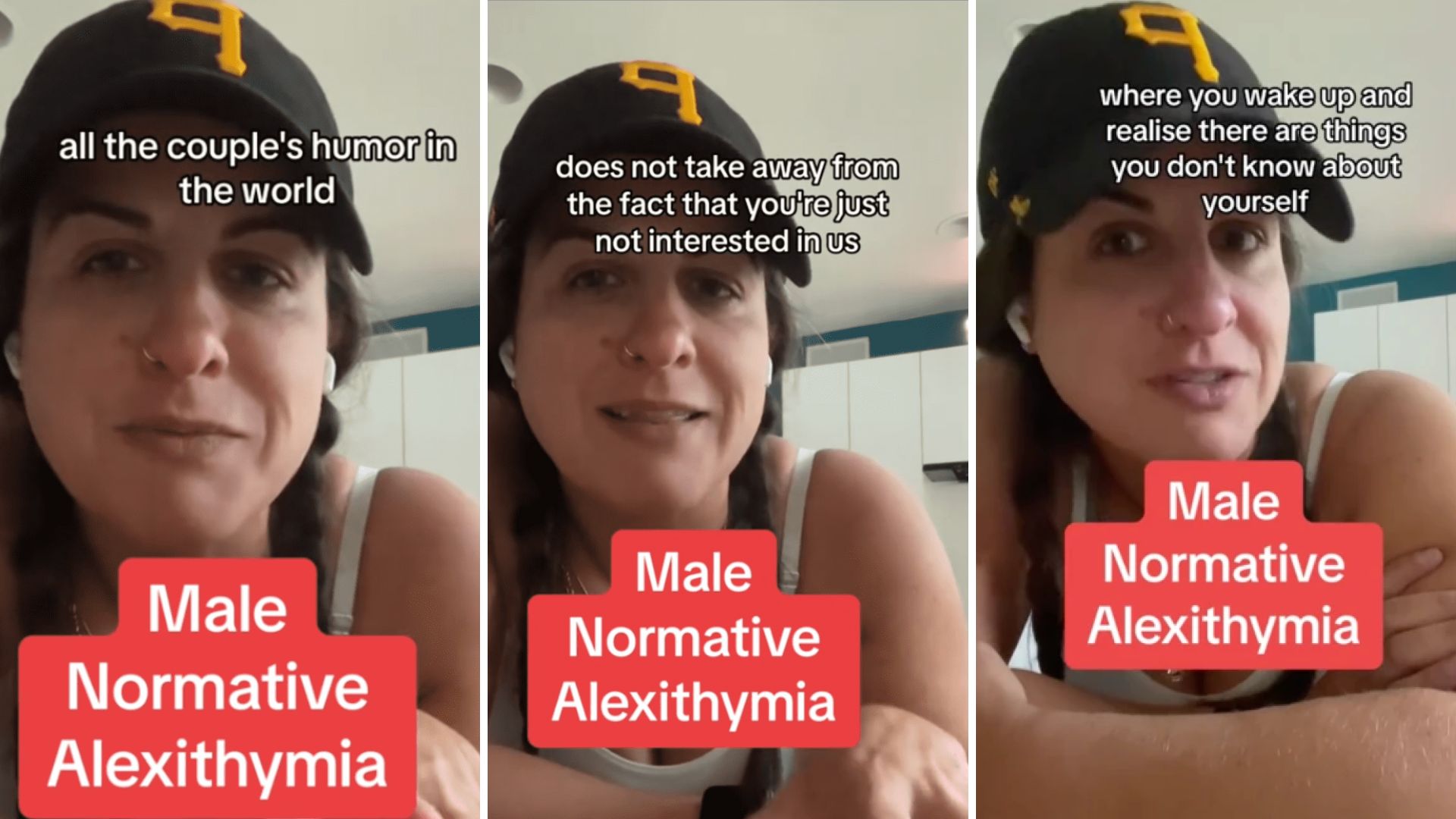
Uma mulher, chamada Katie Hanlon, abriu-me os olhos. Num vídeo no TikTok, ela destaca alguns factores, provavelmente pouco óbvios, que podem causar a rutura de uma relação. Refere-se a investigação sobre “normative male alexithymia”, and explains it’s a termo psicológico para “not being able to name or talk about your emotions.”
In short, men do have feelings but they’re unable to name them and verbally express them. As if they are emotionally illiterate, I would add. Katie is quite convinced that men’s restrições para articular emoções são a razão pela qual as relações flutuam por vezes em mares agitados.
“Men feel the emotion and they just don’t know how to talk about it, or how to garner empathy from each other about said emotion.”
Salienta ainda que o problema não desaparecerá com o tempo e que os casais não devem ignorar nem subestimar o perigo que lhe está subjacente.
Also, men who are prone to holding in emotions tend to pass on this habit to their spouses too. That’s why algumas mulheres optam por suportar a tempestade and hide the emotional grief as they can’t expect any understanding or dialogue with their partners.
“All the couple’s humor in the world does not take away from the fact that you’re just not interested in us.”
This sounds like she believes men are actually not really interested in women and that’s the reason why they rather make jokes instead of having serious talk about what bothers them.
Parece-lhe familiar? Eu sei que quando tento falar com o meu marido sobre o que ele sente, ele começa logo a brincar ou muda de assunto. Ele não se sentirá à vontade para falar de emoçõesnem me dizer se o magoei (acidentalmente) com uma má escolha de palavras.
He won’t communicate the emotion and I’m unfortunately not a mind reader. That creates a que se torna maior cada vez que ele guarda tudo para si. Com o tempo, tornamo-nos mais distantes e a nossa relação sofre.
What he won’t admit is this: destrói a sua auto-confiança masculina. We know well, that it’s all rooted in the patriarchy and traditional masculinity. While at the same time:
“I know for a fact there are wives all over the world who regularly cry themselves to sleep over their marriages”
My husband thinks he needs to withhold his feelings and be tough, and it’s forbidden to show any “female-like” traits such as sensitivity or crying, etc. A auto-censura ou a ocultação de qualquer fraqueza impede os homens de estabelecerem relações significativas e sufoca qualquer troca emocional no seu interior.
Katie acredita que se os homens não estão dispostos a falar sobre as suas necessidades emocionais, então couples can’t start resolving some other common issues such as unequal involvement in child care or housework, and mental workload (project manager of all family activities!) that’s usually more of a woman’s burden in marriage.
A public opinion on TikTok strongly agrees with Katie’s assumptions, and one of the commenters, a woman, named Anu, shared her story:
“I left a 25 year marriage because of this. I cried on the regular and was always sick. It’s been 6 years and I’ve never been better.”
Um utilizador whoisandrewblack sublinhou o problema das normas sociais que levam os homens a comportarem-se como se comportam:
“Not only are these things not taught/modeled to men, but they are also actively repressed by our society. Each man is completely on his own in this struggle.”
Another person, jpickle3, made a comment about how men usually don’t start talking about emotions first, but they do react to woman’s emotions:
“When they do talk about emotions it’s when you talk about yours first and they’re upset and express how bad that makes them feel about themselves.”
In the end, I will say that men really need to become friends with their emotions and understand their masculinity will not be compromised by showing vulnerability. You are humans, for God’s sake!