
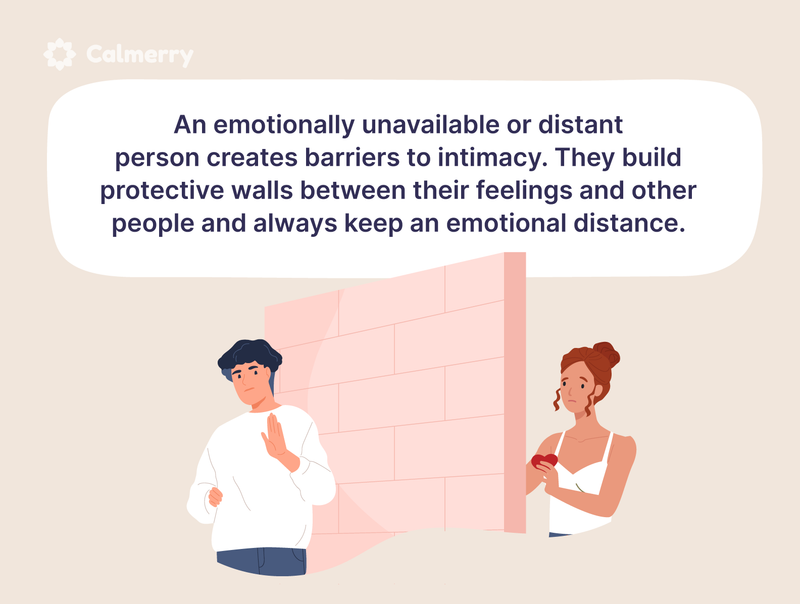
Strong Women So Often Fall for Emotionally Unavailable Men for the Same Painful Reason
You have handled hard things your whole life, and you are proud of that. But somewhere between managing your career, your friendships, and your own inner world, you also started managing him, his moods, his silences, and his slow return after every distance. This article takes an honest look at why some women who are deeply capable and fiercely loyal can end up carrying a relationship almost entirely alone, and what it actually costs them when they do.
Your strength can hide the fact that you are carrying the relationship alone
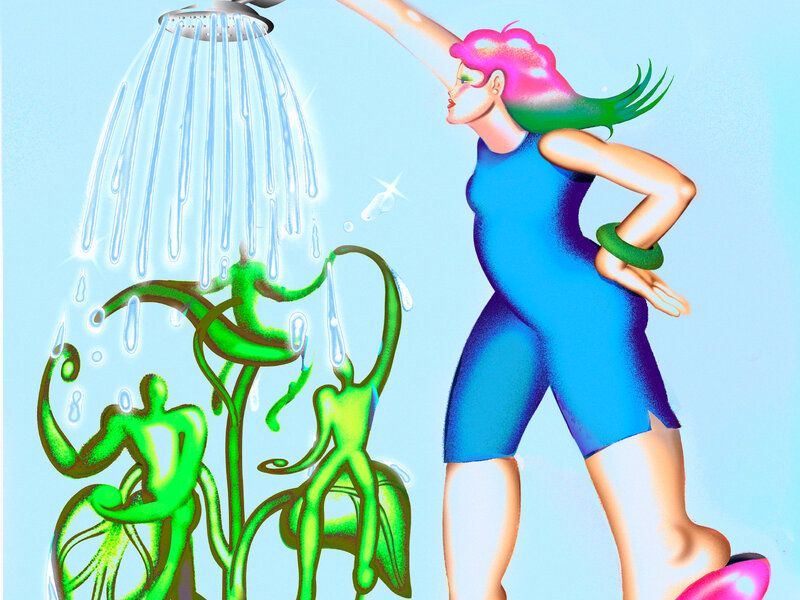
Picture a weeknight that probably sounds familiar. He is quiet again, offering nothing, and you find yourself doing the mental math: Is he tired? Did something happen at work? Did I say something wrong?
You replay the last conversation, soften your memory of the tense part, and decide to give it one more day. You are not doing this because you are weak. You are doing it because you are genuinely good at problem-solving, and somewhere along the way this relationship became one more problem you believed you could solve.
That quiet competence is worth naming. Managing the mood, explaining the silence to yourself, keeping the warmth alive when he goes cold – these take real skill and real emotional energy. The trouble is that when one person is skilled enough to absorb the other’s absence, the absence never has to be addressed. Competence can become a kind of cover story for a relationship that is running on one person’s effort.
A review of dyadic attachment research found that avoidant partners tend to be less available and responsive to the other person’s emotional needs, and that this gap in responsiveness is directly tied to lower intimacy and satisfaction. What the research also shows is that a responsive partner – the one who keeps showing up – can partially buffer the damage, but only up to a point. A longitudinal study of 263 couples found that withdrawal-based communication patterns were linked to lower relationship satisfaction over time.
None of this means you caused the distance or that your strength is a flaw. What it does mean is that your ability to keep going can make it harder to notice how lopsided the arrangement has become. There is a difference between supporting a partner through a hard season and quietly absorbing a permanent absence of reciprocity. One is love.
The other is labor that never gets acknowledged.
Inconsistency turns love into something you feel compelled to earn

He goes quiet for four days. Then a warm, unexpected message arrives and the relief you feel is almost physical. You tell yourself this is the real him, the one you fell for. The distance was just stress, or fear, or circumstance.
You lean back in, softer than before, more careful, more hopeful. And then the cycle begins again.
The hidden cost of that pattern is not just emotional exhaustion. When warmth is unpredictable, your attention shifts from your own needs to his next move. You stop asking whether this relationship is actually meeting you where you are. Instead, you start asking what you can do differently, say more precisely, or wait out more patiently to produce the closeness that should not have to be produced at all.
Research on communication and romantic attachment links withdrawal-based patterns to lower satisfaction and responsiveness in couples over time. A review of attachment research in couples found that avoidant partners tend to be less responsive and available, which can leave the other person working harder to close a gap that is not theirs to close. It is worth noting that withdrawal does not always reveal a partner’s inner life or motives. He could be stressed, conflict-averse, or simply not well-matched to what you need.
But the behavioral effect on you is the same regardless of his reason: you begin measuring your worth by whether the right combination of patience, explanation, and timing can finally unlock him.
That is a painful place to live. Love should not feel like a code you keep failing to crack. When inconsistency becomes the rhythm of a relationship, the question worth sitting with is not how to earn the next warm spell – it is whether the warm spells are enough to build a life on.
Your history can influence relationship patterns without choosing your partner for you

At some point, someone probably told you that you keep choosing unavailable men because of your childhood. Maybe there is something to that. Maybe there is not. The honest answer is that the connection between early experiences and adult relationships is real but not a life sentence.
A study of 501 couples found that cumulative childhood trauma was associated with lower relationship satisfaction in adulthood, and that lower attachment avoidance appeared to soften some of that association. What the study does not show is that a difficult childhood causes someone to seek out emotionally unavailable or harmful partners, or that past pain determines what a person will tolerate. Many people who experienced adversity early in life go on to build secure, reciprocal relationships. Your history may shape your expectations and your comfort with receiving care, but it does not write the ending.
Self-understanding has real value. Recognizing that you learned early to ask for little, to manage other people’s emotions, or to treat inconsistency as normal – that awareness can be genuinely useful. What it should not become is a reason to hold yourself responsible for someone else’s choice to stay distant. His emotional unavailability is not a wound you created, and it is not yours to heal.
Past experiences can influence how you read ambiguous situations, how quickly you extend trust, or how long you wait before naming what is missing. They do not choose your partner for you, and they do not obligate you to stay once you can see the pattern clearly.
There is a difference between loving compromise and abandoning yourself

Every real relationship asks both people to bend sometimes. You cancel plans when he needs you. You soften a hard truth because the timing is wrong. You choose the movie he wants because it genuinely does not matter to you tonight.
That is not self-betrayal. That is just love in practice, and there is nothing wrong with it.
The line moves when giving up something starts to feel less like a free choice and more like the only safe option. Research on daily sacrifice in intimate relationships found that sacrifice motivated by genuine care and wanting to move toward a partner was associated with better well-being and relationship quality. Sacrifice driven mainly by fear, the need to avoid rejection, or the hope of preventing conflict was associated with poorer well-being and more difficulty maintaining the relationship over time. The act looks identical from the outside.
The internal experience is completely different.
Ask yourself honestly whether you can say no without bracing for punishment. Can you express disappointment and expect it to be heard? Can you receive care without immediately turning it back around to focus on him? Can you let a week pass without being the one to repair the distance?
If every adjustment moves in one direction – yours – that is not compromise. That is a slow erasure, and it tends to happen so gradually that you barely notice until you are not sure what you actually want anymore.
Mutuality does not mean keeping score. It means both people are genuinely in the habit of considering each other. When one person’s needs consistently disappear from the conversation, the relationship has stopped being a partnership and become something closer to a performance of one.
Stop interpreting his potential and start watching his repeated behavior

You know the version of him you fell for. The one who showed up fully for a few weeks, who said the right thing at exactly the right moment, who made you feel like you had finally found someone who got it. That version is real. The question is whether it is reliable.
Emotional availability is not a feeling or a potential – it is a behavior pattern that either shows up consistently or does not. A few useful questions matter more than any label or theory: Does he respond when you name a need, or does he go quiet, deflect, or turn it back on you? Does he stay present during conflict, or disappear and return as if nothing happened? Longitudinal research on communication and attachment found that withdrawal-based patterns erode satisfaction over time, while attachment research in couples consistently links responsiveness to intimacy and connection.
Does his behavior actually become more consistent over months, or does it only improve briefly after a rupture?
A less expressive partner is not automatically unavailable. Someone quiet, introverted, stressed, grieving, or still learning how to communicate can still listen, repair after harm, make sustained efforts, and respect what you need. The distinction is willingness. A man who cannot yet express himself easily but keeps trying is different from a man who repeatedly disappears, mocks your concerns, blames you for bringing them up, or turns every conversation about your needs into a conversation about his.
When behavior crosses from emotional distance into humiliation, blame-shifting, or retaliation, that is no longer a communication gap. The National Domestic Violence Hotline identifies emotional abuse as including patterns of control, degradation, coercive jealousy, gaslighting, and withholding affection as punishment. CDC guidance on intimate partner violence e WHO data on violence against women both make clear that these patterns are not caused by the partner who experiences them. A painful history may help explain why someone behaves the way he does.
It does not excuse it, and it does not make occasional breakthroughs equal to durable change.
When distance becomes control, choose safety over more patience
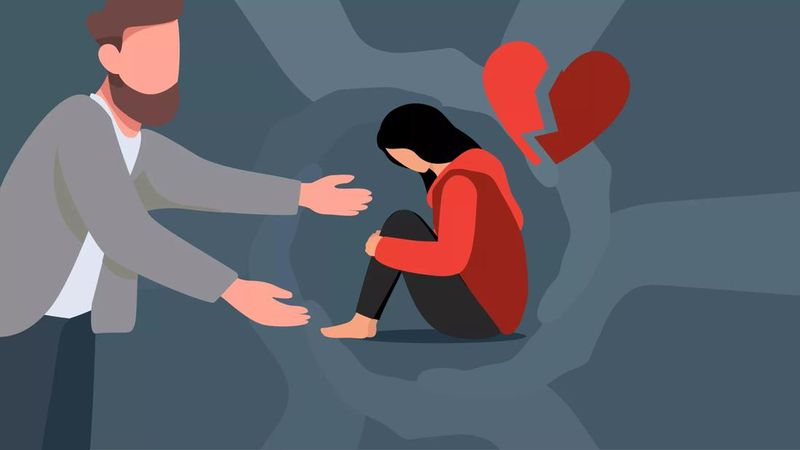
Emotional distance and emotional abuse are not the same thing, and the difference matters. A partner who struggles to open up, needs time to process feelings, or communicates in clipped sentences is not necessarily abusive. Distance becomes something else entirely when it is used as a tool: when affection is withheld to punish you for speaking up, when your friendships are slowly discouraged, when he tracks your location and calls it love, when your concerns are turned back on you so reliably that you start to wonder if you are the problem.
The National Domestic Violence Hotline describes emotional abuse as involving patterns of humiliation, isolation, coercive jealousy, gaslighting, threats, sexual pressure, surveillance, blame-shifting, and the use of withheld affection as punishment. These are not signs of a man who cannot communicate. They are signs of a man who is using the relationship to maintain control. The CDC notes that intimate partner violence is shaped by multiple intersecting factors, and WHO data confirms that these patterns affect women across every background and circumstance.
Better communication, more patience, and stronger attachment work cannot guarantee that a coercive partner will change. Abuse is a choice made by the person who uses it, and you are not responsible for causing it or stopping it through the right combination of words or behavior. For a distressed but nonabusive relationship, working with a couples therapist may help. A randomized clinical trial on behavioral couple therapy found improvements in attachment-related anxiety and avoidance alongside marital satisfaction – but that evidence concerns treatment-seeking couples in relationships without coercive control, intimidation, or threats.
Joint therapy is not a safe or appropriate step when one partner is controlling, threatening, or retaliating.
If any of those behaviors are present, the priority is your safety, not the relationship’s survival. The Hotline’s personal safety planning resource can help you think through options while you are still in the relationship, preparing to leave, or navigating the period after leaving. If monitoring or stalking is part of what you are experiencing, their stalking safety planning guidance addresses digital monitoring specifically. You are allowed to get help before you have made any decision at all.
You are allowed to stop proving that you deserve ordinary emotional care

At some point the question stops being about him and starts being about you. Not what you did wrong, not what you could try next, but whether you are still willing to spend your energy making a case for your own basic needs.
You should not have to earn ordinary emotional care from someone who chose to be with you. Reciprocity, repair, and a partner who stays present when things get hard – these are not rewards for exceptional patience. They are the floor, not the ceiling, of a relationship worth having.
Leaving the over-functioning role is not giving up. It is getting honest. Some partners do change when they are genuinely committed and willing to do the work; that possibility deserves space without becoming a reason to wait indefinitely for proof that never quite arrives. The standard is not perfection.
The standard is sustained, observable effort over time – not promises made in the good moments and forgotten by Tuesday.
You have already proven you are capable of extraordinary love. The only thing left to prove is that you will extend some of that loyalty to yourself. That is not selfishness. That is finally taking your own side.