

When Two People Keep Finding Each Other: Does It Mean Fate, or Something Else?
Few experiences feel quite as disorienting as watching someone you once loved walk back into your life. The pull is real, the history is real, and the hope that flickers back to life feels like proof of something bigger than coincidence. But before you call it destiny, it is worth asking a quieter, more honest question: what is actually bringing you back together, and what, if anything, has genuinely changed?
When a reunion feels like fate, separate the feeling from the evidence

There is something almost eerie about the moment a former partner reappears. The timing feels too precise, the memories rush back too vividly, and somewhere in your chest a voice whispers that this cannot be an accident. That feeling is real, and it deserves to be taken seriously. What it does not deserve is to be mistaken for proof.
Research does not identify romantic fate or an invisible force as the reason two people reconnect. A study on reconciliation attempts in terminated relationships found that reconnection is better explained by ordinary relationship processes: lingering attachment, familiarity, shared history, unresolved conflict, practical ties, and the simple belief that things could be different this time. The uncanny feeling of inevitability is a feeling, not a finding.
That distinction matters because it changes the question you need to ask. The useful question is not “are we meant to be together?” That question has no answerable form. The useful question is: what relationship processes and present-day behaviors explain why this person has returned, and what, if anything, has actually changed since the last time things fell apart?
Framing the return as fate can feel comforting, and research on relationship beliefs does suggest that destiny beliefs can coexist with positive outcomes in some circumstances. But destiny beliefs alone cannot establish compatibility or guarantee permanence. The feeling that something is meant to be is a starting point for curiosity, not a reason to stop asking hard questions.
Why former partners return to familiar emotional ground

When someone comes back, the easiest story to tell yourself is that love brought them. Sometimes that is genuinely part of it. But human beings are complicated, and so are the reasons we return to people we have already left or lost.
Research on attempts to reconcile terminated relationships points to a range of ordinary factors that motivate a former partner’s return: unresolved feelings, the comfort of familiarity, shared history that is hard to walk away from, loneliness, hope that the relationship can succeed on a second try, and practical ties like finances, housing, or children. None of these motivations are shameful. None of them are proof of anything cosmic, either.
A return can feel completely sincere and still not carry the meaning you most want it to carry. Familiarity is powerful. The brain recognizes a known person as safe and known, even when the relationship itself was painful. Loneliness after a breakup is real and often underestimated.
Shared history creates a gravitational pull that has nothing to do with compatibility and everything to do with how deeply two lives became intertwined.
The behavior of coming back cannot, on its own, tell you whether the motive is love, habit, convenience, unresolved grief, or something else entirely. Someone can return because they genuinely want to build something healthier. Someone else can return because being alone feels unbearable. A third person can return out of guilt, or because a new relationship did not work out.
The return is data, not a verdict. What matters is what you do with that data, and that starts with being willing to look at it honestly rather than through the warmth of hope alone.
One respectful reunion is not the same as relationship cycling

Not every reunion is the same, and it matters enormously to know the difference. A couple who separates once, takes time apart, and comes back together with honesty and mutual care is in a very different situation from a couple who breaks up and reconciles repeatedly, cycling through the same patterns without resolution.
Researchers sometimes call that repeated pattern relationship cycling or churning. Studies on relationship churning and mental health have found associations between repeated breakup-renewal cycles and lower relationship quality, greater relational stress, more psychological symptoms, and poorer overall well-being. One study found that mothers in churning relationships reported worse mental health than those in stable relationships, with differences persisting across four years. These are meaningful findings.
They are also correlational findings. Research linking cycling, relational stress, and well-being does not prove that every reunion causes harm, or that every person who reconciles once is heading for a damaging cycle. People who already experience conflict, financial strain, insecurity, or other serious stressors may be more likely both to cycle and to report distress. The relationship pattern and the distress can share common roots without one directly causing the other.
The idea that on-and-off intensity proves deeper passion is not supported by the evidence. What research actually points toward is that repeated cycling tends to be associated with more negative interaction patterns and more stress, not more depth or more love. A single respectful reunion, entered freely by both people with clear eyes, is a different thing entirely. The question worth sitting with is which situation you are actually in, not which one you hope you are in.
Changed behavior matters more than the strength of the longing

Longing is one of the most powerful feelings a human being can experience. It can make a phone call feel like a miracle and a text message feel like evidence. But longing, on its own, tells you nothing about whether the conditions that ended the relationship have actually shifted.
Before interpreting a reunion as meaningful, the most useful thing you can do is look at observable behavior over time, not at promises, not at the intensity of feeling, and not at how much you both missed each other. Healthy-relationship guidance from Utah State University Extension emphasizes mutual respect, open communication, support, privacy, and consistent respect for stated limits as the foundation of a functioning relationship. These are not romantic ideals. They are practical behaviors you can observe.
A reunion may be more promising when both partners freely choose it and demonstrate sustained accountability, respect, communication, reliability, and boundary-respecting behavior. That means specific acknowledgment of past harm, not just “I’m sorry things got bad.” It means a mutually agreed plan for what changes, not just a feeling that things will be different. It means consistent follow-through over weeks and months, not a honeymoon period that fades when old pressures return. And it means the ability to discuss difficult subjects without intimidation, withdrawal, or retaliation.
Loveisrespect’s guidance on boundaries and research on relationship beliefs both point in the same direction: believing that relationships grow through effort, communication, and mutual respect tends to support more durable satisfaction than simply believing two people are destined for each other. Neither growth beliefs nor destiny beliefs guarantee that a relationship will succeed, but only one of them asks you to keep showing up as a full human being with needs and limits. These principles are practical tools for discernment, not a formula that guarantees a happy ending.
Contact can offer clarity, or it can prolong the wound
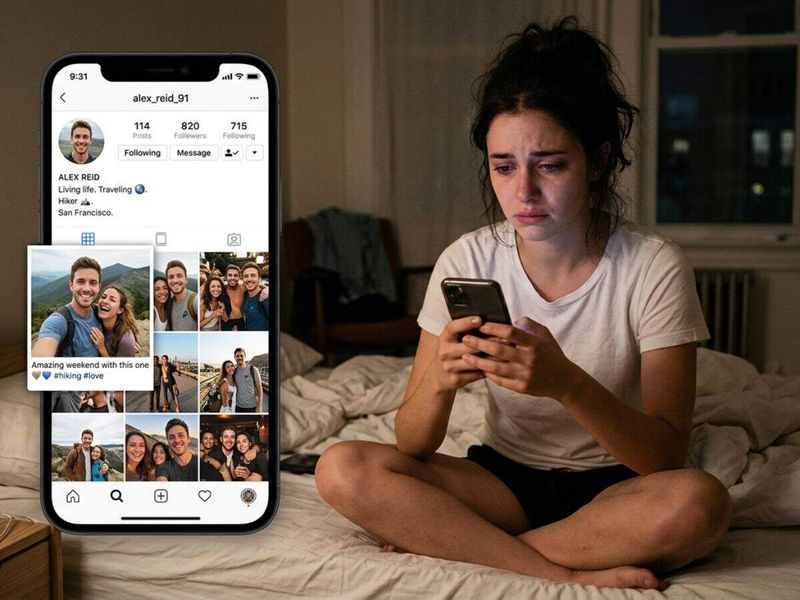
After a breakup, staying in contact with a former partner feels natural. You shared a life, a language, a thousand small rituals. Of course you want to reach out. Of course you wonder how they are.
The question worth asking is not whether the impulse is understandable, because it absolutely is, but whether the contact is actually helping you find clarity or simply keeping the wound open.
A longitudinal study on contact with an ex-partner after marital separation found that more frequent in-person contact with a former partner predicted higher separation-related psychological distress two months later. That is not a universal rule, and the findings do not mean all contact is harmful. But they do suggest that some forms of continued contact, particularly when the relationship’s future is unresolved, can make emotional recovery harder rather than easier.
Online monitoring adds its own complications. Research on Facebook surveillance of former romantic partners found associations between monitoring an ex online and poorer emotional recovery and less personal growth following a breakup. Checking their profile at midnight does not give you information that helps you move forward. It gives you a drip of stimulus that keeps you emotionally tethered without offering anything real.
The honest question to ask yourself is whether your contact with this person is building something or just managing the ache of absence. If every conversation leaves you more confused, more hopeful without reason, or more raw than before, that is information worth taking seriously. Contact is not automatically harmful, but it is not automatically healing either. You get to decide what kind of contact, if any, actually serves your wellbeing right now.
When contact becomes coercion, safety replaces the question of fate
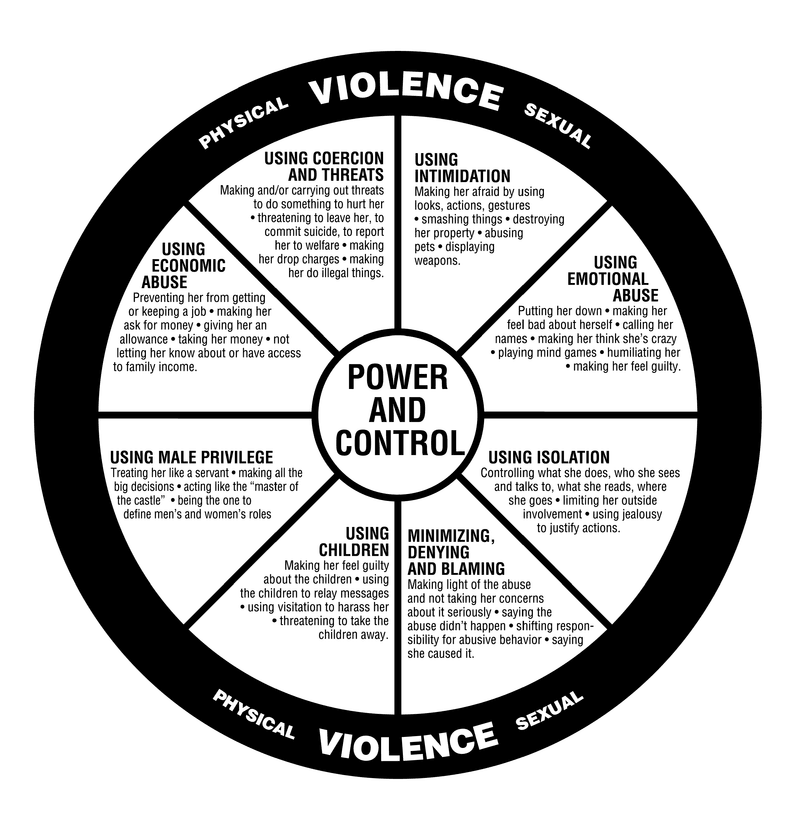
Some returns do not feel like fate. They feel like pressure. If you find yourself afraid to say no, afraid to ignore a message, or afraid of what might happen if you do not respond, that fear is not a sign of deep love. It is a sign that something more serious needs your attention.
The CDC defines intimate partner violence as including physical violence, sexual violence, stalking, and psychological aggression intended to harm or control a partner. Repeated unwanted contact, intimidation, monitoring your movements, showing up uninvited, threats, and coercive control are not romantic persistence. They are behaviors that create genuine safety concerns, regardless of what the person doing them says about their feelings or intentions.
Contact alone cannot tell you with certainty what someone’s motive is. But your own body can tell you something important. If you feel fear rather than hope, relief when they are gone rather than warmth when they appear, or pressure rather than freedom to choose, those responses matter. A relationship that requires you to be afraid in order to stay connected is not a relationship that fate is protecting.
It is a relationship that is hurting you.
The term trauma bond is sometimes used loosely to describe any intense or difficult relationship. That is worth correcting. The National Domestic Violence Hotline describes traumatic bonding specifically in the context of abusive behavior alternating with periods of affection, kindness, or promises. It is not the same as chemistry, heartbreak, or a relationship that ended and restarted.
If contact from a former partner includes fear, threats, stalking, coercive control, physical violence, or sexual coercion, the priority is your safety, not the question of whether you are meant to be together. The National Domestic Violence Hotline offers individualized safety planning that covers housing, communication, legal protections, children, and stalking. Stalking-specific safety planning is also available. If you are in immediate danger, emergency services should be your first call.
Choose the kind of hope that does not require you to wait or endure
Hope is not the problem. Hope is actually one of the most generous things you can offer yourself after a painful relationship. The version of hope worth questioning is the kind that asks you to stay small, stay patient, stay available, and interpret repetition or uncertainty as proof that something beautiful is coming.
You are allowed to believe in love and still refuse to call chaos destiny. You are allowed to want a second chance and still require that a second chance look different from the first one in ways you can actually see and feel, not just in ways you are promised. Believing you deserve a relationship built on mutual respect, honest communication, and consistent care is not asking for too much. It is asking for the minimum.
Whether or not this particular person comes back, whether or not this particular reunion turns into something lasting, your future does not depend on his return. You can choose a safe and healthy life from wherever you are standing right now. The most durable kind of hope is not the kind that waits. It is the kind that recognizes what is real and chooses accordingly, with your eyes open and your own needs firmly in the picture.