
37 frases que pessoas profundamente passivo-agressivas provavelmente dirão a você
Lidar com a comunicação passivo-agressiva pode ser como navegar num campo minado verbal onde as palavras estão carregadas de significados ocultos e emoções não expressas.
Reconhecer estas frases é o primeiro passo para abordar e gerir o impacto emocional que elas podem ter sobre si.
Here’s a list of 37 phrases that are commonly used by passive-aggressive individuals, each accompanied by an exploration of their underlying sentiment and how you can effectively respond.
1. “I was just kidding.”

Oh, the classic disclaimer after someone dishes out a verbal jab. “I was just kidding,” they say, brushing off the sting of their words as if humor were an impenetrable shield. It’s a tactic that allows them to test boundaries without taking responsibility for any hurt feelings. In reality, this phrase often masks a genuine criticism or negative sentiment.
By labeling their comment as a “joke,” the speaker deflects accountability while putting you in a position where any negative reaction on your part seems like an overreaction. It’s a subtle form of manipulation that keeps them safe from confrontation, while you’re left questioning your sense of humor or sensitivity.
When faced with this phrase, it’s crucial to trust your instincts. If something feels off, it’s worth addressing directly. Try saying something like, “I know you meant that as a joke, but it felt hurtful to me.” This approach opens dialogue without falling into the trap of defensiveness or dismissiveness.
Ver também: 25 sinais de que o seu amigo está a ser passivo-agressivo
2. “It must be nice to have so much free time.”

When someone says, “It must be nice to have so much free time,” they might as well stamp “judgment” across your forehead. This phrase drips with sarcasm, implying that your time is less valuable or that you’re somehow less productive. It’s a passive way to question your work ethic without directly calling you lazy.
The underlying message here often stems from feelings of jealousy or resentment. Perhaps they’re overwhelmed with their own commitments and can’t understand how you balance your schedule—or maybe they’re simply projecting their stress onto you. Whatever the reason, a intenção é minar o seu sentido de realização ou fazer-nos sentir culpados pelo nosso lazer.
Responding to this requires both empathy and assertiveness. A simple, “I manage my time according to my priorities,” can affirm your choices without getting dragged into a defensive argument. This way, you acknowledge the comment without validating the negativity behind it.
3. “Whatever, do what you want.”

This phrase is often used to feign indifference while actually expressing a lack of support or agreement with your decision. It’s a subtle way to make you second-guess your choices and feel guilty for not aligning with their expectations.
O impacto emocional desta frase pode ser significativo, especialmente se vier de alguém cuja opinião é importante para si. Sugere que a sua decisão é a errada, mas a pessoa não está disposta a ter uma conversa significativa sobre o assunto.
Esta despreocupação resulta muitas vezes de um desejo de evitar conflitos, mas deixa um rasto de tensão não resolvida.
4. “I don’t want to argue.”

Isto é uma frase de encerramento queat corta a comunicação, usually when the speaker wants to avoid addressing a difficult subject. While it sounds like an attempt to keep the peace, it’s actually a way to dismiss your concerns and invalidate the importance of the conversation.
A frase implica que continuar o diálogo seria inútil ou destrutivo, colocando o ónus sobre si para desistir do assunto ou arriscar-se a ser visto como um confronto. Isto pode ser emocionalmente desgastante, especialmente quando a sua intenção é resolver uma preocupação genuína ou um mal-entendido.
Offering a solution-focused approach can open the door to productive conversation and show you’re not there to fight but to find common ground.
5. “I guess I’ll just do everything myself.”

When someone says, “I guess I’ll just do everything myself,” it’s seldom about actual self-sufficiency. More often, it’s a guilt trip disguised as self-sacrifice. This phrase leverages obligation and guilt to coerce you into helping or acknowledging their struggles without them asking directly for assistance.
This tactic preys on the listener’s empathy, subtly suggesting that you’re not pulling your weight. It’s not just about workload balance; it’s about drawing attention to their efforts—even if that means painting themselves as a martyr. The emotional burden falls on you, pressuring you to offer help or validate their “suffering.”
6. “Wow, I never would have thought to do it that way.”

Esta frase sugere que a sua abordagem é pouco ortodoxa, estranha ou mesmo incorrecta, sem o dizer diretamente. Isto dá ao orador uma forma astuta de criticar sob o pretexto de de expressar surpresa ou admiração.
The underlying message here is critical but shrouded in a veneer of pseudo-praise. It’s a form of passive control, making you question your methods and competence. The emotional impact can be unsettling, especially in professional settings where confident decision-making is key.
7. “No offense, but…”

This one is the verbal equivalent of saying, “Brace yourself.” What follows is almost always offensive. This phrase allows the speaker to excuse their lack of tact while putting you in a position where objecting makes you seem overly sensitive.
A frase é um ataque preventivo, sinalizando que o que vem a seguir não é para ser tomado de ânimo leve, mas convenientemente absolvendo o orador da responsabilidade pelo impacto emocional.
It’s a way to deliver criticism under the guise of being forthright, often leaving you struggling to respond without appearing defensive.
8. “I thought you knew about that.”

Este comentário surge frequentemente quando algo importante fica por dizer ou quando as expectativas não são claras, tornando-se uma forma passivo-agressiva de lidar com falhas de comunicação.
A implicação é que perdeu um memorando crucial ou não se manteve informado, o que levou à sua situação atual. Coloca-o na defensiva, esforçando-se por justificar a sua falta de informação.
O impacto emocional é a frustração combinada com a insegurança, pois perguntamo-nos se realmente nos escapou alguma coisa ou se o lapso foi deles.
9. “Fine, if that’s what you want.”

“Fine, if that’s what you want,” is delivered with an air of resignation that drips with unsaid dissent. It pretends to grant permission, but the subtext is clear: they don’t agree, and they may not support your choice. This phrase is a way to express discontent without engaging in meaningful dialogue.
The emotional undercurrent here is one of silent protest. Instead of discussing concerns or preferences, the speaker leaves you to question the validity of your decision, all while maintaining the appearance of cooperation. It’s a tática passiva que pode levar a ressentimentos persistentes.
10. “I’m just saying…”

This serves as a verbal shrug, suggesting that their remark isn’t important enough to warrant a reaction, when in fact, it often provokes just that.
This passive-aggressive strategy allows the speaker to voice a potentially hurtful opinion without owning the impact of their words. It’s a way to criticize or provoke under the guise of casual conversation. The impact on you can be frustration or annoyance, as you grapple with the intention behind the comment.
11. “I’m not mad.”

This phrase is often accompanied by body language that screams the opposite of its verbal message. It’s a denial tactic that avoids addressing the real issue, leaving you to navigate the emotional fallout.
By asserting that they’re not angry, the speaker avoids a confrontation while subtly communicating that something is indeed wrong. This leaves you in a tricky situation, trying to decipher the root of their displeasure without any direct guidance.
12. “I just find it funny how…”

Prefacing a statement with “I just find it funny how…” is a surefire way to indicate that the speaker doesn’t actually find anything amusing. Instead, it introduces a complaint or grievance cloaked in the guise of humor, often leaving you feeling criticized or confused.
This phrase allows the speaker to voice a gripe indirectly, making it difficult for you to respond without seeming defensive or sensitive. It’s a tactic that leverages humor to mask dissatisfaction or judgment, making it challenging to engage in a straightforward conversation.
13. “If you really want to.”

Esta frase é uma forma de expressar relutância ou desaprovação sob o disfarce de concordância, deixando-o a questionar a sensatez da sua decisão.
The underlying message is one of doubt or skepticism, suggesting that while they’re conceding to your preference, they’re not on board with it. It’s uma forma subtil de minar a sua confiança e fazem-nos duvidar do nosso julgamento.
14. “I didn’t mean anything by it.”

“I didn’t mean anything by it,” is the go-to phrase for backpedaling after a comment has landed poorly. It allows the speaker to retreat from the impact of their words without actually retracting them, leaving you to navigate the discomfort.
This phrase serves as a conversational parachute, offering the speaker an out without addressing the underlying issue. It places the responsibility on you to either accept their non-apology or confront the comment’s implications, both of which can be emotionally taxing.
15. “Oh, I didn’t realize you were doing it like that.”

“Oh, I didn’t realize you were doing it like that,” is a comment dressed as an innocent observation but often loaded with judgment. It suggests that your approach is surprising or unexpected, hinting that there’s a more “correct” way to do things.
The speaker uses this phrase to voice disapproval without overt criticism, leaving you questioning your methods and decisions. It’s a passive way to apply pressure, fazendo-o sentir-se inadequado ou inseguro quanto às suas escolhas.
16. “You wouldn’t understand.”

Esta é uma afirmação desdenhosa que implica uma falta de capacidade ou de inteligência da sua parte, fechando efetivamente a discussão.
This phrase is often used to withhold information or to assert authority in a situation, making you feel excluded or inferior. The emotional impact can be one of frustration or self-doubt as you’re left out of the loop and unable to contribute meaningfully.
17. “Just saying.”

Isto sugere que o comentário é uma mera observação quando, na realidade, contém frequentemente um juízo ou uma crítica implícita.
Esta tática permite que o orador expresse a sua opinião sem se envolver num diálogo construtivo, colocando sobre si o ónus de interpretar a sua intenção. Pode fazer com que se sinta rejeitado ou confuso, sem saber se deve ou não responder.
18. “If you insist.”

Uma frase como esta implica que a sua decisão está a ser tolerada em vez de apoiadaA Comissão Europeia, por seu lado, posiciona-se como uma concessão relutante.
This phrase subtly undermines your authority or decision-making, making you feel as though you’re imposing rather than making a rational choice. The emotional impact can be a mix of frustration and doubt, as you question whether you’re making the right decision.
19. “I guess you’re too busy.”

“I guess you’re too busy,” is a remark that feigns understanding while subtly laying on the guilt. It suggests that your priorities are misplaced, without directly accusing you of neglect.
This phrase is often used as a way to express disappointment disguised as empathy. It puts the onus on you to justify your schedule while hinting that you’re not making time for the speaker, leading to feelings of guilt or inadequacy.
20. “I didn’t want to bother you.”

This is often used to highlight the speaker’s restraint or independence, while subtly suggesting that you’ve been unavailable or unapproachable.
The underlying message is one of passive reproach, implying that you should have been more attentive or available. It’s a tactic that places the burden on you to initiate engagement or assistance, often leaving you feeling guilty or negligent.
21. “Oh, I didn’t expect you to be here.”

“Oh, I didn’t expect you to be here,” is a phrase that can be interpreted as either genuine surprise or veiled disapproval. While it might seem innocent, it often carries an undertone of judgment about your presence or absence.
The implication is that your attendance is out of the ordinary or unwelcome, leaving you to wonder if you’ve misread social cues or intruded where you’re not wanted. It’s a passive way to make you question your place in a situation or group.
To respond, maintain positivity: “Surprise! I’m glad to join.” This response embraces the situation without addressing any implied negativity, keeping the interaction light and on your terms.
22. “I was going to do that.”

“I was going to do that,” is a phrase used to claim credit or express dissatisfaction that someone else took initiative. It suggests that the speaker had similar intentions, subtly undermining your actions or contributions.
The comment often arises from feelings of inadequacy or competition, as the speaker attempts to assert their relevance or capability. The emotional impact is one of frustration, as you’re left feeling like your efforts are undervalued or unnecessary.
Em resposta, reconhecer as suas intenções, mantendo a sua contribuição: “Great minds think alike! It’s good to have support on this.” This reinforces collaboration without diminishing your own role, promoting teamwork.
23. “It’s fine.”

When someone says, “It’s fine,” it often means the exact opposite. This phrase is commonly used to avoid conflict by shutting down the conversation, leaving unresolved issues simmering beneath the surface.
O orador sugere que está tudo bem, enquanto o seu tom ou linguagem corporal contradizem frequentemente as palavras. It’s a way to express discontent without engaging in a potentially uncomfortable discussion, leaving you to navigate the emotional disconnect.
24. “I’m just trying to help.”

“I’m just trying to help,” is a phrase often used to justify unsolicited advice or criticism. It presents the speaker as well-intentioned, even when their comments might be intrusive or unwelcome.
This phrase can feel like a shield against any negative reaction, positioning the speaker as a benevolent figure while subtly undermining your autonomy or decisions. The impact is one of frustration, as you’re left to navigate the fine line between genuine assistance and covert criticism.
25. “If that makes you happy.”

This phrase suggests that while your choice might seem questionable to them, they’re reluctantly willing to accept it.
The underlying message is one of judgment, casting doubt on your ability to make wise decisions. It’s a forma subtil de questionar os seus motivos ou a sua satisfaçãon, fazendo-o duvidar da sua felicidade ou realização.
26. “Are you sure about that?”

This phrase is a subtle form of undermining, implying that you haven’t thought things through or might be making a mistake. It can lead to self-doubt and second-guessing, as you’re left to defend your choices without clear opposition.
To address this, affirm your decision: “Yes, I’ve considered it carefully.” This response reinforces your confidence, neutralizing the implied skepticism and asserting your authority over your own decisions.
27. “I didn’t want to say anything, but…”

Esta frase funciona como uma justificação preventiva para partilhar opiniões não solicitadas ou potencialmente prejudiciais.
The tactic is to absolve responsibility for the impact of their words, framing the comment as reluctant honesty rather than active critique. The emotional impact is often one of discomfort or frustration, as you’re left to process the weight of their opinion without prior consent.
28. “I thought you’d know.”

This passive-aggressive comment implies that you’re at fault for not anticipating what wasn’t made clear, leaving you feeling inadequate or uninformed. The emotional impact is one of frustration, as you scramble to justify your position or catch up on what you supposedly missed.
To respond, request clarity and future improvement: “I missed that detail. Can you fill me in? Let’s make sure we’re aligned moving forward.” This not only seeks the needed information but also subtly addresses the need for clearer communication.
29. “I hope you’re happy.”
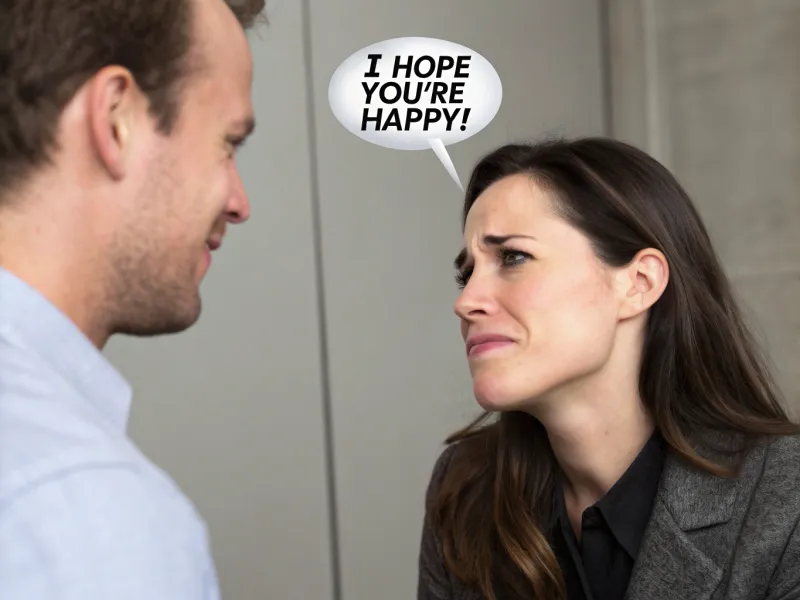
Esta é uma frase que visa atribuir-lhe a culpa, sugerindo que as suas acções provocaram insatisfação ou incómodo.
While it appears to be a gracious wish, the underlying message is one of resentment or disappointment. It’s designed to make you reassess your decisions and question the true cost of your happiness or success.
30. “Do what you want.”

“Do what you want” is a phrase that conceals disapproval under the guise of indifference. It suggests a relinquishment of influence or concern, often leaving you to question the wisdom of your actions.
The underlying emotion is typically one of frustration or disappointment, indicating that the speaker has given up on influencing your choices. It’s uma forma passivo-agressiva exprimir descontentamento sem participar numa discussão construtiva.
31. “Whatever.”

“Whatever,” is the quintessential phrase for expressing apathy or disregard. It’s often used to shut down a conversation, signaling that the speaker has checked out emotionally or intellectually.
This phrase leaves a residue of unresolved tension, suggesting that further discussion is futile. The emotional impact is one of dismissal, as you’re left to navigate the issues alone or abandon them entirely.
32. “I didn’t think you’d mind.”

“I didn’t think you’d mind,” is a phrase often utilizados para justificar acções realizadas sem o seu consentimento ou participação. Sugere uma presunção da sua indiferença ou concordância, colocando-o numa posição em que a objeção parece não ser razoável.
Este comentário surge frequentemente depois de os limites serem ultrapassados, fazendo com que se sinta esquecido ou desrespeitado. O impacto emocional é de frustração ou traição, uma vez que as suas preferências ou limites foram ignorados.
33. “That’s interesting.”

When someone says, “That’s interesting,” it’s often a placeholder for a more critical or disinterested thought. This phrase allows the speaker to disengage from genuine feedback, leaving you to decipher their true opinion.
The vagueness of the comment can be unsettling, as it provides no real insight into whether your idea or action was positively received. It’s a passive way to acknowledge your contribution without investing in a meaningful dialogue.
34. “I didn’t know you cared so much.”

“I didn’t know you cared so much,” is often used to belittle or trivialize your interests or concerns. It implies that your passion or involvement is unwarranted, making you question the legitimacy of your feelings.
A frase serve como uma forma passivo-agressiva de minimizar o seu entusiasmo or commitment, often leaving you feeling embarrassed or defensive about your priorities. It’s a subtle way to undermine your confidence and dismiss your interests.
Counter this by affirming your passion: “I do care, and it’s important to me.” This response reinforces your interests without conceding to their dismissive tone, promoting self-assurance and validation.
35. “I never said that.”

Esta tática permite ao orador negar a responsabilidade ou mudar a narrativa, confundindo a questão em causa.
By insisting they never made a particular comment, the speaker casts doubt on your memory or understanding, making you question the validity of your perceptions. It’s a manipulative strategy that can erode trust and clarity in communication.
36. “I’m sure you’ll figure it out.”

Esta frase pode parecer desdenhosa, pois implica que se deve ser autossuficiente, independentemente do apoio ou orientação de que se possa realmente necessitar. O impacto emocional é um misto de pressão para o desempenho e de isolamento na resolução de problemas.
37. “I didn’t want to say anything, but I think you should know…”

Esta frase prepara o terreno para partilhar informações não solicitadas ou potencialmente prejudiciais sob o pretexto de preocupação.
The speaker positions themselves as a reluctant messenger, framing the comment as necessary rather than optional, often leaving you to deal with the emotional fallout. It’s a tactic that shifts the burden of processing difficult news onto you, without offering genuine support.