10 coisas a ter sempre em mente quando sentimos que não somos suficientemente bons
You’ve tried everything from meditation to reading all the advice about true happiness, but you still feel like you’re not good enough.
E o pior de tudo é que nem sequer se lembra quando começou a sentir-se assim.
Did it happen while you were growing up, or you were born with an inner critic that you somehow can’t shut down (not even for a second)?
Feeling like you’re not good enough is one of the most draining things in the world and the process of overcoming it requires understanding, determination, and patience.
É preciso aprender a arte do amor-próprio.
It is when you’re convinced that no matter what you do or say, it will never be good enough for other people, or for you.
It is when you’re afraid to make mistakes in life because they make you feel like the ultimate failure.
Há muitas razões para nos sentirmos menos dignos, ser sensívele, e constantemente a remoer pensamentos negativos na sua cabeça, e essas razões estão muitas vezes ligadas a questões profundamente enraizadas.
Before diving deeper into things you should remember when you’re feeling like you’re not good enough, let’s first check out the possible roots of that feeling:
7 Common Reasons Why You Feel Like You’re Not Good Enough
1. Tem pressupostos ocultos sobre o mundo devido a alguns acontecimentos passados

One of the main reasons why we feel like we’re not good enough lies in the past and previous events.
As children, we absorb everything around us – the way people talk, walk, and most importantly, the way people behave in certain situations.
Ligamos tudo e enquadramos essas memórias num compartimento especial do nosso cérebro chamado pressupostos ocultos.
Enquanto crianças, não conseguimos compreender que tudo acontece por uma razão ou as verdadeiras razões por detrás de certas acções.
Por isso, fazemos suposições. Criamos as nossas próprias crenças sobre o motivo pelo qual as coisas acontecem e associamo-las às nossas próprias e únicas razões.
Por exemplo, se uma criança acorda um dia e se apercebe de que um dos seus pais desapareceu, não compreenderá realmente porque é que isso aconteceu.
All the child knows is that they love their parent and now they are gone. The hidden assumption here is: “If you care about someone, they abandon you.”
This hidden assumption becomes a deep-rooted issue and it becomes a part of a child’s everyday life and then their life as a grown-up.
These assumptions work on a subconscious level meaning you won’t really be aware of them, but they will still be active in the background.
And that core belief or assumption is what might make you feel like you’re not good enough, like you don’t deserve love and that you need to earn it.
Este medo pode forçá-lo a nunca deixar ninguém aproximar-se de si.
2. You’re overly self-critical

Já alguma vez escutou atentamente os seus pensamentos? Já reparou que 90% do tempo os seus pensamentos são negativos e que raramente pensa em algo positivo?
We often become convinced that the reason why we feel we’re not good enough is because of something or someone else.
We think that we’re not good enough because someone said something insulting or took us for granted.
Mas, por vezes, somos nós a razão pela qual nos sentimos assim. O cérebro humano é complexo e complicado.
Se deixarmos que os nossos pensamentos prevaleçam sem nunca interferirmos, podemos encontrar-nos no reino da dúvida, da falta de valor próprio e da baixa autoestima.
A healthy dose of self-criticism is motivating, but a toxic one is destructive. And that’s when we start asking ourselves: Porque é que não sou suficientemente bom?
There’s no real reason for it, but we feel that way because we let all the negativity penetrate our thoughts and influence our behaviour.
There’s only one person who can silence your inner critic and that is YOU!
Pode fazê-lo praticando pensamento positivo, conversa interna e meditação.
If you do all these things on a regular basis, you will notice a significant improvement when it comes to your self-confidence and over time you’ll be less self-critical and self-loathing.
You’ll realize that you’re enough!
3. Rodeia-se de pessoas demasiado críticas e/ou julgadoras

Se me perguntarem, uma das coisas mais tóxicas do planeta é estar rodeado de pessoas críticas e julgadoras.
We all know that human beings can be really toxic (especially when they’re having a bad day).
I bet that in everyone’s life there are a few people who are overly critical and/or judgmental.
Essas pessoas podem ser os seus amigos, pais, familiares, parceiros ou pessoas aleatórias nas redes sociais.
And those people have the power to change the quality of your whole life in a second. They follow your every move and they can’t wait to jump into critic mode.
Whatever you say or do, they’ll always find a way to convince you that you’re not doing something right, that you’re incapable of achieving something or fixing something.
Or they judge your decisions and choices even though it’s none of their business.
By doing that they’re subtly implanting a message into your brain that you’re not good enough. And over time you’ll start to believe it.
If this is the case with you, you need to stand up for yourself and stop spending time with such toxic people (or at least minimize the time you spend with them if you don’t have the luxury of avoiding them completely).
4. Teve um ou mais pais muito exigentes, críticos ou distantes

As a person who had highly critical parents, I can totally relate to this one. So, let’s start with the critical aspect first.
There’s a thin line between healthy criticism and toxic criticism.
A crítica saudável consiste em criticar o seu filho de vez em quando para o motivar a fazer algo melhor, enquanto a crítica tóxica consiste em criticar constantemente alguém.
It’s when you never say anything positive to your child, but you only acknowledge when they do something wrong.
Then the child starts to think that they’re not good enough because they’re never praised, but only criticised. And such children grow up into adults who still think they’re not good enough.
Also, if the parents are too demanding, they don’t give the child the space to make mistakes.
They often demand perfection and when children are unable to meet or fall short of their parents’ impossible standards, they start feeling bad about themselves.
Distant parents make children feel like they’re not good enough because they never show any kind of affection and they don’t shower their children with the unconditional love that is the essence of happy parenting.
(In most cases, the parents also didn’t experience such love, so they don’t know what unconditional love is).
Children who’ve never experienced a parent’s unconditional love are at high risk of becoming a grown up who will never feel good enough because they weren’t worthy of their parent(s) love.
Ver também: 10 boas razões para ela ser suficientemente boa
5. O(s) seu(s) progenitor(es) não conseguiu(aram) oferecer-lhe estabilidade ou proteção

Nem todas as crianças têm a sorte de ter pais capazes de lhes oferecer estabilidade e segurança. Alguns pais estão a travar as suas próprias batalhas com o álcool, as drogas ou sofrem de ansiedade e depressão.
Muitas vezes, estes pais não podem mostrar aos seus filhos amor incondicional e para os fazer sentir protegidos.
Since they are fighting their own demons, they don’t have enough time to be there for their children.
And because of that, the children start to feel like they are the reason why their parent(s) are absent or why they’re drinking.
Children don’t have the ability to think rationally, therefore their only conclusion will be that they are doing something terribly wrong and making their parents do things they normally wouldn’t.
Começam a sentir que não são suficientemente bons desde a infância e este sentimento acompanha-os também na idade adulta.
When they grow up, they start searching for stability and protection somewhere else (in their partners) or they become attracted to commitment-phobes because they often feel like they need to compete for other people’s affection and approval.
6. You didn’t get enough attention and love as a kid

Como já foi referido, o amor incondicional é uma das coisas mais importantes quando se trata de uma parentalidade saudável e feliz (especialmente numa idade precoce).
If your parents didn’t give you enough attention and love when you were a kid, chances are that’s the reason why you think: I’m not good enough.
As a child, you probably thought that you were the problem – that you were the reason why your parents never hugged you or kissed you good night.
As crianças fazem isso. Elas ligam os pontos à sua maneira, à sua maneira parva.
They don’t have the capacity to understand the deep-rooted issues behind this phenomenon.
In most cases, parents who don’t give attention or shower their children with love didn’t receive it from their parents, either.
It’s like an endless chain that needs to be understood and broken into pieces in order for something to change. But, that’s easier said than done.
Luckily, most children learn valuable lessons from their parent’s behaviour and they don’t do the same things to their future children.
If someone lacked parental love, they know how they felt about it and that’s why they promise they’ll never repeat the same mistakes as their parents. But, some things remain or hardly change.
Those children will continue to feel like they’re not good enough until they realize their parent’s lack of attention and love was not their fault.
7. Teve uma ou mais experiências traumáticas no passado

Abuso físico, abuso sexual, abuso emocional… There are many categories and subcategories of abuse and these three are the most common ones.
Now, many people think that emotional abuse is something that doesn’t leave scars because they are not visible like with physical abuse.
Those scars may not be seen on a person’s body, but they are deeply rooted in their soul.
Talvez façam com que a pessoa se lembre desses acontecimentos dolorosos todos os dias e, com o tempo, esses sentimentos piorem cada vez mais.
They become convinced that they’re not good enough, that the reason why something bad happened to them is that they deserved it (even though they didn’t).
It’s really hard to convince children that something is not their fault. They grow up into adults who still believe that they are a bad person even though they haven’t done anything wrong.
Traumatic experiences are like ghosts – they tend to follow a person through their entire life.
Seeking professional help or advice is often the only thing that can make them feel better about themselves and everything they’ve gone through.
10 Things To Remember When You Feel You’re Not Good Enough
Now that we’re done with the list of common reasons for not feeling good enough, it’s time to dive into the self-help department.
Sempre que começar a sentir-se assim, lembre-se das seguintes coisas:
1. You don’t have to be a slave to your inner critic

Todos temos o nosso crítico interior dentro de nós, mas alguns são mais barulhentos e outros menos intrusivos. O que precisa de fazer é pensar porque é que teve aquele pensamento negativo em primeiro lugar.
Do you repeat in your head that you’re too lazy because you haven’t done something yet? In that case, you should start doing something about it. You should roll up your sleeves and start working.
And you should tell yourself that your unwillingness to do something at the moment doesn’t make you lazy or a bad person.
We all have days when we’re a little off and we’re less motivated to do our daily tasks.
That doesn’t make us less worthy or not good enough. It’s time to start making a difference and prevent that inner critic from turning you into a slave of your own thoughts!
2. Mudar a sua mentalidade para uma mais positiva

Whenever you start feeling like you’re not good enough, it’s important to detach yourself from that illusion.
Tem de mudar a sua mentalidade para uma mais positiva, que o ajudará a destruir a negativa.
Think about all the happy moments from the past, your achievements, something nice you’ve done for someone; think about your loved ones and all the other things that make your heart beat faster.
É preciso reencontrar esse lado positivo, recordando e lembrando-se de todas as coisas positivas da sua vida!
It won’t be easy at first. You’ll notice the battle between your positive and negative side, but if your stay persistent, you will most certainly succeed in making the positive one prevail!
3. Criar uma lista de memórias positivas

Once you’re done with contemplating all the positive things in your life, it’s wise to write them down on a piece of paper so that you always have a reminder when you need it.
Crie uma lista de memórias positivas com todas as coisas positivas que se lembrar sobre si, o seu estilo de vida, a sua personalidade, etc.
Pense nos momentos em que se sentiu verdadeiramente feliz por fazer algo, em que fez algo inspirador e em que ajudou alguém que precisava.
Once you start to feel like you’re not good enough, it’s really important to remind yourself of all those things because they are your motivation and proof that you are enough.
4. Deixar de se comparar com os outros

Let’s face it. It has never been easier to compare yourself to others than it is nowadays.
Todas aquelas pessoas perfeitas na televisão, todas aquelas pessoas ricas e perfeitas nas redes sociais, os seus vizinhos, os seus colegas de trabalho, os seus amigos, a sua família. A lista é interminável.
There is not a single thing or a person you can’t compare yourself to (I even compare myself to my cat, yup).
Whenever you see someone “prettier” or who is more settled in life than you, you automatically start comparing yourself to them and, as a result, you start to feel that you’re not good enough.
It’s important to remind yourself that the grass is not greener on the other side of the fence.
It’s important to be grateful for what you already have. (And it’s important to stop comparing yourself to others).
Ver também: Leia isto sempre que começar a comparar-se com uma rapariga mais bonita
5. Minimizar o tempo que passa nas redes sociais
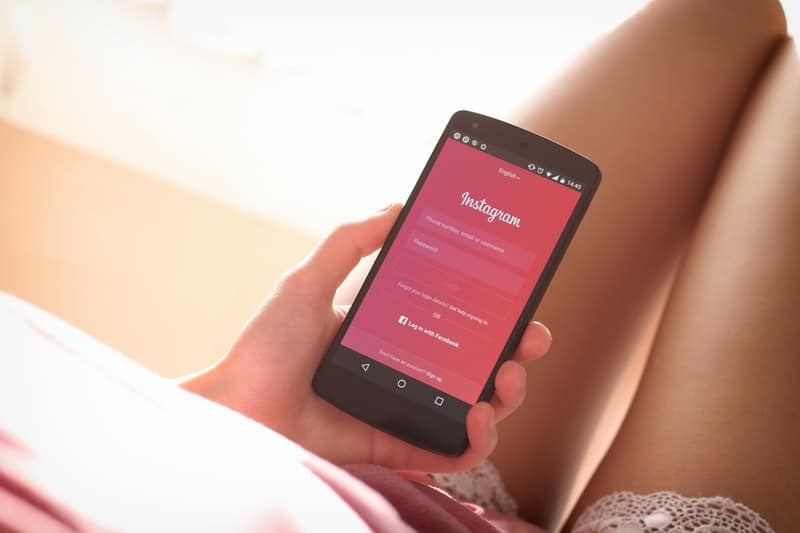
As mentioned above, social media is one of the biggest things that can ruin our mental health and make us feel like we’ll never be good enough – no matter how hard we try.
Os meios de comunicação social convencem-nos de que existem vidas perfeitas e que nós também podemos viver essa vida perfeita se começarmos a vestir-nos como eles, a comportar-nos como eles e a viver como eles.
In case you’re wondering who “them” is, I’m referring to all those (self-proclaimed) influencers.
Para evitar uma overdose de comparações, é preciso minimizar o tempo que se passa nas redes sociais e fazer outras coisas que, sem dúvida, serão mais gratificantes.
6. Aumente a sua autoestima fazendo algumas coisas boas para si ou para os outros

This is a great way to help you feel better instantly. Whenever you feel like you’re not good enough, make a list of a few things that you could do in order to help someone, or to help yourself.
The accent is on doing a nice thing that will make someone’s day or doing something nice for yourself that will make you proud of yourself.
Pode ser qualquer coisa, desde ajudar alguém nas suas tarefas domésticas até reorganizar o seu guarda-roupa.
Once you’ve done it, make sure you give yourself a pat on the back and say out loud: I did a great job! I’m freaking awesome!
7. Celebrar as grandes e pequenas vitórias

Uma das razões pelas quais muitas pessoas começam a sentir-se mal consigo próprias é o facto de só celebrarem as grandes vitórias (como acabar a faculdade, arranjar um emprego ou algo semelhante).
Esquecem-se de todas as pequenas vitórias que também são muito importantes.
Pequenas vitórias como levantar-se da cama de manhã, preparar o pequeno-almoço (estar grato pela oportunidade de preparar o pequeno-almoço), ultrapassar os seus medos, ir ao ginásio quando se sente mal, etc.
Há milhares de pequenas vitórias que nos acompanham ao longo do dia e, se prestarmos atenção a elas (e não apenas às grandes), aperceber-nos-emos do nosso poder e potencial ilimitados.
8. Desabafar fará com que se sinta melhor instantaneamente

When you feel like you’re not good enough, reprime frequentemente esses sentimentos? Do you tell yourself that what you’re feeling is not something you should share with others?
Se é esse o seu caso, pense novamente. Em vez de reprimir, deve DEFINITIVAMENTE falar sobre isto com o seu melhor amigo, um familiar ou alguém próximo.
Porque quanto mais o reprimires, mais intenso será o sentimento.
If you don’t feel comfortable talking it out with someone, there’s another method called journaling.
Escreva os seus sentimentos e pensamentos no seu diário regularmente ou sempre que lhe apetecer. Isto terá o mesmo efeito que se falasse com alguém sobre o assunto.
9. Concentrar-se sempre no processo e não no resultado

Este conceito é verdadeiramente brilhante. Quando andava na universidade, nunca pensei no dia em que iria finalmente receber o meu diploma (e ser feliz para o resto da minha vida).
Em vez disso, concentrei-me no processo. Concentrei-me em cada um dos exames e, sempre que passava num, via-o como uma pequena vitória.
Win after win after win – and there you are. When you focus on the process, you will be more present and realistic regarding your expectations.
You will not think that you’re not good enough, but you will focus on doing your best in each situation.
10. Visar os factores que desencadeiam a negatividade e livrar-se deles (ou minimizá-los)

We’ve already listed one negative trigger – social media. Each person has lots of triggers and we’re often not even aware of them.
So, it’s time to think about what things make you feel bad and have a negative influence on your psyche. Those things might be people, your beliefs, your habits, and so on.
Once you’ve identified them, focus on getting rid of them (or at least minimizing their impact).
E lembre-se: não está sozinho.
In case you haven’t been told lately, you are important, you are amazing, and you are loved. Your past doesn’t define your present or the future.
You are a brave human being who has been through a lot. You’ve fought, you’ve cried, your heart has been broken into pieces, but you’ve never given up.
You’ve never given up being you. An imperfectly perfect human being with the strength of a warrior. So, don’t you dare think that you’re not good enough!
Ver também: Este ano sei finalmente que sou suficientemente bom