
5 cosas que no aprendiste porque eres hijo de un alcohólico
Tu infancia te convirtió en lo que eres hoy. Las cosas que viste y viviste te acompañan toda la vida.
Now, that’s a beautiful thing if you remember your childhood in beautiful pictures; if you have happy memories which make your heart warm every time you think of them.
Pero, ¿qué ocurre cuando esas imágenes no son tan bonitas? ¿Qué ocurre cuando sólo recuerdas el dolor y el sufrimiento causados por quienes se suponía que debían amarte y protegerte?
It’s something you’re carrying throughout your whole life. It’s something that can consume and destroy you.
Sadly, you’re blaming yourself for not being able to fight the demons haunting you from the past. But what you fail to see is that it’s not your fault. You weren’t supposed to have that crappy childhood, and you couldn’t choose the life to live. You got what you got—an alcoholic parent.
It’s not your fault because you were the victim of someone else’s mistakes and wrong moves. You were a victim, and you are a victim now.
And because of that, your life is not easy, and it never will be. You are not a quitter, and you don’t want to continue the vicious circle. You don’t want your kids to be faced with living a life they didn’t choose.
Living with trauma such as that raises many challenges you’re faced with, which other people don’t get. Every day is a battle for you. Every situation that others might find trivial can be disastrous to you. But you’re facing it. Every day. Every hour. Every minute.
Here’s what you failed to learn, and it’s not your fault:
1. Nadie te enseñó a comportarte
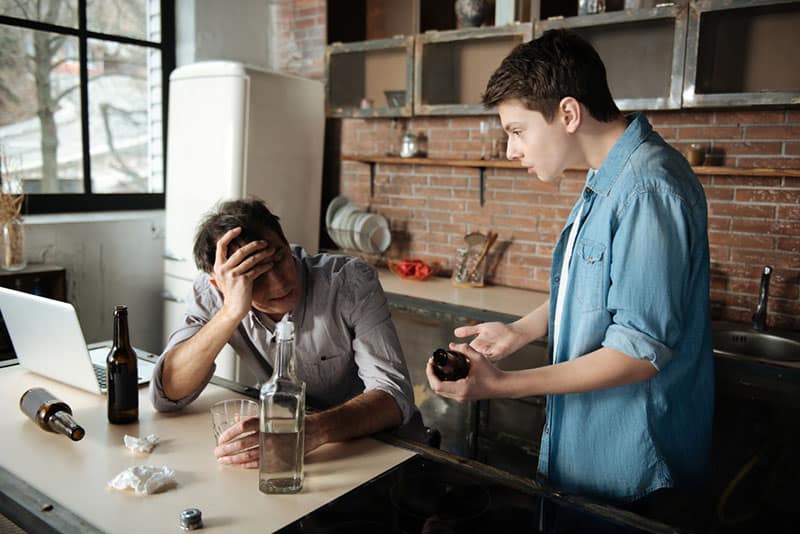
Normal social situations aren’t normal for you. A quiet Sunday evening in a normal house was about spending the evening together, playing games or watching TV.
Your Sunday evening was either being the victim of an aggressive outburst caused by alcohol or watching your parent fall asleep in the middle of the house with a bottle in their hand.
In the best-case scenario, you could walk away or hide so as not to look at the misery surrounding you. So, today when you simply don’t know how to react to some things that other people think are self-explanatory, it’s not your fault.
You didn’t have a role model to tell you what is right and what is wrong. You didn’t have anyone to look up to.
2. You never learned it’s impossible to keep everything under control

Cuando eras un niño, tu casa era un caos controlado, sobre todo si uno de tus padres era alcohólico.
La otra era intentar ocultarlo, intentar obligar a tu progenitor alcohólico a mantener las apariencias. Se invertía mucha energía y fuerza en mantener callado al progenitor sobrio.
Tenías que vivir con ello. Tuviste que pasar tu vida en ese caos controlado en el que te parecías a cualquier otra familia desde fuera, pero eras todo menos una familia desde dentro.
As a result, now that you’re a grown-up, you’re trying to keep everything under control because you couldn’t control anything when you were little.
Not only are you trying to control your life, but you’re trying to control the lives of other people. You want to fix everything, so no one gets hurt. A lot of people can’t understand your behavior, and they think of you as a control-freak.
Ninguno de ellos entiende por qué eres así. Ninguno de ellos puede relacionarse con tu dolorosa infancia y el entorno que te enseñó a ser así.
3. Nadie te enseñó a protegerte de las personas dañinas

Te falta apoyo emocional. Nunca tuviste el amor que realmente merecías. Tus padres nunca estuvieron ahí cuando los necesitaste. Eran egoístas por estar ocupados con sus propias vidas, así que te ignoraron por completo.
Buscabas atención como fuera. Puede que incluso fueras problemático porque, en el fondo, lo único que querías era que alguien te acogiera y te abrazara. Lo único que querías era que alguien te prestara atención.
As an adult, you hold on to every relationship you have, even if it’s abusive. Sadly, an abusive relationship is the only thing you were surrounded with when you were a child, so to you, it’s normal.
You’re afraid if you turn their back even on the people who take advantage of you, everyone in your life will eventually leave. And you don’t want to be left alone. Not again.
4. No aprendiste a creer en ti mismo ni a respetar tus necesidades

While growing up, your needs weren’t important. Even more, you probably watched one of your parents sacrifice their own life to help protect their partner and clean up the mess they made every time.
Esos patrones de comportamiento que se desarrollaron a una edad temprana no pueden deshacerse así como así. Con el tiempo, pueden corregirse, pero siempre estarán presentes, sobre todo en situaciones emocionales en las que las personas no pueden controlarse fácilmente.
Everyday interactions and relationships are especially hard for you. You always do what others tell you because you don’t believe in yourself. You seek acceptance, and you’re scared of conflict.
You hold on to chaotic and problematic people because that’s the surrounding you’re used to being in and because you respect everyone else except yourself and your needs.
5. Nunca aprendiste que eres más que suficiente

Cuando eras joven, nada de lo que hacías era lo bastante bueno. Es más, te enfrentabas constantemente a la crítica y la decepción.
Your alcoholic parent never acknowledged or noticed anything you did. Even if they saw it, they walked all over you because they didn’t care.
You’re very ungrateful to yourself. You don’t respect yourself, and no matter what you do, it will never be enough for you. You even verbally insult yourself because you don’t believe in yourself; because you’re insecure.
There will always be those who will try to persuade you that you are everything opposite from what you’re saying about yourself and what you think about yourself, but those words won’t find their way to you.
How can you see yourself in a positive light, when everything you’re saying about yourself is true from your perspective?
¿Cómo puedes amarte a ti mismo si nunca tuviste la oportunidad de aprender a hacerlo?