
Being Single Hurts Less Than Begging the Wrong Relationship to Become Love
Most of us were taught that being alone is the thing to fear, that a relationship, any relationship, is proof we are wanted and therefore safe. But somewhere between that lesson and real life, a quieter truth gets buried: staying in the wrong relationship can cost you more than being on your own ever would. This article is not a case against love or partnership. It is an honest look at what happens when the effort to hold a relationship together requires you to keep losing yourself, and whether the peace of solitude might sometimes be safer than the war of staying.
The title is a conditional truth, not a verdict on singlehood

Somewhere along the way, a quiet assumption took root: that being partnered is always better than being alone. Most advice, most family pressure, and most cultural scripts run in that direction. But the evidence tells a more complicated story, and it is one worth sitting with honestly before drawing any sweeping conclusions.
A 2024 observational study across 12 nations found something worth paying attention to. People in good relationships reported the highest well-being of any group, including those who were single by choice. But people in persistently poor relationships reported lower life satisfaction than single participants, including some who were single involuntarily and not happy about it. Because the study was observational, it cannot prove that the relationship itself caused every difference in how people felt.
Depression, financial stress, prior trauma, and social isolation all shape well-being too.
What the research does support, consistently, is that relationship quality matters far more than relationship status. A meta-analysis of marital quality and health found that higher-quality partnerships were linked with better physical and mental health outcomes, while low-quality relationships were associated with poorer ones. A loving, genuinely supportive partnership can be better than solitude. That matters, and this article will not pretend otherwise.
The more useful question is not “single or partnered?” but rather: does this specific relationship offer you respect, safety, trust, and room to remain yourself? Longitudinal research on entering romantic relationships shows that well-being gains depend heavily on the quality of the connection formed. A label is not a life. The texture of the relationship is what shapes how you feel day to day, and that is exactly where to look.
Love should not require you to keep disappearing

You know the rehearsal. You have a concern, something real, something you have carried for days, and before you even open your mouth you are already editing it. Softer. Shorter.
Less likely to set something off. By the time the words come out, they barely resemble what you actually felt.
That kind of constant self-editing is exhausting. And when it becomes the price of every conversation, it stops being patience and starts being self-erasure. Healthy relationships are built on mutual respect, honest communication, trust, and room for each person to maintain separate interests and a private sense of self. Boundaries are normal.
Checking a partner’s messages, demanding passwords, or treating your need for privacy as a betrayal is not trust. It is control dressed up as closeness.
A population-based study found that women in poor-quality relationships reported greater anxiety than women who were single. Not the same anxiety. More. Being partnered did not protect them; the quality of the partnership was what mattered.
That finding is worth reading twice, slowly.
Carrying the emotional load of two people while being blamed for bringing it up is not love. Apologizing to end an argument you did not start is not keeping the peace. Shrinking a need because you already know the response will be dismissal or punishment is not patience. A relationship that requires you to disappear to function is not a relationship holding you.
It is a relationship holding you down. The contrast worth noticing is this: mutual relationships involve both people adjusting over time, while a one-sided dynamic has one person perpetually adjusting and the other perpetually deciding what is acceptable. Gottman research identifies contempt, chronic defensiveness, and stonewalling as destructive conflict patterns associated with relationship deterioration. They are not just unpleasant.
Over time, they erode the very foundation a relationship needs to survive.
Look for the pattern—and take one dangerous incident seriously

Arguments happen in every relationship. Two people with different histories, fears, and needs will misread each other, snap, go quiet, and sometimes say things they regret. Conflict alone does not prove a relationship is abusive or beyond repair. That distinction matters, because collapsing every difficult moment into the same category makes it harder to see what is actually happening.
What deserves closer attention is a pattern. Contempt, the kind that curls into your name or rolls its eyes at your feelings, is different from frustration. Humiliation in front of others is different from a clumsy argument. Stonewalling that lasts for days as punishment is different from someone needing an hour to calm down.
Research from the Gottman Institute identifies criticism, contempt, defensiveness, and stonewalling as destructive patterns associated with relationship deterioration, though they should not be treated as a diagnostic checklist or a guaranteed prediction of where a relationship is headed.
Beyond those patterns, CDC guidance on psychological aggression describes behaviors including name-calling, humiliation, degrading behavior, excessive monitoring, restricting access to friends or family, controlling money or transportation, interfering with electronic communications, and making threats toward a partner, loved ones, or possessions. These are not personality quirks. They are behaviors with real consequences for the person on the receiving end.
Repeated behavior is especially informative when you are trying to understand whether something is chronic rather than situational. But a single severe incident, one serious threat, one attempt at physical intimidation, one act of monitoring that crosses a clear line, still warrants a safety assessment on its own. You do not need a long list of incidents to take something seriously. The Hotline notes that abusive behavior can escalate, and waiting for a pattern to become undeniable can sometimes mean waiting too long.
Accountability, sustained behavioral change, and genuine repair are far more meaningful than persuasive promises made in the aftermath of harm.
Ask what happens when you say no

One of the clearest windows into a relationship is not how things look on a good day. It is what happens the moment you say no. Not a dramatic no, not a confrontation. Just a quiet, ordinary no: you are too tired, you disagree, you need something different, you would rather not.
Ask yourself honestly. Can you decline without something being taken away, or without the temperature in the room dropping for days? Can you contact your friends and family without permission, explanation, or consequences? Can you keep your passwords, your messages, your private thoughts without that being treated as evidence of disloyalty?
Behaviors that restrict access to people, monitor communications, or control finances and transportation are recognized forms of psychological aggression, not relationship norms.
When conflict happens, notice what comes after. Does the disagreement lead to some form of accountability and repair, even if imperfect? Or does it lead to blame, punishment, prolonged silence used as a weapon, or a slow accumulation of confusion that leaves you questioning your own memory of what was said? If you regularly feel afraid, confused, isolated, or responsible for managing another adult’s emotional state, those feelings are information worth trusting.
Healthy relationships involve both people feeling safe to express themselves without fear of retaliation or punishment.
A boundary is not a magic switch. Setting one clearly does not guarantee the other person will respect it, and in relationships where control is already present, asserting a boundary can sometimes trigger a stronger reaction rather than a calmer one. The Hotline specifically flags that abusive behavior may escalate when a partner feels control slipping. A boundary tells the other person what you will do.
It cannot determine what they will do next. That distinction is not a reason to stay silent. It is a reason to think carefully about how and when you move, and with whose support.
Singlehood can offer room without promising instant healing

There is a version of being alone that feels like failure, and most of us were handed that version early. The empty chair at the table, the plus-one box left unchecked, the implication that without a partner you are somehow incomplete. That framing deserves to be set down.
Being single is not a consolation prize. For some women, a period of solitude is the first time in years they have been able to hear their own thoughts without filtering them through someone else’s reactions. That kind of space, where you can want what you want, feel what you feel, and make a decision without calculating how it will land, is not nothing. It can be genuinely restorative.
The 12-nation study found that involuntary singlehood was associated with lower well-being than voluntary singlehood, which matters: the experience of being alone is shaped significantly by whether it feels chosen or imposed.
Solitude and loneliness are not the same thing. Being alone can offer autonomy and emotional safety. But loneliness and social isolation carry real costs. Research linking social relationships to mental health outcomes is consistent: disconnection from community, friends, and support networks is associated with poorer mental health, regardless of relationship status.
The goal is not to withdraw from everyone. It is to stop treating one romantic relationship as the only possible source of belonging.
A meta-analysis on social support and loneliness found that perceived social support was consistently linked with lower loneliness. Friendships, family, community, therapy, and personal interests are not substitutes for romance. They are the foundation that makes any relationship, including a future one, more sustainable. You do not need to be partnered to be held.
But you do need to be connected. Singlehood can offer room to rebuild that broader web of connection, which is not the same as promising it will be painless or fast.
If control is present, make a safety plan before making a scene
Reading through the patterns in the previous sections, you may have recognized something more serious than a difficult relationship. Monitoring your phone, controlling access to money or transportation, isolating you from friends and family, interfering with your messages, making threats, or punishing you for trying to assert independence, these are not communication problems to be solved with a better conversation. They require a different kind of response.
CDC guidance on psychological aggression is clear that these behaviors, including monitoring communications, restricting movement, controlling finances, and making threats, constitute recognized forms of intimate partner violence. You do not need a bruise to have been harmed. You do not need to have a name for what is happening before you are allowed to get help.
What matters most right now is not confrontation. You do not need to announce what you are thinking, issue an ultimatum, or make a dramatic exit to begin protecting yourself. In relationships where control is already present, those moves can escalate danger rather than resolve it. The Hotline warns explicitly that abuse can escalate when an abusive partner feels control is being threatened, and that the period around separation can carry increased risk.
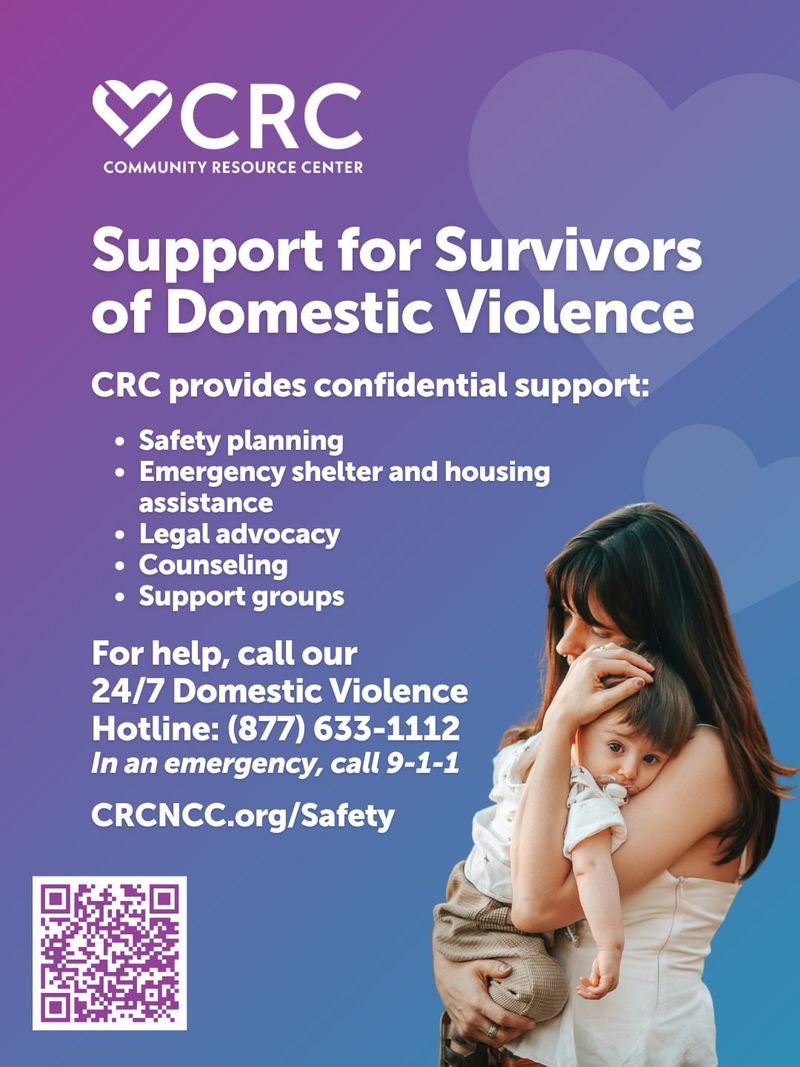
What helps most is a confidential, individualized plan that accounts for your specific circumstances: where you live, whether children are involved, your financial access, how your devices are used, whether your movements are tracked, and who in your life can be trusted. The National Domestic Violence Hotline offers personalized safety planning that covers all of these factors. Because internet activity can be monitored, consider accessing help from a device or browser that is not connected to your shared accounts.
For readers in the United States, the National Domestic Violence Hotline can be reached at 1-800-799-SAFE (7233) and also offers confidential chat support at thehotline.org. MedlinePlus guidance on domestic violence also recommends telling a trusted person, gathering important documents, and calling emergency services when in immediate danger. These are U.S.-specific resources. If you are outside the United States, a local domestic violence organization or women’s shelter can help you find services in your country.
Fear, finances, housing, children, emotional attachment, isolation, and the very real risk of escalation are all legitimate reasons why leaving takes time. You are not weak for needing a plan. You are being careful with your life, and that is exactly right.
Choose the life that lets you remain fully present in it
There is a particular kind of loneliness that does not come from being alone. It comes from sitting across a table from someone and feeling completely invisible. From lying awake next to a person and feeling more isolated than you ever did by yourself. From spending years inside a relationship and losing track of who you were before you started making yourself smaller to fit inside it.
Being alone is not the same as being abandoned. Being in a relationship is not the same as being loved. The version of you that wants real partnership, warmth, honesty, and the safety of being known without penalty, that version is not asking for too much. She is asking for the right things.
Leaving a relationship that has caused harm is not simple, and this article will not pretend it is. Grief is real. Financial stress is real. The loneliness of starting over is real, and it may require therapy, community, advocacy, or time that no single article can provide.
Gradual preparation is not the same as giving up. Taking small steps toward safety and clarity is not weakness. It is how most people actually move through hard things.
You are allowed to want love without accepting fear as its companion. You are allowed to want peace without being told that peace means silence. The relationship worth staying for is one where you can remain fully, recognizably yourself. And if that is not what you have right now, the most important question is not whether you are single or partnered.
It is whether the life you are living has room for you in it.