
He Didn’t Cheat Because She Was Better – He Cheated Because She Asked Less of Him
When you find out your partner had an affair, the first thing most women do is look for what she had that you didn’t. You scroll through her photos, replay conversations, and quietly audit yourself for whatever flaw must have made it happen. That comparison is one of the most painful traps infidelity sets, and it tells you almost nothing true about why he made the choices he made. This article is about stepping out of that trap and into something clearer.
The affair does not prove that she was better than you

Somewhere in the early days after you found out, you probably started building a case against yourself. Maybe she was younger, or seemed easier to be around, or didn’t ask hard questions. Your mind turned the affair into a referendum on your worth, and every detail you found became another piece of evidence in a trial where you were already the defendant.
That comparison feels like it should lead somewhere useful. If you could just figure out what she had that you lacked, you could understand what happened. But a systematic review of 82 studies on infidelity found that cheating cannot be explained by a single cause, and the research does not show that an affair partner’s perceived superiority drives betrayal. Infidelity is shaped by a mix of individual traits, relationship history, personal values, opportunity, and context – not by a ranking of two women.
The research on infidelity focuses on the person who chose to cheat: their attitudes toward exclusivity, their personality, their willingness to conceal behavior, and the meaning they assigned to the relationship. Studies on infidelity in romantic relationships consistently point back to the unfaithful partner’s own patterns and decisions, not to a comparison between two women.
His affair is not a verdict on your appearance, your age, your sexuality, or your value as a partner. It is evidence of a choice he made, and the most honest question is not what she had that you didn’t – it is what he was willing to do when no one was watching.
“Asked less” is a compassionate reframing, not a proven cause

The phrase at the center of this article – that he cheated because she asked less of him – is meant to offer relief, not a research finding. It is a way of redirecting your attention from her qualities to his avoidance. And for many women, that shift genuinely helps. But it deserves to be held carefully, not swallowed whole.
“Asked less” might mean several things. The affair relationship may have carried fewer shared responsibilities, less complicated history, fewer unresolved arguments, fewer expectations around honesty and repair, or the kind of novelty that makes everything feel lighter than it actually is. Those are plausible ways to understand how an affair can feel simpler – but they are interpretations, not mechanisms that infidelity research has confirmed in individual cases.
Fantasy tends to fill in the gaps. A relationship that exists in secret, outside of ordinary life, doesn’t yet have the weight of grocery lists, health scares, financial stress, or years of accumulated hurt. That lightness isn’t proof that she was more lovable – it’s proof that the relationship hadn’t been tested yet. What looks like ease from the outside is often just newness that hasn’t had time to become real.
Most importantly: asking for respect, fidelity, honest communication, and accountability is not asking for too much. Research on what shapes infidelity does not identify a betrayed partner’s reasonable needs as a cause. Your standards did not drive him away. They simply required something from him that he chose not to give.
A troubled relationship can provide context without excusing betrayal

Some relationships are genuinely struggling before an affair begins. Disconnection builds quietly over years. Conversations get shorter. Resentments stay unspoken.
Intimacy fades in ways that both people notice but neither addresses directly. None of that is comfortable to sit with, and none of it is something to dismiss.
Research on predictors of extradyadic involvement has found that low relationship satisfaction, opportunity, personal attitudes toward infidelity, and the ability to conceal behavior are each associated with a higher likelihood of cheating. That list matters, because it shows that relationship quality is one factor among several – not the whole story, and not a cause that operates on its own.
Crucially, a study of Ashley Madison users found that relationship dissatisfaction was not consistently the main driver of affairs, even among people who were actively seeking them. Some people cheat in relationships they describe as satisfying. Unhappiness in a relationship is real, but it does not make deception the only available response.
If the relationship had genuine problems, those problems could have been named. He could have started an honest conversation, suggested counseling, asked for space, or chosen to leave before pursuing someone else. Disconnection is a circumstance. Deception is a decision.
Those two things can exist at the same time, and keeping them separate is not about protecting him from criticism – it is about protecting you from carrying responsibility that was never yours to carry. The broader research on infidelity supports that complexity without collapsing it into a simple cause-and-effect story.
His explanation may shift responsibility onto you

“You pushed me away.” “You were never happy with anything I did.” “She actually listened to me.” If you have heard any version of those sentences, you already know how disorienting they feel. One moment you are the person who was betrayed. The next, you are being handed a list of reasons why you made it happen.
Research on sexual betrayal and blame attribution found that people who committed infidelity tended to place more blame on their primary partners and on circumstances than betrayed partners placed on themselves. That pattern matters. It suggests that partner-blaming after an affair can function as a way of protecting the cheater’s self-image rather than offering an accurate account of what happened.
That does not mean every complaint he raises is false. A relationship can have real, unresolved problems and still not be the reason someone chose to deceive you. The question worth asking is whether his explanation holds up when you look at it carefully: Does it account for the secrecy? Does it explain why honest conversation wasn’t tried first?
Does it shift every ounce of responsibility onto you while leaving him with none?
Explanations can be evaluated for honesty and consistency with behavior, but they should not be accepted simply because they are delivered with confidence or emotion. Infidelity research consistently points to multiple contributing factors, none of which place the cause entirely on the betrayed partner. You are allowed to hear his account, sit with it, and decide how much of it is true – without taking on blame that belongs to him.
Accountability becomes clearer when words and actions agree

After an affair comes to light, promises tend to arrive quickly. He is sorry. He will do anything. It will never happen again.
Those words matter less than what follows them, and what follows them is the part worth watching.
Accountability shows up in behavior over time. A few useful markers: Has he ended the affair completely and verifiably? Does he answer reasonable questions honestly, without defensiveness or redirection? Has he stopped blaming you for his choices?
Does he respect the boundaries you set, even the ones that are inconvenient for him? Has he sought appropriate help, whether through individual therapy, a support group, or another form of honest self-examination? No single action guarantees that repair is possible, but the pattern of his conduct tells you far more than any single conversation.
Couples therapy is one option that helps some people after infidelity. A randomized controlled trial of therapy for couples after an affair found meaningful reductions in distress for some participants, while research on behavioral couples therapy following infidelity showed improvement in some relationship outcomes alongside dropout and incomplete recovery in others. A study on Gottman Method couples therapy after infidelity found that some couples improved while others separated during or after treatment. Therapy is a tool, not a guarantee.
You do not owe anyone a commitment to repair before you know whether repair is safe or real. If joint therapy does not feel right, or if you are not ready for it, individual support is a completely valid path. A feasibility study of a group intervention for people affected by infidelity found reductions in distress and increased self-efficacy among participants – evidence that healing does not require him to be in the room with you.
Protect your health and safety before deciding what comes next
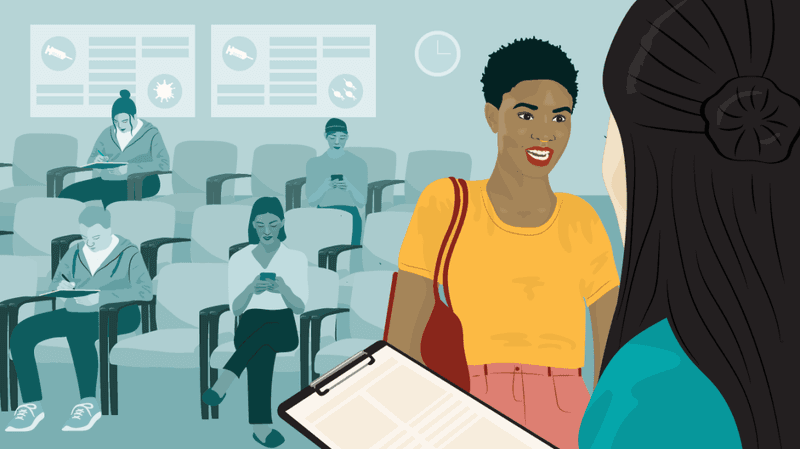
Before you make any decisions about the relationship, your physical health deserves attention. If your partner had undisclosed sexual contact with someone else, you may have been exposed to a sexually transmitted infection without your knowledge or consent. Many STIs produce no noticeable symptoms, which means you would not know without testing. CDC guidance on STI testing recommends discussing your testing needs with a health-care provider, since the right tests depend on your specific history and the types of exposure involved.
A clinician can help you figure out what makes sense for your situation.
If there is any possibility of HIV exposure within the past 72 hours, that is a time-sensitive medical situation. CDC clinical guidance on post-exposure prophylaxis explains that PEP needs to be started as soon as possible after a potential exposure, and the 2025 PEP recommendations confirm it must begin no later than 72 hours after a substantial exposure. If that window applies to you, contact a clinic or emergency room today. Depending on your vaccination history and the nature of the exposure, a clinician may also want to discuss hepatitis B screening or vaccination, which CDC STI treatment guidelines recommend for eligible adults with certain sexual exposures.
Your physical safety matters just as much. If your partner has ever monitored your phone or accounts, controlled where you go, intimidated you, threatened you, or made you feel afraid to speak honestly, that changes the advice about confrontation, joint therapy, and how you plan your next steps. The National Domestic Violence Hotline’s guide to emotional abuse describes patterns like isolation, gaslighting, coercive pressure, and blaming the partner for the abuser’s behavior – patterns that make joint conversations unsafe rather than productive.
If any of those patterns feel familiar, safety planning comes before relationship decisions. Emotional safety planning resources from the Hotline y stalking safety planning guidance offer practical steps for navigating a situation where leaving or confronting may carry risk. You can call or text the Hotline at 1-800-799-7233 to talk through your specific situation with someone trained to help.
You do not have to become easier to betray in order to be loved

Somewhere in the wreckage of an affair, a quiet fear tends to take root: that you were too much. Too demanding, too watchful, too serious about honesty, too unwilling to let things slide. The fear whispers that if you had just asked less, needed less, expected less, he would have stayed. That fear is not a fact.
It is the residue of being betrayed by someone who made his choices and then handed you the explanation.
Research on infidelity’s aftermath has found that self-blame is common among betrayed partners – and that it can deepen emotional harm rather than lead to clarity. Blaming yourself is not a neutral interpretation of what happened. It is an additional wound, and you do not have to keep inflicting it.
Your standards, your need for honest communication, your expectation of fidelity – those are not character flaws that pushed him toward someone else. They are the minimum that a real relationship requires. A partner who found them burdensome was telling you something important about himself, not about your worth.
You do not need to forgive on a timeline, reconcile to prove you have healed, or shrink yourself so the next relationship feels safer for someone who might repeat the same pattern. The decision about whether to stay, leave, or wait for more information belongs entirely to you – grounded in what he actually does, what feels safe, and what you are willing to trust. Healing is not about becoming easier to betray. It is about becoming clearer on what you deserve.