
You Lose a Good Woman the Moment You Treat Her Love Like It Will Wait Forever
Some losses happen slowly, quietly, in the space between what was asked for and what was given. A woman who has spent years showing up, adjusting, and holding everything together does not usually walk away in anger. She walks away after hope has been replaced by exhaustion, and by the steady, private realization that nothing she says seems to change anything. If any part of that sentence landed somewhere familiar, this article is for you.
The loss rarely arrives as one scientifically identifiable moment

The phrase hits like a warning shot: you lose a good woman the moment you take her for granted. Emotionally, that lands. Literally, it is more complicated. A large longitudinal study tracking relationship satisfaction over time found that relationships that eventually ended showed lower satisfaction overall and a steeper decline in satisfaction compared to those that continued.
That decline was gradual. Not one moment. Not one missed anniversary or one careless comment.
What research describes is a slow erosion, not a single breaking point. You do not stop loving someone at a precise instant that could be circled on a calendar. What changes, over months or years, is the accumulation of small experiences: the concerns that went unacknowledged, the repairs that never came, the hope that gradually stopped refilling itself.
The research also does not study a universal category of “good women” or claim that all women follow the same emotional timeline. People in relationships, whether women, men, or anyone else, respond to sustained dissatisfaction in their own ways, shaped by their history, attachment, circumstances, and what they still believe is possible. What the evidence does support is this: patterns matter more than moments.
So if you have been looking for the exact second it all turned, you may not find it. What you are more likely to find, looking back, is a long stretch of time when the relationship stopped feeling reciprocal, and you kept showing up anyway. That stretch is worth understanding, because it holds more useful information than any single dramatic scene ever could.
Repeated nonresponse may weaken her faith that speaking up will matter

Picture this: you bring up something that has been bothering you for weeks. Maybe it is the way he shuts down when you try to talk about the future, or the way your concerns get turned around until you end up apologizing. He listens, or seems to. Then nothing changes.
You bring it up again, softer this time, careful with your words. Still nothing. So you stop bringing it up at all.
That pattern, raising a concern and receiving dismissal, defensiveness, minimization, or simple non-follow-through, can gradually wear down a person’s belief that speaking up is worth it. Research on conflict recovery in relationships points to how failed repair attempts and ongoing conflict sabotage are linked to relational distress. When one partner’s attempts to reconnect or resolve an issue are repeatedly blocked or ignored, the motivation to keep trying can quietly diminish.
This is not a universal rule. Individual reactions differ enormously. Some people raise concerns more often when they feel unheard; others suppress grievances to keep the peace. Context matters too: a partner who is going through a genuinely hard season may be less responsive than usual, and that is different from a sustained pattern of indifference.
Research distinguishing withdrawal from passive immobility during conflict reminds us that disengagement can look different depending on what is driving it.
What tends to matter most is whether repair actually happens. A partner who hears your concern, acknowledges it, and follows through over time is a very different experience from one who apologizes in the moment and resets to the same behavior by Tuesday. The first builds trust. The second, repeated often enough, can quietly teach you that raising your voice changes nothing at all.
Conflict alone does not doom a relationship; destructive patterns can deepen the damage
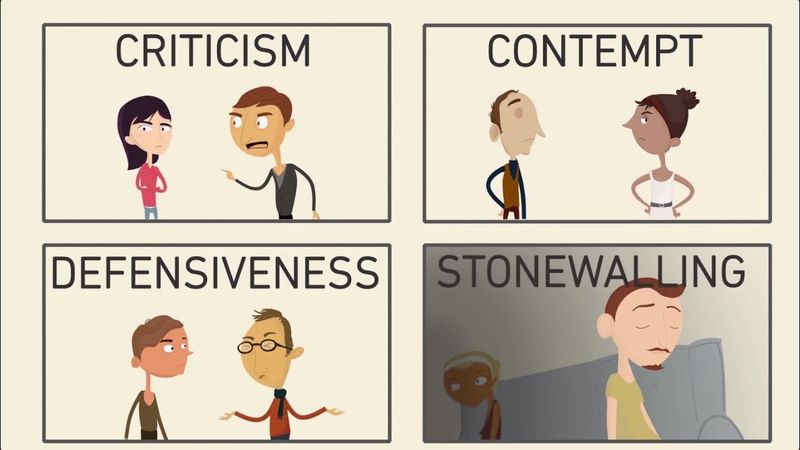
Every relationship has conflict. That is not the problem. Two people with different histories, different nervous systems, and different ideas about how to load a dishwasher are going to disagree. Research from the Gottman Institute identifies specific destructive communication patterns, criticism, contempt, defensiveness, and stonewalling, as associated with relationship deterioration.
These are not the same as ordinary disagreement, and it is worth knowing the difference.
Criticism is attacking who your partner is rather than what they did. Contempt is communicating superiority or disgust, the eye-roll, the dismissive snort, the cutting remark dressed up as a joke. Defensiveness is deflecting responsibility so completely that nothing ever lands. Stonewalling is shutting down and going emotionally unreachable.
None of these patterns guarantee a relationship will end, but their presence is associated with lower satisfaction and, over time, with deterioration.
An observational and prospective study on demand-withdraw communication found that when one partner consistently presses for discussion while the other consistently withdraws or refuses to engage, both relationship and sexual satisfaction tend to be lower, and relationship satisfaction can decline further over the following year. The study found this pattern was not limited to one gender.
Conflict frequency, severity, and whether issues stay unresolved all matter too. A single hard conversation that ends in genuine understanding is not the same as the same argument cycling on repeat for three years. Guidance from Utah State University’s relationship program points to calm breaks, active listening, repair attempts, and specific “I” statements as practical tools for non-abusive relationships. And their national extension model draws a useful distinction: a healthy pause is communicated, time-limited, and returns to the issue.
Silence used to punish or avoid accountability is a different thing entirely.
Unequal emotional and household work can make love feel lonely

You are the one who remembers the dentist appointment, the one who notices when the tension in the house needs addressing, the one who initiates the hard conversation and then manages his feelings about having it. You are also the one who planned the birthday dinner, followed up with the contractor, and checked in on his mother. None of this was assigned to you. You just kept doing it because someone had to.
A daily-diary study on emotion work in couples found that listening, encouraging, and emotionally supporting a partner was related to relationship quality measures. Crucially, the study also found that emotion work can benefit a relationship when it flows both ways. When it becomes one person’s permanent responsibility, it creates an imbalance that can quietly breed resentment.
Carrying the relationship is exhausting in a way that is hard to explain, because so much of the work is invisible. Nobody sees the mental load of managing everyone’s emotional state while also keeping the household running. A study drawing on more than 10,000 responses found that perceptions of unfairness in household arrangements were associated with relationship outcomes. The study cannot tell us that unequal chores directly cause breakups, but it does suggest that feeling like the arrangement is unfair matters to how people feel about their relationship.
The exhaustion that comes from sustained over-functioning is not a character flaw. It is a predictable response to doing too much for too long without reciprocity. And when you have been the one carrying everything, love can start to feel less like a partnership and more like a job you never applied for and cannot seem to quit.
Her silence needs context before anyone calls it an ending

When a woman goes quiet, there is a temptation to read it as indifference, or worse, as manipulation. She has stopped arguing, so she must not care. She has stopped bringing things up, so she must be fine. Neither of those conclusions is reliable.
Silence, in a relationship, can mean a great many things.
Research distinguishing between withdrawal and passive immobility during conflict is a useful reminder that emotional stillness is not one thing. It can reflect accumulated exhaustion, conflict avoidance, fear, depression, a nervous system that has been overwhelmed one too many times, or genuine disengagement. It can also be a form of self-protection when someone has learned that speaking up does not lead anywhere good.
Quiet is not always surrender, and it is not always a verdict. Sometimes it is a person trying to hold themselves together until they figure out what to do next. The practical distinction that matters is this: a healthy pause says “I need some time, and I will come back to this.” It is communicated, it has a limit, and it returns to the issue. Silence that simply makes the problem disappear, week after week, is a different experience for the person on the receiving end.
Relationship guidance from a national extension model recommends taking a genuine break when emotional arousal is too high to be productive, and then returning to the conversation after things settle. That is not stonewalling. The difference lies in whether the silence serves the relationship or erases the conversation entirely. Before calling a woman’s quiet an ending, it is worth asking what made her stop speaking in the first place.
Measure the relationship by accountability and sustained follow-through

Apologies are easy. Follow-through is the harder, more revealing thing. After an argument, after a painful conversation, after the moment he says “you are right, I will do better,” what actually happens next? That gap between the promise and the behavior over the following weeks is where you find out what you are actually working with.
A study using machine learning across 43 longitudinal couples datasets identified appreciation, perceived partner commitment, sexual satisfaction, perceived partner satisfaction, and conflict management as among the strongest relationship-specific predictors of relationship quality. These are not one-time events. They are patterns that show up, or fail to show up, consistently over time.
Commitment and appreciation, in particular, are not things you see in grand gestures. You see them in whether your partner notices what you do, whether they acknowledge when they have caused harm, whether they share the effort without being asked, and whether repair actually sticks. Research on whether communication predicts satisfaction or satisfaction predicts communication found that the relationship between the two is not a simple one-way street. This matters because it means one good conversation alone is unlikely to fix a long-standing pattern, and no single skill or exercise can guarantee change.
For relationships without abuse or coercion, there are real options worth considering: a direct conversation about specific needs, individual support from a therapist, or couples counseling. Structured programs like ELEVATE note that relationship exercises can be difficult or triggering when significant unresolved conflict is present. These are options, not guarantees. What you are looking for, over time, is whether the person beside you shows up differently after accountability, or simply waits for the discomfort to pass.
Coercion and danger require safety planning, not ordinary relationship advice
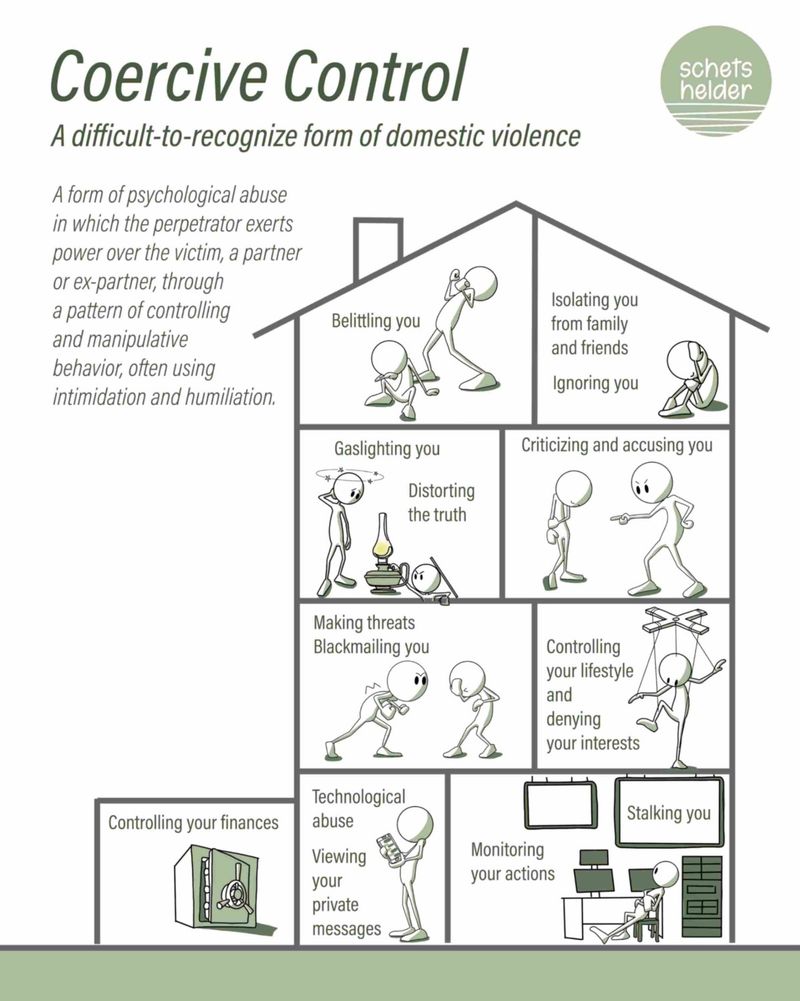
There is a line between a relationship that is painful and unsatisfying and one that involves fear, control, or danger. That line matters enormously, because the advice that helps in one situation can be genuinely unsafe in the other. Not every difficult relationship is the same, and it is worth being clear about that.
CDC guidance on intimate partner violence identifies psychological aggression as verbal or nonverbal communication intended to harm a partner mentally or emotionally or to exert control. Coercive control can include restricting access to money, transportation, friends, or family, monitoring your location or communications, and using threats or intimidation. CDC resources on psychological aggression make clear that these behaviors are not communication problems to be solved with better listening skills. They are safety concerns.
If you feel afraid of your partner, that fear deserves to be taken seriously, not reframed as a relationship challenge. Privately confronting a controlling partner, announcing plans to leave before you are ready, or attending couples counseling in a situation involving abuse can all increase risk rather than reduce it. Joint exercises can give a controlling partner more information to use against you, and the dynamics of coercive control do not respond to standard conflict-resolution tools.
A National Academies review of essential health care services for intimate partner violence notes that leaving can increase danger in some high-risk situations, and recommends individualized safety planning, risk assessment, connection to trained advocates, and ongoing support. There is no single universally safe way to leave. If any of this section resonates, please reach out to a domestic violence hotline or trained advocate who can help you think through your specific situation.
She can take her patterns seriously without proving a final breaking point

You do not need one dramatic betrayal to acknowledge that something has not been working. You do not need a clinically defined breaking point, a single moment you can point to and say “there, that is when it ended.” Exhaustion is real. Unmet needs are real. A relationship that has not felt reciprocal in a long time is worth taking seriously, even if nothing catastrophic ever happened.
Recognizing a pattern is not the same as punishing someone. Asking for more is not cruelty. Seeking clarity, whether through a direct conversation, individual support, or simply allowing yourself to see things as they are, is not a betrayal of loyalty. It is what loyalty to yourself looks like.
Love and commitment are not the same as agreeing to carry a relationship indefinitely on your own. You are allowed to want more than you have been given. And the most useful question, in the end, is not whether there was one moment that sealed the outcome. The most useful question is whether, right now, the relationship holds enough accountability, reciprocal effort, and genuine safety to be worth staying for.
That answer belongs to you.