
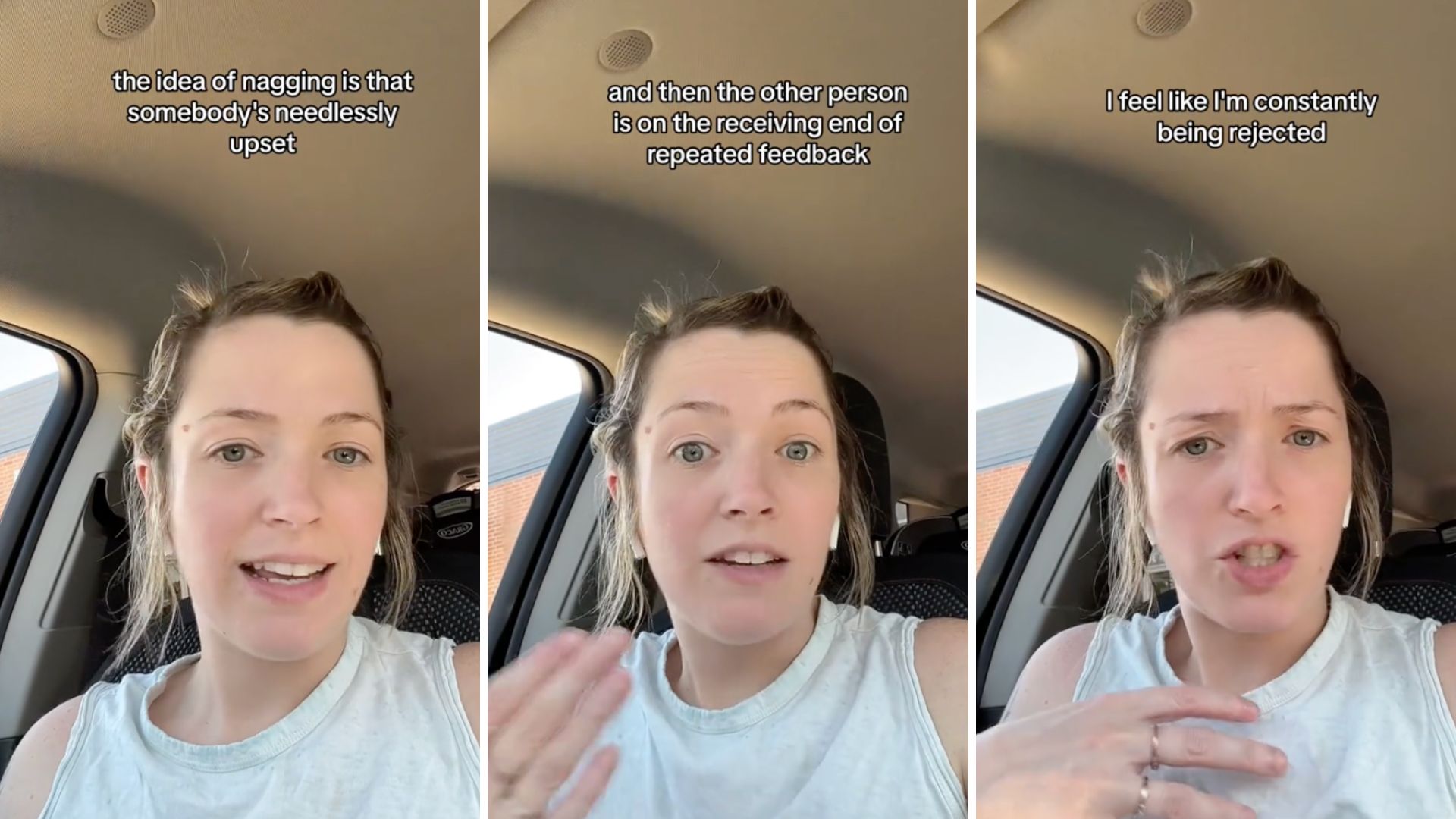
Una donna su TikTok spiega il paradosso di Nag e le sue conseguenze sulla relazione di coppia
Continuo a lamentarmi, a dirgli cosa fare. Lui continua a sbagliare, io mi lamento ancora di più e continuiamo a litigare. Vi suona familiare?
La maggior parte dei miei amici ha lo stesso problema nelle loro relazioni, e non vedono alcun modo per sfuggire all'assillo. Some of them are “the complainers” and some of them are the ones receiving complaints.
Mentre pensavo a questo grande problema delle relazioni mi sono imbattuto in un video su TikTok. L'utente chedarnchat A.K.A. Laura Danger ha aperto una discussion about “the nag paradox” e lo definisce come:
“…a setup when one person is managing and delegating and decision making and standard setting…”
Allo stesso tempo, l'altra persona ha un ruolo di supporto e aspettano che gli si dica cosa fare, che li si indirizzi e li si gestisca in casa.
Laura says this is very common, she even admits there’s the same setup in her relationship:
“Tell me what to do. How can I support you? Just let me know how I can show up for you.”
Then she explains why it’s a trap. When one person is in charge of everything and is forced to ask for help, then it becomes:
Un'offerta di connessione
She refers to Dr John Gottman’s bid theory as one of the key concepts of Il metodo Gottman e spiega che si tratta di un'offerta quando:
“… basically anytime you invite somebody to join you.”
Può essere un invito a cena o può essere un suggerimento per pulire la casa insieme o anche mostrare interesse per la sua giornata di lavoro.
Le persone possono “turn toward”, join the invitation, talk and be interested, or reject it, or even miss “the call”.
Any attempt to engage with your partner, verbal or non-verbal is considered a “bid”. You can ask questions, talk about something, or touch them. The way you and your partner respond to these Le offerte possono cambiare le relazioni.
If your response is attentive you’ll build trust, emotional connection, and intimacy, and foster deep and meaningful bonds.
Rifiutare e mancare è negativo per una relazione. If one partner constantly feels being rejected then they’ll become distant and will stop asking for a connection.
C'è poi un'altra cosa di cui parla Gottman. È il:
I quattro cavalieri dell'apocalisse (delle relazioni)

Alcuni comportamenti possono predire la fine di una relazione, ma Laura si concentra su due: La critica e la difesa sono i comportamenti principali coinvolti nel paradosso dell'assillo.
One person is always giving directions and instructions and …
“If you don’t get it right or if something else needs to be done, they have to give back feedback repeatedly.”
Mentre the second person is “on the receiving end of negative feedback” and even when they’re only suggested how to adjust the way they’ve been doing something so they do it better, it makes them feel undervalued as a person.
Cominciano a dubitare di se stessi e delle proprie capacità. Si sentono minacciati. Questo provoca difese, perché sentono il bisogno di proteggersi.
“This dynamic is a setup for that.”
After some time a partner who keeps getting negative feedback gets fed up. They decide they don’t wanna expose themself to feeling miserable, feeling like they can’t do anything right and are constantly letting down their partner.
Allo stesso tempo, il partner assillante si sente costantemente rifiutato.
Quindi la cosa giusta da fare in una relazione, come spiega Laura, è parlarne e non dare per scontato. Talk about the mental load, and agree on who’ll be in charge of making decisions.
Il fatto è che molte coppie litigano regolarmente per questo motivo e la maggior parte delle persone crede che sia normale:
“… the whole honeydew list, being told what to do, bossed around.”
Allo stesso tempo, people who are upset about all this are being called “nags” e questo mina davvero la serietà e tutte le implicazioni che questo problema può portare in una relazione.
Inoltre, l'opinione generale sull'assillo dà alle persone un'idea sbagliata di cosa sia l'assillo in sostanza:
“The idea of nagging is that somebody is needlessly upset about something that doesn’t matter.”
This is far from the truth. Laura emphasizes how household labor MATTERS as it “runs our lives”, building a connection to our partner matters and it’s not nagging. It’s the call for partnership.
“What if the bid is something I don’t enjoy?”
Oltre 1200 commenti sotto il video sottolineano l'importanza di questo argomento. Ovviamente, people can recognize their relationship dynamics in Laura’s examples.
ADHDWitch was wondering what if she doesn’t enjoy the bid? She gives an example of her partner’s bid: to drive 45 minutes in one direction with kids to get food. Non è molto piacevole, vero?
Un altro utente, casa degli animali shared the problem with her husband is basically “the nag paradox”:
“My husband thinks saying ‘how can I help’ is enough and when I say ‘you should know what needs to be done.’ He’ll say ‘make me a list.’”
Another example perfectly describes what was Laura talking about – un partner è assillante, l'altro si mette sulla difensiva:
“Then what do you do if your the “nag”?? Even pointing out this dynamic is just perceived as nagging and met with defensiveness. I’m so tired”
A user Sera described the nag paradox with a never-satisfied perfectionist – no matter how much she does, her partner always wants more:
“I feel like both people in this situation because I’ll be putting in 200% effort. and the 80% person will ask me why I’m not doing 220%.”
Per me è stata una prospettiva che mi ha aperto gli occhi. Se ci penso, tutto ha senso! Assicuratevi di seguire questo consiglio e cercate di costruire un rapporto basato sulla reattività e sulla comunicazione aperta, in modo da creare fiducia e legami forti.
Se volete approfondire il video, è disponibile qui: