Single Feels Safer After a Narcissist for Reasons Most Women Understand Too Late
Feeling safer alone than you ever did in your relationship is not a sign that something is wrong with you. For some women who have lived through psychological abuse, coercive control, or constant emotional manipulation, solitude is not loneliness. It is the first real breath of air they have taken in years. This article explains why that feeling makes sense, what it can protect, and how to let it work for you without treating it as the only way forward.
When vigilance replaces safety, being alone can feel like relief

Abuse does not always arrive with raised fists. Sometimes it shows up as a partner who tracks your location “just to know you are safe,” who dismantles your confidence with a well-timed insult dressed as a joke, who cuts you off from friends one small criticism at a time, or who makes ordinary requests feel like negotiations you are never allowed to win. These behaviors, including humiliation, monitoring, isolation, financial restriction, and threats, are recognized forms of intimate-partner violence even when no physical mark is ever left.
The CDC defines psychological aggression as verbal or nonverbal behavior intended to harm a partner mentally or emotionally or to exert control, and it counts coercive control in the same category as physical and sexual abuse. The World Health Organization similarly recognizes that intimate-partner violence encompasses emotional and psychological harm, not only physical injury. You are not exaggerating if what happened to you left no visible bruise.
Living in that kind of environment can take a real toll. A 2025 systematic review and meta-analysis of longitudinal studies found that women exposed to intimate-partner violence had significantly increased odds of subsequent depression, though researchers noted wide variation between studies and cautioned against overstating causal conclusions. Anxiety, PTSD, disrupted sleep, and psychological distress are also associated with intimate-partner abuse, though not every survivor experiences all of these, and reactions vary widely.
What many women describe after leaving is a particular kind of exhaustion that has nothing to do with laziness. It is the fatigue of constant vigilance, of reading a room every moment, of bracing for a shift in mood that could change the entire day. When that pressure lifts, quiet can feel less like emptiness and more like the first safe place you have had in a very long time. That relief is information worth taking seriously.
Why a dating pause may feel safer for some survivors

Choosing not to date for a while after a controlling relationship is not the same as giving up on connection. For some survivors, stepping back from dating removes a specific and immediate source of pressure. You no longer have to manage someone else’s moods. You no longer have to justify ordinary needs, defend small decisions, or stay alert for the moment a boundary you set quietly becomes the reason for retaliation.
That kind of relief is real, and it is worth naming without dressing it up as a universal prescription. SAMHSA’s trauma-informed care principles center safety, autonomy, collaboration, and empowerment, which means that what matters most right now is what feels genuinely safe and chosen for you, not what someone else thinks your timeline should look like.
A dating pause can also create space to notice what you actually want rather than reflexively adapting to what another person needs. Research on survivors rebuilding intimate relationships suggests that trust and new relationship-building can feel more complicated after intimate-partner violence, which is a reasonable reason to move slowly rather than push yourself back into situations that feel unsafe before you are ready.
What the evidence does not show is that singlehood is inherently healthier than being in a respectful, safe relationship, or that staying single is the required endpoint of recovery. Some survivors eventually form deeply satisfying relationships. Others find that solitude suits them, at least for now, and possibly for much longer. Both are legitimate.
The meaningful question is not whether you are dating, but whether the choices you are making feel like yours. A break from dating is not a sign that you are broken. It may simply be the first decision in a long time that no one pressured you into.
Trust may feel difficult after betrayal—but reactions vary

After a relationship built on shifting ground, ordinary things can start to feel loaded. A friend who does not text back quickly, a new acquaintance who seems very attentive very fast, someone who gives a compliment that sounds a little too polished. These moments may trigger a low hum of alarm that you cannot always explain to other people, and that alarm can feel disproportionate from the outside even when it makes complete sense from the inside.
A 2025 study comparing intimate-partner violence survivors with and without current relationships found elevated betrayal sensitivity across survivor groups, meaning some survivors showed a heightened readiness to interpret ambiguous situations as signs of disloyalty or threat. The researchers were careful to note that the study was cross-sectional, so it cannot establish that the abuse caused these responses, predict how any individual survivor will feel in the future, or determine whether later relationship quality might shift those patterns over time.
That matters, because it means your current reactions are not a life sentence. Guardedness after betrayal is not the same as being permanently damaged. It may be your nervous system doing its best to keep you safe with the information it has right now. Some survivors feel this kind of heightened alertness strongly; others do not experience it at all, or notice it fading as their circumstances change.
One practical note: if a new person in your life takes a few hours to reply to a message, that delay is not inherently evidence of dishonesty or danger. It may feel alarming in the moment, and that feeling is worth being curious about, but it is one data point, not a verdict. Reactions like this are worth bringing to a therapist or advocate who can help you sort out what is protective instinct and what might be worth gently examining over time.
Name the behavior without assuming a diagnosis
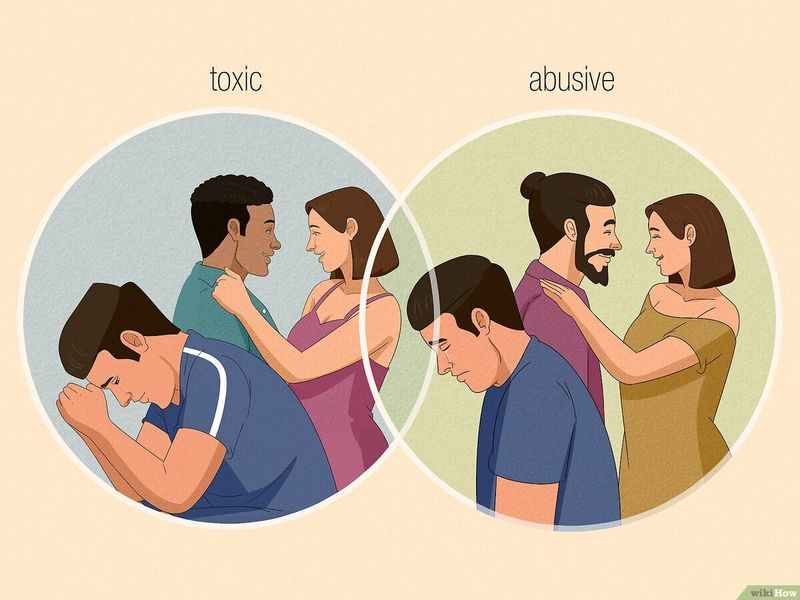
The word “narcissist” gets used a lot online, and it is easy to understand why. It gives a name to something that felt nameless for a long time: the entitlement, the way ordinary conversations became competitions, the sense that your feelings were always less important than his, the retaliation that came when you finally asked for something different. Using that shorthand is not wrong, but it is worth separating the label from a formal clinical diagnosis.
Narcissistic personality disorder is a specific condition that requires professional assessment. MedlinePlus describes narcissistic personality disorder as a pattern involving grandiosity, a need for admiration, and a lack of empathy, and the Mayo Clinic notes that personality disorders are diagnosed through careful clinical evaluation, not through behavior in a relationship alone. A person can have narcissistic traits without meeting the criteria for the disorder, and a person can be genuinely abusive without any diagnosable personality condition at all.
A 2024 systematic review and meta-analysis found only a weak, variable overall association between narcissism and intimate-partner violence perpetration, with the strongest links appearing in psychological and cyber abuse rather than physical violence. That finding does not minimize what you experienced. It simply means that narcissism does not automatically produce abuse, and abuse does not require a narcissistic diagnosis.
What you can name with confidence are the behaviors themselves: humiliation, coercive control, blame-shifting, monitoring, boundary retaliation, emotional manipulation, and entitlement. You do not need a clinical label to trust that what you lived through was real, harmful, and not something you caused. Focusing on observable patterns rather than diagnoses also protects you from the trap of trying to figure out why he did it, which is a question that rarely leads anywhere useful.
Rebuilding autonomy can make room for recovery
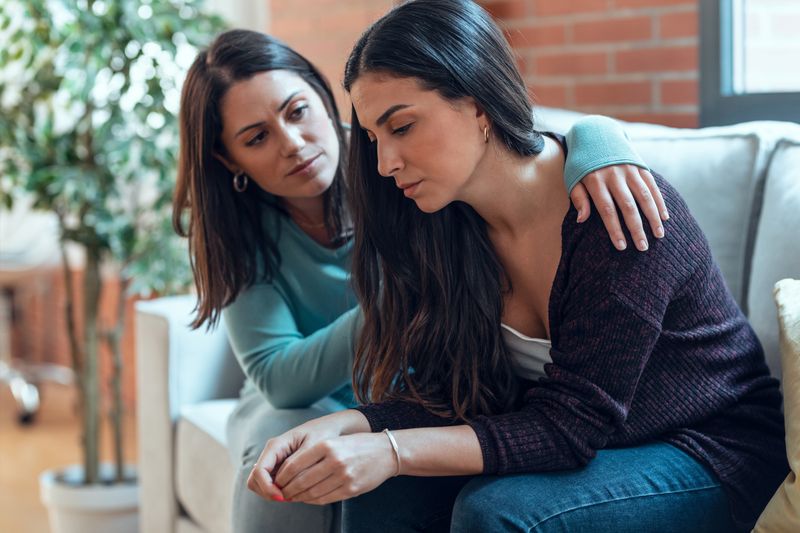
Recovery after psychological abuse rarely looks like a straight line. Some days feel clear and grounded. Others bring back old self-doubt you thought you had already worked through. That is not failure.
Qualitative research on help-seeking among domestic violence survivors describes a process of rebuilding self-esteem, social connections, trust, and independence that unfolds gradually and unevenly over time.
Reconnecting with people you trust is one of the most grounding things you can do, not because you need to explain everything, but because consistent, low-pressure relationships remind you what it feels like when someone is reliably kind. Research on social support for IPV survivors points to the protective value of community connection, particularly when isolation was part of the abuse.
Financial and social independence, where possible, can also matter more than it might seem. If the relationship involved financial control or restricted your access to money, work, or housing, rebuilding those resources is not just practical. It is part of reclaiming a life that belongs to you. SAMHSA’s trauma-informed framework emphasizes empowerment and survivor choice as foundational, which means the steps that matter most are the ones you can actually take given your real circumstances, not an idealized checklist someone else designed.
Working with a trauma-informed therapist or a domestic-violence advocate can help you sort through what you are carrying without pressure to move at a particular pace. Identifying your own values and limits, separate from what the relationship required of you, is slow work, but it tends to be the kind that actually sticks. You do not need a new romantic partner to begin reclaiming yourself. You need time, safety, and support that asks nothing in return.
Let readiness—not pressure—guide any future dating
Somewhere along the way, a message gets delivered to women who leave difficult relationships: that healing means getting back out there, that solitude is a temporary state to move through rather than a valid place to rest, that forming a new relationship is proof you are okay now. That message is worth questioning out loud.
Dating again is not evidence that you have healed, and choosing not to date is not evidence that you are bitter, stuck, or incapable of love. The research on survivors and later relationships shows a mixed picture: some survivors do form satisfying relationships over time, and supportive relationships may help some people recover. But recovery does not depend on finding another partner, and no timetable applies to everyone.
Solitude, close friendship, casual dating, a serious relationship, remarriage, or a life organized entirely around something other than romance are all legitimate ways to live. Trauma-informed principles consistently return to the same idea: what matters is that the choice is genuinely yours, made from safety and self-knowledge rather than social pressure or fear of judgment.
If you do eventually want to date, the signals worth paying attention to are not intensity, grand gestures, or how quickly someone says the right things. Watch for consistency, respect for your limits, willingness to be accountable, and the feeling that your autonomy is welcome rather than inconvenient. A relationship that fits your life should make your life feel larger, not smaller. You are allowed to hold out for that, and you are equally allowed to decide, for now or for longer, that you would rather not hold out for anything at all.
Put safety planning before closure when contact continues
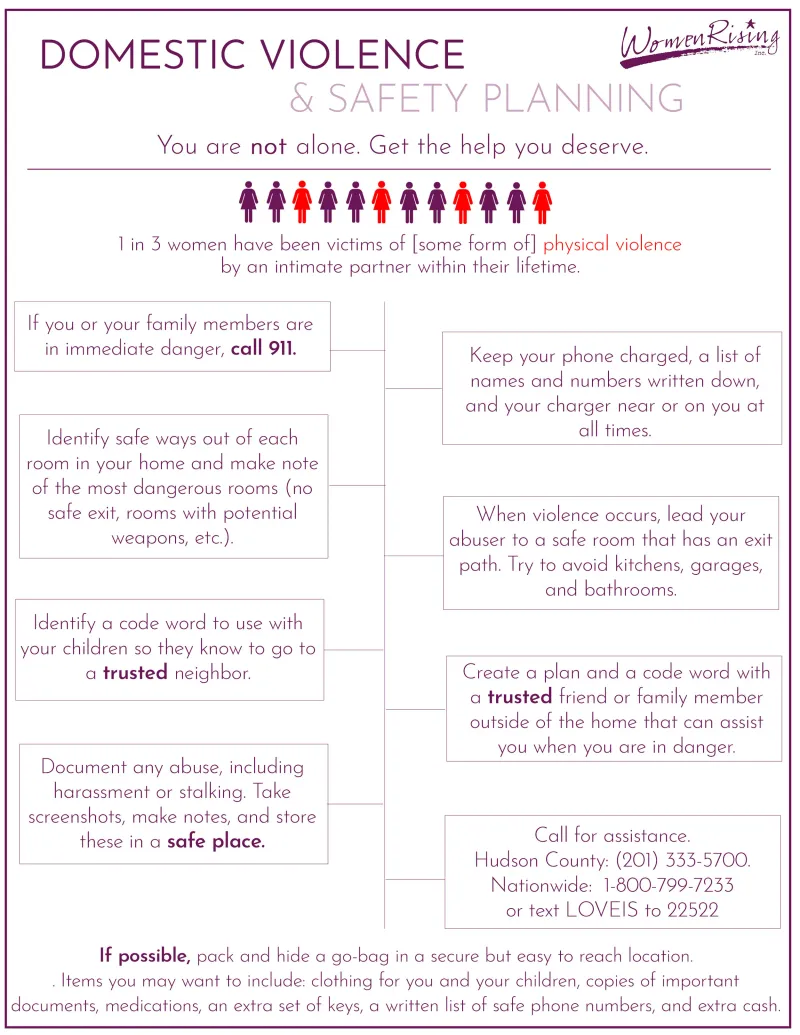
Not every woman who reads this has already left. Some are still sharing a home, co-parenting, managing shared finances, or navigating a legal situation that keeps them in contact with someone who has been controlling or threatening. If that is where you are, the advice that sounds clean from the outside, such as block him, go no-contact, or announce your plans, can be genuinely dangerous in practice.
ACOG’s clinical guidance on intimate-partner violence identifies prior threats to life, prior nonfatal strangulation, access to firearms, and escalating control as risk factors that require individualized safety assessment before any action is taken. Leaving or announcing a departure can increase danger in some circumstances, particularly when a controlling partner has made threats or has a history of retaliation. This is not a reason to stay. It is a reason to plan carefully with people who know what they are doing.
If you think your phone, computer, or internet use may be monitored, the National Domestic Violence Hotline advises using a safer device, such as a library computer or a trusted friend’s phone, when seeking help or researching options. A safety plan might include knowing where important documents are, having a trusted contact, and thinking through what you would need if you had to leave quickly.
NICE guidance on domestic violence recommends referral to specialist support services for anyone experiencing or at risk of domestic abuse, rather than relying on general counseling or couples therapy when coercive control is present. Joint counseling is not a safe starting point when one partner has been monitoring or retaliating against the other.
If you are in the United States and need support, the National Domestic Violence Hotline is available 24 hours a day at 1-800-799-SAFE (7233) or by texting START to 88788. If you are in immediate danger, call 911. These are starting points, not the only options, and a trained advocate can help you figure out what makes sense for your specific situation.
Your relationship status does not measure your healing
Being single after a controlling or abusive relationship can mean a lot of different things. For some women it is protection. For others it is grief, or freedom, or simply the practical reality of a life being rebuilt from the ground up. It can be all of those at once, and it can shift from one week to the next.
None of those meanings require justification.
What singlehood does not mean, on its own, is that you are healed, or that you are not healed, or that you are bitter, or that you are wise, or that you have learned a lesson other women are missing. Trauma-informed care measures progress by safety, autonomy, trustworthiness, and genuine choice, not by whether you are partnered or single. Research on survivors shows a wide range of outcomes and paths, not a single arc with a predictable destination.
The most honest thing this article can offer is this: you are allowed to let your relationship status be whatever it needs to be right now, without using it as a report card on your recovery. Partnership may become part of your future. It may not. What matters far more is whether the life you are building feels like it belongs to you, whether the people in it treat you with basic respect, and whether the choices you make from here come from safety and self-knowledge rather than fear or pressure.
You spent enough time in a relationship where your worth was up for negotiation. That ends when you decide it ends, not when you find someone new, and not when you stop wanting to.