
A Real Man Never Makes the Woman He Loves Beg for Basic Consideration
There is a particular kind of exhaustion that comes not from doing too much, but from asking for too little and still being made to feel like a burden. You have been patient, reasonable, and careful with your words, and somehow you still end up defending your own feelings like they need a lawyer. This article is about a simple standard: a loving partner should not make you plead, repeatedly, to be treated as someone who matters. What that looks like in real life, and how to tell the difference between a rough patch and a pattern, is worth looking at closely.
Real love is responsive, not a test of how much you can endure

Somewhere along the way, many women are taught that love requires proof of endurance. That the harder you work to keep him, the more real the relationship must be. But endurance alone is not a measure of love’s quality; it can just as easily be a measure of how long you have been willing to go without.
Relationship researchers use the term “partner responsiveness” to describe something far more grounded: feeling understood, valued, cared for, and supported by the person you are with. A 10-year longitudinal study of more than 2,000 married adults found that perceived partner responsiveness predicted meaningful increases in well-being over time, including a person’s sense of purpose, personal growth, and self-acceptance. That is not a small finding. It means that feeling genuinely seen and cared for by your partner is connected to how you flourish as a person, not just how satisfied you feel on a good day.
Responsiveness, as research on relationship quality and interpersonal goals describes it, does not mean a partner who agrees with everything you say, reads your mind, or never has a hard week. It means someone who recognizes your experience, treats it as meaningful, and responds with care rather than contempt or indifference.
A loving partner can be imperfect, distracted, or emotionally clumsy on a given Tuesday and still be fundamentally responsive. The standard here is not perfection or constant emotional availability. The standard is that you should not have to beg, repeatedly, to be treated as someone whose feelings register. One missed cue is human.
A pattern of dismissal is something else entirely, and you are allowed to call it what it is.
You should not have to turn your pain into a courtroom argument

Picture this: you tell him something hurt you. Maybe he canceled plans again, or made a cutting remark in front of people you respect, or simply stopped listening mid-sentence. You chose your words carefully. You stayed calm.
And then the conversation somehow became about whether your hurt was valid, whether you were overreacting, whether you had enough evidence to prove the wound was real.
You should not need a closing argument to get a caring response from someone who loves you. Consideration after you name a hurt does not look like perfect agreement or an instant solution. It looks like a partner who hears what you said, acknowledges that your experience is real, and responds to the specific thing you raised, rather than pivoting to his own grievances or making you defend the fact that you have feelings at all.
Research on constructive conflict resolution draws a useful distinction here: the goal is not a partner who never upsets you, but one who responds in a tailored way to your specific need when you tell him you are hurt. That tailored response can look different in different couples. Sometimes it is a genuine apology. Sometimes it is sitting with you in the discomfort rather than rushing to fix it.
Sometimes it is simply saying, “I hear you, and I did not realize that landed that way.”
What it does not look like is mockery, a subject change, or a lecture on why your feelings are statistically unlikely. A partner can disagree with your interpretation of an event and still treat your experience as something worth engaging with honestly. Those two things are not in conflict. Responsiveness is not the same as agreement; it is the decision to take you seriously.
The moment after he hurts you reveals more than the mistake itself

Nobody gets through years together without causing hurt. Misread tones, forgotten promises, words said in frustration that land harder than intended. These moments are not the real measure of a relationship. What matters is what happens in the minutes and days after.
A partner who genuinely cares about the impact of his behavior will acknowledge the specific harm, not just offer a general “sorry you feel that way” and wait for the topic to close. He will return to the issue rather than hoping it dissolves with time. He will change the repeated behavior, not just the words he uses to explain it away. Studies on conflict recovery in romantic relationships associate a partner’s constructive post-conflict behavior with more positive relationship emotions and, in some research, with greater relationship satisfaction and stability over time.
That does not mean one good repair attempt guarantees a healthy relationship, or that a single heartfelt apology erases a long pattern. The evidence points toward accountability, cooling down appropriately, genuinely returning to the conversation, and changing behavior as the meaningful markers. Not emotional perfection. Not conflict-free romance.
The partner who blames you for being hurt, who treats an apology as a transaction that closes the account, or who repeats the same behavior after clear conversations is showing you something important about his relationship to accountability. An apology that is never followed by changed behavior is not really an apology; it is a way of managing you. Research on conflict recovery also notes that how partners respond to each other’s repair attempts shapes the emotional safety of the relationship over time. When repair is consistently one-sided, or absent, that asymmetry accumulates.
You deserve a partner who treats his impact on you as something worth taking seriously, not something to survive until you go quiet again.
A pause can help a relationship; repeated disappearance can become damaging

Needing a moment to collect yourself during a heated conversation is not a character flaw. Saying “I need an hour before I can talk about this without making it worse” is honest communication, and it is different from walking out of the room and not coming back to the issue for three days, or ever.
Research on romantic relationship interaction patterns has examined what happens when one partner repeatedly raises a concern while the other consistently withdraws, shuts down, or stops engaging. This demand-withdraw pattern is associated with relationship dissatisfaction, though its effects can vary depending on a couple’s circumstances, stressors, and history. The research does not say that every man who asks for space is doing damage. It says that when one person’s withdrawal consistently leaves the other person’s concerns unresolved, that pattern tends to erode the relationship over time.
A reasonable pause looks like: a communicated limit, a credible plan to return, and an actual return. “I am too activated right now. Can we come back to this tonight?” followed by coming back tonight. That is a pause that respects both people. What becomes damaging is when the pause is permanent, unexplained, or seems to arrive exactly when you raise something important.
Withdrawal can also reflect avoidance, emotional overload, poor communication skills, or past experiences that make conflict feel threatening. That context matters and deserves acknowledgment. But context does not erase impact. If you consistently raise something real and the conversation consistently disappears, you are left carrying both the original concern and the unanswered silence.
The question worth sitting with is not whether he needed space once. It is whether he ever comes back, and whether anything changes when he does.
Consideration includes the life he expects you to carry for both of you

There is a version of being uncared for that never involves a raised voice or a missed anniversary. It shows up in the grocery list that only exists in your head. The dentist appointment you remembered for everyone. The social calendar you maintain, the school forms you track, the emotional temperature of the household you monitor without anyone asking you to.
This is cognitive household labor: the planning, anticipating, organizing, monitoring, and delegating that keeps a shared life running. A study of 322 mothers of young children found that women reported carrying a disproportionate share of this cognitive labor, and that greater responsibility for it was associated with depression, stress, burnout, and poorer overall mental health. The invisible work is not invisible in its cost. It just tends to be invisible to the person not doing it.
Consideration, in a shared life, includes showing up for the parts of that life that are boring, repetitive, and easy to overlook. Not because chores are romantic, but because carrying them alone, indefinitely, communicates something about whose time and mental bandwidth the relationship treats as expendable.
That said, couples divide responsibilities differently for real reasons: work schedules, illness, disability, income, caregiving demands, preference. Research on fairness perceptions in relationships suggests that how supported and fairly treated a person feels can matter as much as the raw count of tasks completed. The conversation worth having is not “did he do exactly half” but “does he understand what I carry, does he take genuine responsibility for his share, and does he show up without being managed into it?” If the answer to all three is no, that is not a division of labor. That is a default you were never asked to agree to.
Respect becomes nonnegotiable when your body, freedom, or safety is involved
Most of what this article covers lives in a range where honest conversations, accountability, and changed behavior can genuinely help. But there is a line where the conversation changes entirely, and you deserve to know where it is.
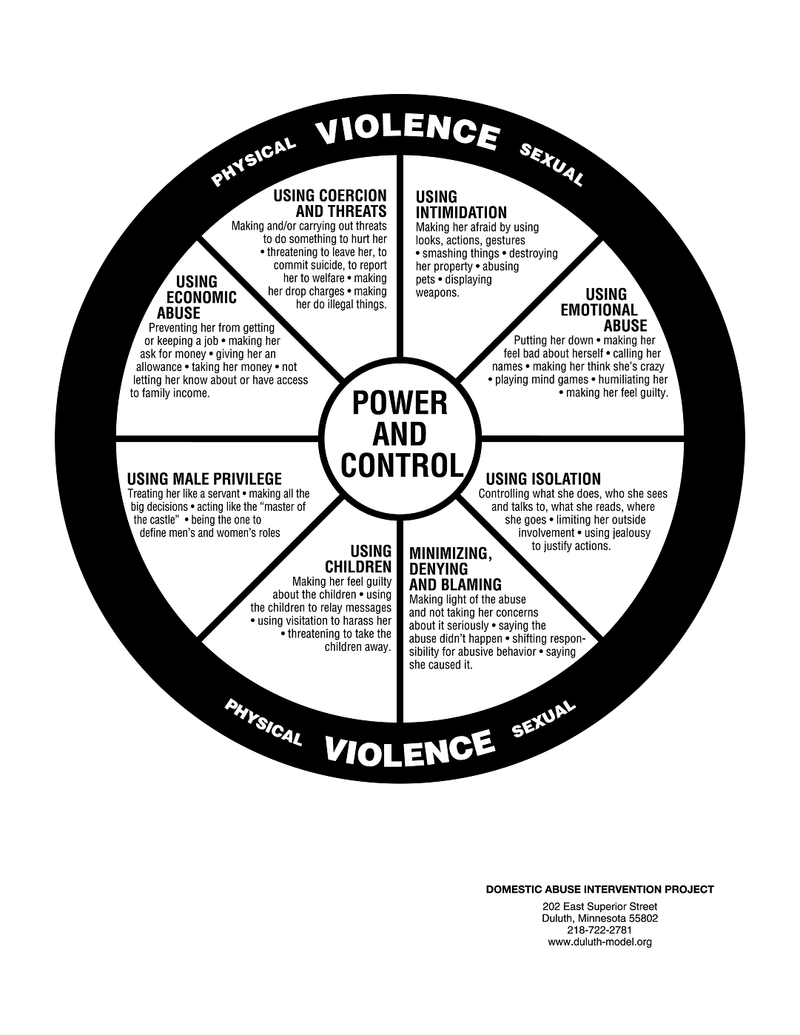
Respecting your “no” around sex is not optional. Respecting your reproductive choices is not a negotiation. Allowing you reasonable privacy, friendships, financial independence, and the freedom to move through your own life without seeking permission or facing punishment are not extras a loving partner grants you on good days. The CDC identifies psychological aggression as communication intended to harm a partner mentally or emotionally or to exert control over them, and it classifies sexual coercion, reproductive coercion, and controlling behavior as recognized forms of intimate partner violence.
When a partner uses threats, humiliation, intimidation, or isolation to manage your behavior, that is not a communication problem. That is a safety concern. Clinical guidance from ACOG on intimate partner violence and its related patient resources recognize that coercion, control, and psychological abuse carry serious health consequences and require a different kind of response than ordinary relationship conflict.
Not every disagreement about finances, friendships, or time together rises to this level. Couples navigate these areas differently, and some friction is normal. The distinction lies in whether the disagreement is worked out between two people who both get to speak, or whether one person’s choices are controlled, punished, or overridden by the other. Freedom from intimidation, retaliation, and coerced sex or reproduction are not relationship preferences.
They are the baseline beneath which no amount of love, history, or patience should ask you to go.
You can reclaim your standard without rushing into an unsafe confrontation

Getting clear on what you deserve does not require an ultimatum delivered by Friday. Clarity is allowed to arrive quietly, in the privacy of your own thinking, before you decide what to do with it.
A practical way to assess what you are actually living with is to look at four things: the pattern, not just the worst moment; the impact on your daily sense of safety and self-worth; how your partner responds when you raise concerns clearly; and whether his behavior actually changes over time, or whether the conversation just resets and the same thing happens again. One difficult season is not a verdict. A long pattern of dismissal, refusal to repair, or resistance to any accountability is more informative than any single argument.
If coercion, threats, control, or intimidation are part of what you are describing, individualized support takes priority over any confrontation. The National Domestic Violence Hotline’s emotional safety planning resources and guidance on safety planning around sexual abuse are built around the fact that you know your situation and its risks better than anyone else. Safety planning is confidential, individualized, and designed to help you think through your options without pressure to act before you are ready. You do not have to announce your clarity to someone who has shown you he will use it against you.
Couples counseling is not a universal answer, and the Hotline is direct about why: joint therapy in relationships involving coercive control can expose disclosures to retaliation and does not address the unequal power that makes abuse possible. If your relationship involves control or intimidation, individual support from a qualified professional is a safer starting point.
Basic consideration is not something you earn through more patience, more silence, or a better way of asking. You were allowed to want it from the beginning.