
Stay Single Until You Meet Someone Who Loves You with Real Effort
There is a particular kind of loneliness that does not come from being alone. It comes from sitting across the table from someone who is supposed to love you and feeling completely invisible. If that feeling sounds familiar, this article is for you. Choosing to stay single rather than accept a relationship built on one-sided effort is not giving up on love – it is refusing to trade your self-respect for the appearance of it.
Singlehood can be a choice instead of a verdict on your worth

Somewhere along the way, a quiet and unfair story took hold: that a woman without a partner is a woman who was not chosen. That being single past a certain age means something went wrong, that you are too much or not enough, that the absence of a relationship is proof of a flaw only you cannot see. That story is not true, and you already know it – even if the world around you keeps whispering otherwise.
Being alone after a relationship that left you emotionally exhausted can feel like relief before it feels like anything else. The silence stops being empty and starts being yours. The emotional labor you used to pour into someone who never quite filled you back suddenly has nowhere to go, and for a while that is disorienting. But that disorientation is not failure.
It is your nervous system finally getting to rest.
Research on singlehood shows that life satisfaction among single adults varies widely, and many single women report strong well-being and genuine contentment with their relationship status. A separate study on single women’s relationship-status satisfaction found that singlehood is not uniformly experienced as deprivation. It can be a full life, not a waiting room.
None of that means being single is universally better than being partnered. It means the question is more personal than the world lets on. What matters is whether your life, as it is right now, feels like yours. The value of waiting is not that a better partner is guaranteed to arrive.
The value is that you protect your choice, your peace, and your sense of self while you decide what you actually want – and what you will no longer accept.
Real effort reveals itself in the pattern, not the performance

Flowers after a week of being ignored are not effort. A long emotional apology followed by the same behavior three days later is not effort. A grand declaration of love at midnight, after a fight you did not start, is not effort. Those are performances, and performances are designed to be watched, not lived alongside.
Real effort looks different. It looks like someone who follows through on what they said they would do, even when it is inconvenient. It looks like a partner who makes room for your needs without needing to be reminded every time. It looks like shared labor – not just the visible kind, but the invisible kind too: the mental load of remembering, planning, noticing, and caring.
Healthy relationship guidance from Utah State University Extension consistently identifies honesty, respectful communication, mutual contribution, and a sense of safety as the markers of a relationship that actually works.
Researchers studying relationship repair and responsiveness have found that constructive conflict recovery and sustained responsive behavior are linked to better relationship satisfaction and long-term stability. Not the dramatic reconciliation. The quiet, consistent showing up afterward.
The difference between intensity and effort is this: intensity spikes and fades, but effort accumulates. A partner who tries hard in the beginning and disappears into passivity once you are committed has shown you the ceiling of what they are willing to give. Whereas someone who listens when you are upset on a Tuesday, who adjusts when you tell them something is not working, who respects the limits you have set even when it costs them something – that person is demonstrating care through behavior, not just feeling. That is what “real effort” actually means.
Not a perfect score. A sustained, observable pattern over time.
Responsiveness makes love feel like care instead of a performance

Picture this. You finally say it – the thing that has been sitting in your chest for weeks. You tell your partner that a comment they made hurt you, or that you have been feeling invisible lately, or that you need something to change. And instead of listening, they sigh.
Or they tell you that you are too sensitive. Or they turn it around so that by the end of the conversation, you are somehow apologizing. You walk away feeling smaller than when you started, and a little less sure that your feelings were real.
Now picture the other version. You say the same thing. And they stop. They ask a question.
They do not immediately defend themselves. They sit with what you said long enough to actually understand it, and then they respond in a way that tells you they heard you – not just the words, but the feeling underneath them. That difference – between being heard and being managed – is what responsiveness feels like in real life.
Perceived partner responsiveness, which involves feeling understood, validated, and genuinely cared for, is one of the strongest predictors of intimacy and relationship satisfaction. Research on responsiveness and relationship quality consistently links it to deeper connection, and longitudinal studies tracking couples through stressful transitions show that when responsiveness drops, so does relationship satisfaction, often significantly.
This does not mean a responsive partner will always say the right thing or never get defensive. Healthy relationships still include misunderstandings, hard weeks, and conversations that do not go perfectly. The question is what happens after. Does your partner come back and try again?
Do they take your hurt seriously over time, even if their first reaction was not ideal? Responsiveness is not a single moment. It is a pattern of being treated as someone whose inner life genuinely matters.
Your standards become clear when you stop confusing patience with self-abandonment

Being called patient, understanding, or low-maintenance can feel like a compliment. And sometimes it is. But sometimes it is a description of someone who has quietly learned to ask for less, to swallow hurt before it inconveniences anyone, to adjust and accommodate and wait until the waiting becomes the entire relationship. There is a version of patience that looks like grace from the outside and feels like disappearing from the inside.
A boundary is not a wall you build to keep someone out. According to the APA’s definition, a boundary is a personal limit that protects your integrity and your ability to participate in a relationship on your own terms. Setting a boundary means clarifying what you will accept and what action you may take if that limit is repeatedly ignored. It is not a demand to control another person.
It is information about yourself – and a test of whether the other person can respect you.
The moment you stop adjusting yourself to fit someone else’s comfort is often the moment you finally see whether the relationship has room for you at all. Some practical questions worth sitting with: Do their actions match their promises over time, or do the promises reset with every conversation? Can you raise hurt without being mocked, dismissed, or blamed for bringing it up? Is the care in this relationship reciprocal, or are you carrying nearly all of the emotional and practical weight?
Can you maintain your friendships, your privacy, your money, and your own identity?
These are not questions about finding a perfect partner. They are questions about whether the relationship you are in – or considering – has the basic architecture of mutual respect. Compatibility does not mean you never disagree. It means you can disagree without one person always being the one who gives ground.
Not every painful relationship is abusive, but repeated disregard still matters

Not every relationship that hurts you is abusive. That distinction matters, because collapsing the two can leave you either minimizing real harm or catastrophizing ordinary difficulty. A partner who gets defensive the first time you raise a concern is not automatically manipulative. A hard week, an unequal period of effort during illness, or a misunderstanding that took a few days to resolve is not automatically proof that the relationship is broken.
The question that matters more is what happens next.
Do they come back and acknowledge what happened? Do they make a genuine adjustment, not just a temporary one? Do the same patterns keep repeating without any real change? Evidence on relationship repair shows that the ability to acknowledge ruptures and work toward resolution is central to relationship health.
One difficult conversation tells you very little. A year of difficult conversations that go nowhere tells you quite a lot.
Gaslighting is a term that has traveled far from its actual meaning. The APA defines gaslighting as a specific form of manipulation in which someone causes another person to doubt their own perceptions, experiences, or understanding of events. It is not the same as a partner who disagrees with you, forgets something important, or initially denies doing something hurtful. When the word is used too broadly, it makes it harder to identify the real thing when it is happening.
You do not need to prove that your relationship meets a clinical threshold for it to be unacceptable. Chronic dismissal, persistent one-sided effort, and a partner who consistently leaves you carrying the emotional weight of the relationship can be genuinely damaging without ever being labeled abuse. You are allowed to decide that a relationship is not working for you based on your own sustained experience of it, not only if it crosses a line someone else has drawn.
When control enters the picture, this is a safety question—not a test of patience
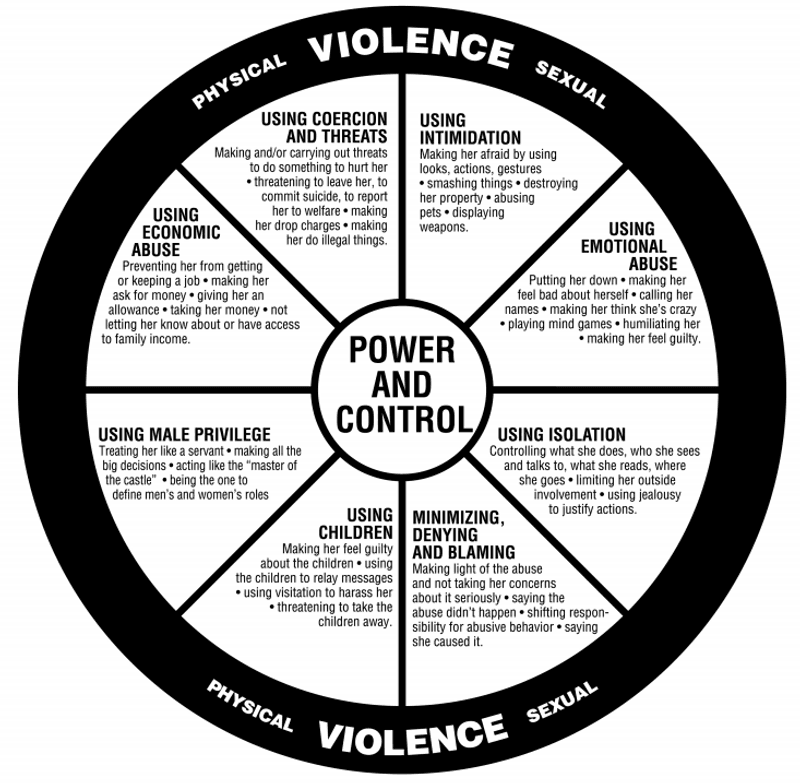
There is a difference between a relationship that disappoints you and one that frightens you. When a partner monitors your phone, tracks your location without your knowledge or consent, isolates you from friends and family, controls access to money or transportation, humiliates you privately or publicly, or retaliates when you try to reclaim any independence – that is not a communication problem. That is a safety concern, and it requires a different kind of response than patience, conversation, or couples counseling.
CDC guidance on intimate partner violence identifies psychological aggression and coercive control as including insults, threats, humiliation, monitoring, isolation, restricting finances or transportation, and interfering with communications. National survey data make clear that these patterns affect people across all demographics. These are not relationship quirks. They are tactics that systematically reduce a person’s freedom and ability to leave safely.
Leaving a controlling relationship is not always as simple as walking out the door, and suggesting otherwise can put someone in greater danger. Research and safety advocates consistently note that the period around separation can be the most dangerous time for someone experiencing coercive control. A partner who escalates when you seek independence, threatens harm to themselves or others if you leave, or has a history of monitoring your movements requires individualized planning – not a confrontation, not a couples session, and not a decision made in a single afternoon.
If any of this sounds familiar, the most important first step is reaching out to people who specialize in exactly this. The National Domestic Violence Hotline’s guidance on escalation can help you understand what you are seeing. Their personalized safety planning tool covers finances, children, pets, documents, and digital safety. If stalking is part of the picture, specialized stalking safety planning resources are available.
And if you are trying to understand what leaving an abusive relationship actually involves, that guidance exists too. You do not have to figure this out alone, and you do not have to have a perfect plan before you reach out to someone who can help.
You do not have to accept less just because love has taken time

Waiting is not the same as being left behind. Choosing not to settle is not the same as giving up. There is a version of being alone that feels like punishment, and there is a version that feels like you finally stopped shrinking yourself to fit into a space that was never quite yours. The second kind of being alone is not loneliness.
It is the beginning of knowing what you actually want.
No one can promise you that holding your standards will bring a specific person into your life. That promise would be dishonest, and you deserve honesty more than comfort. What staying single on your own terms does offer is something real: the protection of your dignity, your safety, your sense of self, and your right to choose. Studies on single women’s well-being and research on relationship-status satisfaction both suggest that singlehood, when it is chosen rather than merely endured, can be a genuinely full life.
There is a particular kind of loneliness that has nothing to do with being alone. It is the loneliness of sitting next to someone who does not see you, of over-functioning to earn love that should have been freely given, of making yourself smaller so someone else feels comfortable. You have probably already lived that version. You do not have to go back to it just because time has passed or because someone shows up offering the minimum and calling it love.
A life that does not require you to over-function to be loved is not too much to ask for. It is exactly the right amount.