

Why You Still Feel Guilty After Setting a Boundary With Your Mother
You finally said no, and then the guilt hit harder than you expected. Maybe you told her you couldn’t talk every night, or you left early from a visit, or you simply stopped explaining yourself after she dismissed your feelings for the hundredth time. Instead of feeling free, you felt like you had done something terrible. That feeling deserves a closer look, because guilt after a boundary does not automatically mean the boundary was wrong.
Guilt is a feeling, not a verdict on your boundary

Picture this: you told your mother you couldn’t come for Sunday dinner this week, and the moment the call ended, a wave of shame washed over you so fast it felt like proof you had done something cruel. You replayed the conversation, wondered if you had been too cold, and spent the rest of the afternoon trying to undo the feeling by texting an apology you did not actually owe. That cycle, saying no and then immediately convicting yourself, is one of the most exhausting places a person can live.
Guilt is an emotional response, not a reliable verdict. Research on guilt and shame shows that guilt can sometimes support prosocial behavior, but its meaning depends heavily on context. The feeling alone cannot tell you whether your boundary was appropriate, proportionate, or kind. It can reflect legitimate regret, yes, but it can just as easily reflect fear of disappointing someone, grief over a relationship you wish were different, strain from years of carrying the caregiving load, or relational expectations that were shaped long before you were old enough to question them.
So instead of obeying the guilt automatically or dismissing it entirely, try asking what it is actually pointing toward. What did you say? Was it proportionate to the situation? Did you decline participation, limit a visit, protect private information, or end a conversation that had turned disrespectful?
Or did you threaten, deceive, or try to control how she thinks and feels? Those are very different actions, and the guilt does not distinguish between them on its own.
Guilt after a boundary is information worth examining, not an order to abandon your own limit. The feeling tells you something is uncomfortable. It does not tell you that you were wrong.
Earlier control may make independence feel risky
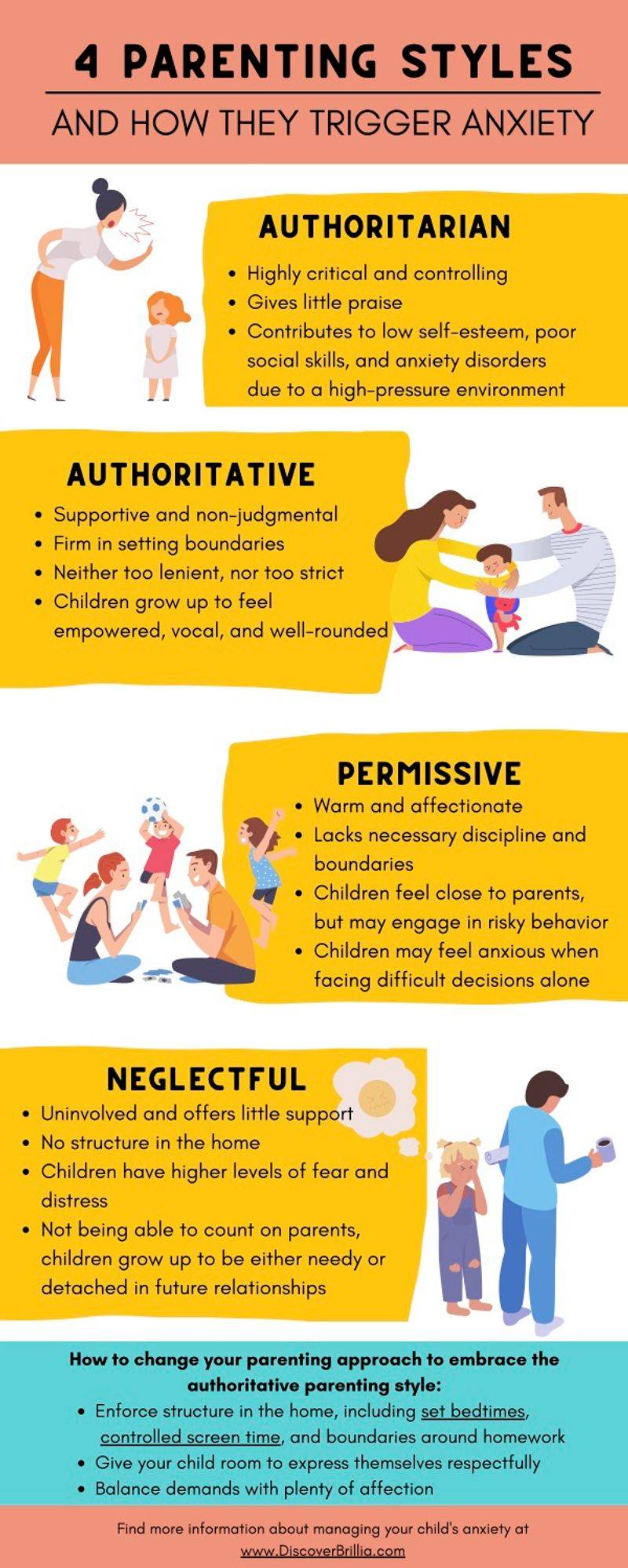
Some guilt does not start on the day you set the boundary. It was built much earlier, in small repeated moments when expressing a need, disagreeing, or simply wanting something different felt like it put the relationship at risk. Parental psychological control refers to behavior that pressures a child’s thoughts, feelings, conduct, or sense of closeness through tactics such as guilt-induction, shaming, invalidation, or withdrawal of affection. It is not always loud or obvious, and it is not always intentional.
Research on controlling parenting styles finds these behaviors are associated with reduced autonomy and adjustment difficulties in children. A separate study examining parental psychological control and long-term adjustment found that its effects can persist into adulthood, particularly in how a person relates to independence and obligation. These are associations, not certainties, and they do not confirm that your guilt was deliberately installed by someone who meant to harm you.
What they do suggest is this: if earlier interactions repeatedly connected your independence with the loss of warmth, approval, or connection, your nervous system may have learned to treat self-protection as a threat to the relationship. Saying no can feel like an act of betrayal when you were raised in an environment where your needs and the relationship’s survival seemed to be in competition. That is a possible explanation, not a diagnosis.
Reflect on whether earlier moments in your relationship felt like you had to earn acceptance by staying small, agreeable, or endlessly available. If that pattern sounds familiar, it may be one thread in the guilt you are feeling now. Other explanations remain possible too, and only you can assess which ones ring true.
Practical care and emotional responsiveness are not the same thing

She kept the lights on, made sure you had lunch money, drove you to every appointment, and never missed a school event. By any external measure, you were taken care of. So when something about the relationship still feels hollow, and when a boundary now triggers a confusing guilt that does not match the gratitude you also genuinely feel, it can be hard to make sense of what is actually happening.
Practical care and emotional care are not the same thing, and they can coexist very unevenly. A systematic review of emotional neglect research describes emotional neglect as often an omission rather than a dramatic event, involving patterns of inadequate responsiveness, recognition, or validation. Critically, it notes that emotional neglect can occur without the caregiver recognizing what they are doing. That means a mother can provide food, housing, and school support in good faith while still being emotionally unavailable, dismissive of feelings, or consistently unresponsive to her child’s inner life.
Some adults only recognize emotional gaps after a present-day conflict makes the pattern impossible to ignore. That is a possibility, not a guaranteed sequence. You may be noticing something real, or you may be reinterpreting old memories through the lens of a current conflict. Both are possible, and neither requires you to reach a verdict about your childhood right now.
What is worth doing is looking for repeated patterns rather than a single memory. Did she regularly minimize your feelings, change the subject when you were upset, or offer solutions when you needed to be heard? Those are patterns worth noticing. A single difficult moment does not define a relationship, and recognizing emotional gaps does not require labeling your mother or assuming she acted with intent to harm you.
Caregiving expectations can make a simple no feel morally loaded
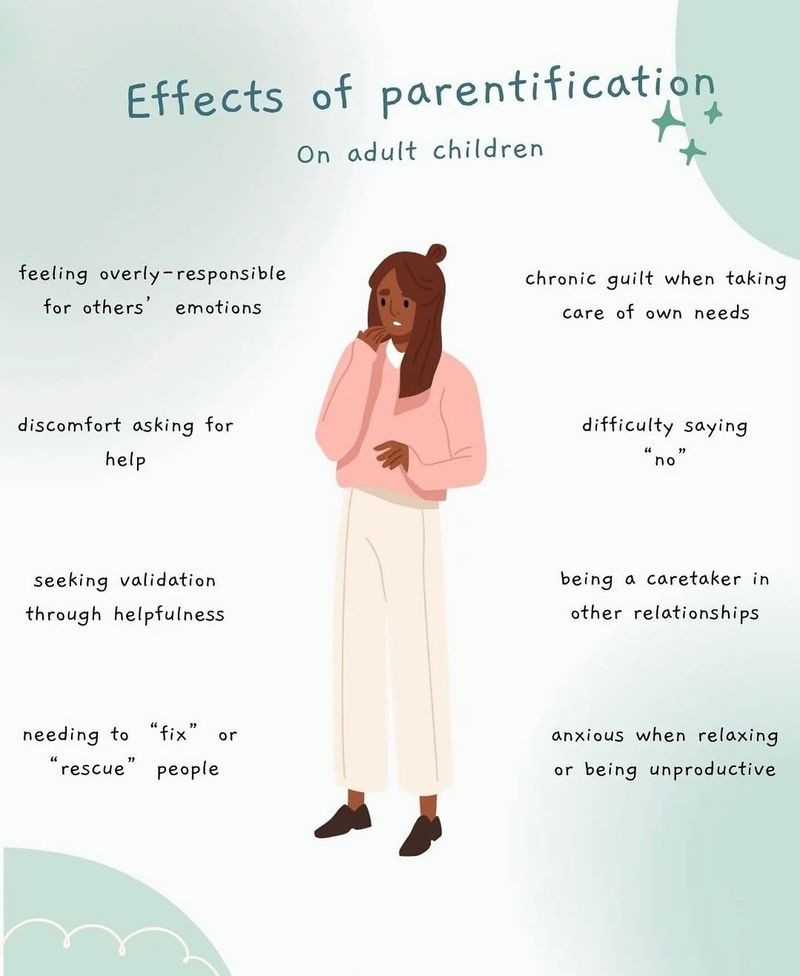
From the time you were young, you may have understood, without anyone saying it plainly, that your job was to keep the emotional temperature in the house stable. Maybe you were the one she called after arguments with your father. Maybe you managed her anxiety before your own. Maybe you were the family translator, mediator, or the person who somehow always knew when she needed something before she asked.
That kind of role has a name: parentification, or role reversal, and it involves a child carrying developmentally inappropriate emotional or practical responsibility for a parent.
A systematic review of parentification research found that children who carry these roles can serve as confidants, emotional supporters, family navigators, and practical caregivers. Outcomes are genuinely mixed: some people describe increased empathy, resilience, and closeness with siblings alongside real difficulties. Burdensome parentification, particularly when it was forced rather than chosen, is associated with stress, role overload, and later relationship challenges. Ordinary family contribution, cultural interdependence, or occasional help with household tasks is not the same thing.
When you have spent years feeling responsible for how your mother feels, a simple no can carry the weight of abandonment. You are not just declining a Sunday dinner; you are breaking a role you were handed before you were old enough to consent to it. That distinction matters, because the guilt is not really about the dinner.
A separate study of 66 midlife daughters caring for aging mothers found that guilt was positively associated with caregiver burden. That study examined active caregiving situations, not adult daughters setting boundaries, so it does not directly explain your experience. But it does suggest that caregiving expectations and guilt can be closely linked for some women in some situations, and that the link is worth examining honestly.
Judge the boundary by what you did, not only by how she reacted

Her reaction hit like a verdict. She went quiet, or she cried, or she told someone else in the family what you had done. And now the guilt has a face on it, because her pain feels like evidence that you were the one who caused harm. But a mother’s distress after a boundary is not, by itself, proof that the boundary was wrong or that the relationship has been damaged beyond repair.
A more useful test is to look at what you actually said and did. Research distinguishing autonomy-supportive from controlling parenting behavior draws a clear line between encouraging choice and acknowledging feelings on one side, and using guilt, shaming, or love withdrawal to manage someone’s behavior on the other. You can apply that same lens to yourself. Did you decline participation in something that felt harmful to you?
Did you limit the length of a visit, protect information that was yours to keep, or end a conversation that had turned disrespectful? Those are legitimate acts of self-protection.
Contrast that with threatening to withhold contact unless she apologizes, trying to control what she tells other family members, or delivering a boundary in a way that was designed to humiliate rather than inform. A boundary states what you will do, not what she must feel or believe. “If the conversation turns to criticism of my parenting, I’m going to end the call” is a boundary. “You have to admit you were wrong or I won’t speak to you” is a demand dressed up as a limit.
Her disappointment, grief, or confusion after a boundary is understandable and does not make her an abuser. The more consequential question is whether her response involves repeated coercion, humiliation, or refusal to respect your stated limit over time. One difficult conversation is not a pattern.
Use brief language and allow discomfort without turning it into proof

When you do set a limit, the words you use matter less than you think, and more than you think, at the same time. They matter less because no perfectly chosen sentence will guarantee your mother responds calmly. They matter more because vague or apologetic language can leave you unsure of what you actually said, which makes the guilt harder to examine afterward. Brief, repeatable language tends to hold up better under pressure.
A few examples that keep the focus on your own participation rather than her behavior: “I’m not able to talk about that topic.” “I can visit for two hours on Saturday.” “If the conversation turns to criticism of my choices, I’ll end the call and we can try again another time.” These are not scripts guaranteed to produce a particular outcome. A systematic review of assertiveness training programs found that structured communication interventions improved outcomes in most studied groups, while also noting limits in the evidence and the need for sustained follow-up. That research was not conducted specifically on mother-daughter boundary conversations, so treat it as qualified encouragement rather than a formula.
The emotional aftershocks that follow a boundary, the guilt, the second-guessing, the physical unease, are not proof that the boundary was wrong. They may reflect old relational learning, caregiving pressure, fear of retaliation, grief over the relationship you wish you had, or plain uncertainty. All of those are real and worth sitting with. None of them are evidence.
When self-criticism becomes relentless after a boundary, outside support can help. Research on self-compassion interventions suggests they can reduce self-criticism, though the studies are not specific to this kind of family conflict. A therapist familiar with family dynamics, parentification, or emotionally complex relationships can help you sort out whether the guilt reflects actual harm, old conditioning, or something else entirely.
When the response becomes retaliation, prioritize safety

Most of what has been covered so far applies to situations where a mother reacts with hurt, disappointment, silence, or ordinary conflict. Those responses are painful, but they are not the same as what happens when the response to a boundary includes threats, stalking, intimidation, harassment, financial retaliation, or violence. When the dynamic shifts into that territory, the priority changes from interpreting guilt to protecting yourself.
Repeated coercion matters more than a single upset reaction. A mother who refuses to speak to you for a week is expressing pain. A mother who shows up at your workplace, threatens to cut you out of a will unless you comply, contacts your children or employer to retaliate, or escalates into physical intimidation is doing something categorically different. The National Domestic Violence Hotline’s emotional safety planning guidance and its broader safety planning resources both emphasize individualized planning, trusted support, and caution when access or control is being threatened.
If stalking or monitoring is part of what you are experiencing, the Hotline also offers specific stalking safety planning that addresses documentation, digital safety, and support options. And if you are unsure whether what you are experiencing crosses into abusive territory, their guidance on recognizing relationship abuse can help you name what is happening without requiring you to have it all figured out first.
Cutting contact immediately is not always possible or safe, and it is not the only option. Caregiving responsibilities, shared finances, housing, custody arrangements, and other practical realities may mean that a gradual, supported plan is more realistic than an abrupt cutoff. What matters most is that you are not navigating a dangerous situation alone.
You can keep a respectful boundary without solving every feeling

Protecting your time, your privacy, your dignity, or your emotional steadiness does not make you a disloyal daughter. A boundary can be respectful and still make your mother unhappy. Both things can be true at the same time, and the coexistence of those two truths is not a reason to abandon the limit.
You do not need a diagnosis of your mother, a confirmed theory about your childhood, or certainty about every explanation before you are allowed to say no. You are permitted to hold uncertainty about old memories while still recognizing that a current pattern is not working for you. You can feel compassion for her feelings and still keep your limit. You can leave room for the relationship to change over time without promising to endure what is hurting you right now.
A boundary does not require permanent estrangement to be valid, and estrangement is not the inevitable endpoint of self-protection. Research on parent-adult child estrangement suggests it is a complex, often changing process, not a final destination. Some relationships shift, some repair, and some stay distant. None of those outcomes are failures on your part.
If the guilt stays loud and persistent, a therapist who understands family conflict, trauma, or emotionally complicated dynamics can help you sort through what the feeling is actually tracking. Guilt that keeps returning is worth examining with support, not just enduring alone. You are not cruel for having a limit. You are human for feeling the weight of it.
Those are two different things, and learning to hold both without collapsing into either one may be the quietest, most honest work you do.