Strong Women Stop Calling It Love When a Man Still Acts Like a Boy
Some relationships feel like love from the outside but feel like a second job from the inside. You give, you manage, you repair, and you wait, while the person across from you offers affection and promises but rarely shows up with both. For many women, there comes a quiet, clarifying moment when they realize they have not been in a partnership, they have been running one. That moment is worth paying attention to.
Love can feel empty when one person carries the relationship

Raising a concern and then spending the next hour managing the emotional fallout of raising it is a particular kind of exhaustion that is hard to explain to anyone who has not lived it. You bring up something that hurt you, and before the conversation finds any ground, you are suddenly the one apologizing, softening your words, or reassuring him that you are not attacking him. The original issue disappears, and you are left holding both your pain and his discomfort.
Some women eventually name this pattern for what it is: not a rough patch, not a communication style difference, but a recurring arrangement in which one person does the emotional work for two. Feeling cared for, understood, and genuinely responded to is not a luxury in a relationship. It is the foundation of one. Longitudinal research on partner responsiveness links this sense of being seen and appreciated to relationship quality and, over time, to a person’s broader well-being.
That does not mean every hard season is a verdict. Grief, job loss, illness, and parenting pressure can make even a caring partner temporarily less available, and one difficult year is not the same as a stable pattern. The question worth sitting with is not whether things were ever hard, but whether, when you raised a concern, your partner stayed in the room with it or made you manage his reaction while your own went unaddressed.
Love can be real and still not be enough for a partnership that keeps asking only one person to carry it. This is not a statement about all women or all men. It is an honest observation about what happens when responsiveness, care, and mutual effort are consistently one-directional.
The invisible work can turn partnership into one-sided labor

Picture a Tuesday afternoon. You have already texted the dentist, noticed the permission slip deadline, mentally planned a dinner that works around two dietary preferences, and registered that he seems tense without knowing why yet. He has not noticed any of it. When dinner is on the table, he says, genuinely and warmly, that you are amazing.
And somehow that feels lonelier than silence would have.
This is what researchers sometimes call the mental load or household management burden, and it extends well beyond physical chores. A study of 393 partnered U.S. mothers found that feeling disproportionately responsible for monitoring family needs, including children’s emotional adjustment, was associated with role overload, lower personal well-being, and lower satisfaction with the partner. The invisible layer, the anticipating, the tracking, the worrying, carries its own weight.
Couples do not need identical task lists to have a fair partnership. What they do need is for both people to notice, not just help when asked. Research on emotion work in relationships finds that greater equality in emotional support and care is associated with higher relational satisfaction for both partners, which means this is not a complaint about men generically. It is an observation about what happens when one person’s contribution stays invisible and unacknowledged long enough to become the expected baseline.
Persistent, unwanted, and unacknowledged inequality in household and emotional labor can erode well-being and relationship satisfaction over time. That is not a moral judgment about who caused it. It is a practical description of what that weight does to a person, and to a relationship, when it is never shared.
What happens after you speak matters more than a beautiful apology

A well-delivered apology can feel like relief, at least for an hour. He says the right things. He looks genuinely sorry. You feel your shoulders drop.
And then, two weeks later, the same thing happens again, in almost exactly the same way, and you find yourself wondering whether the apology was ever really about you or whether it was about ending his discomfort with your hurt feelings.
Accountability is not a speech. It is a sequence of behaviors that can be observed over time. A practical way to watch for it: Does he acknowledge the specific harm without immediately pivoting to his own grievances? Does he show genuine interest in understanding your experience?
Does he help figure out how to prevent it from recurring? Does he follow through after the conversation ends? And does his behavior actually change in a way that holds over weeks and months, not just days? Research on commitment and relationship maintenance supports sustained behavioral follow-through, not declarations, as the meaningful indicator of investment.
The apology that never changes anything is not an apology. It is a pressure release valve. A partner who is genuinely accountable accepts the discomfort of being wrong without requiring you to manage his feelings about it. He does not make you perform forgiveness quickly so the tension will lift.
He sits with the impact of what happened and participates in repairing it.
This framework is not a clinical assessment. It is a way of watching what actually happens after the hard conversation ends. Studies on behavioral change in relationships consistently find that sustained, observable change over time is a more reliable signal than emotional intensity in the moment. You are allowed to want that.
It is not an unreasonable standard.
Withdrawal is not always cruelty, but permanent avoidance has a cost
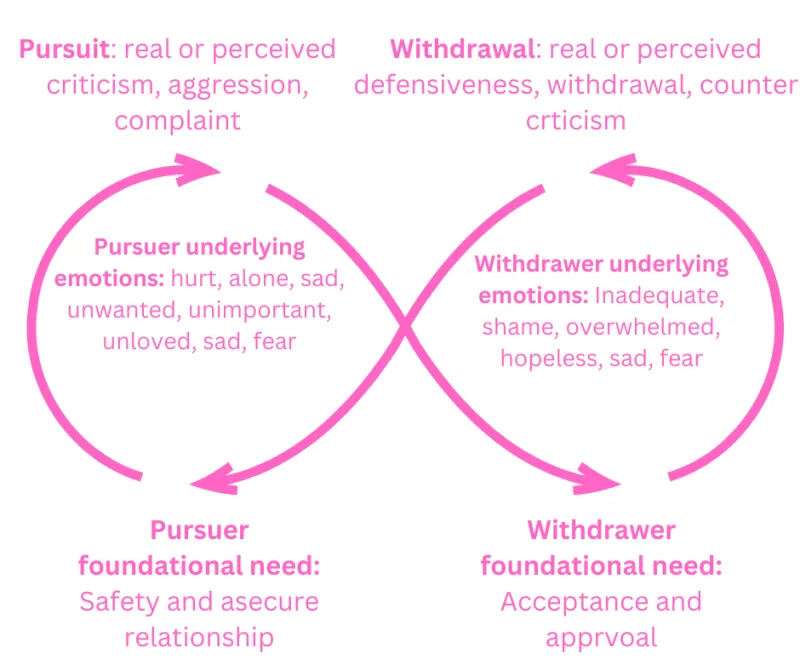
Not every silence is a weapon. Sometimes a person goes quiet because the conversation has escalated to a place where nothing useful will come out of either of them, and stepping away is the most honest thing they can do. A communicated pause, one where he says something like “I need an hour to calm down and then I want to come back to this,” followed by actually coming back, can be a healthy way to prevent a fight from doing more damage than the original problem.
The pattern that wears a relationship down is something different. It looks like disappearing for days when a concern is raised. It looks like mockery or contempt when you try again. It looks like silence held long enough that you eventually drop the subject entirely, not because it was resolved, but because you got tired of being the only one willing to stay in the room.
Research on demand-withdraw patterns consistently associates this dynamic with lower relationship satisfaction and less actual behavioral change, and further findings confirm that when one partner persistently pursues and the other persistently retreats, both people tend to feel worse over time.
The question is not whether he needed space. The question is whether the space was for both of you, or only for him. A cooling-off period that protects the conversation is different from a disappearance that protects him from having it at all. Context shapes how withdrawal affects outcomes, and not every pause is manipulative.
But when the pattern reliably ends with your concern being abandoned rather than addressed, that is worth naming clearly.
A hard season deserves compassion; a permanent refusal to grow deserves clarity

Grief does not make someone emotionally immature. Neither does depression, a brutal work period, a sick parent, a newborn, or a health crisis. Real life reduces capacity, sometimes significantly, and a partner who is less available during a genuinely hard stretch is not the same as a partner who has decided that growth is optional. Compassion for a difficult season is not weakness.
It is what people who love each other actually do.
The distinction that matters is whether limited capacity is temporary and acknowledged or whether it has quietly become a permanent exemption. Longitudinal research on stress and relationship behavior confirms that difficult external circumstances interact with how both partners behave, and that a single hard period is not a reliable predictor of a relationship’s long-term pattern. One brutal year is not a life sentence for either of you.
The difference between a hard season and a permanent pattern is whether your partner can name what is happening, participate in figuring out a workable arrangement, and accept appropriate help when it is needed. Growth does not have to be fast or flawless. It does have to be real. You can hold space for someone’s struggle while also noticing whether they are moving at all, even slowly, or whether the struggle has simply become the reason nothing ever changes.
You are not asking for perfection. You are asking for good-faith participation, and that is a reasonable thing to ask for in a partnership between two adults.
When a boundary brings fear, the problem may be coercive control
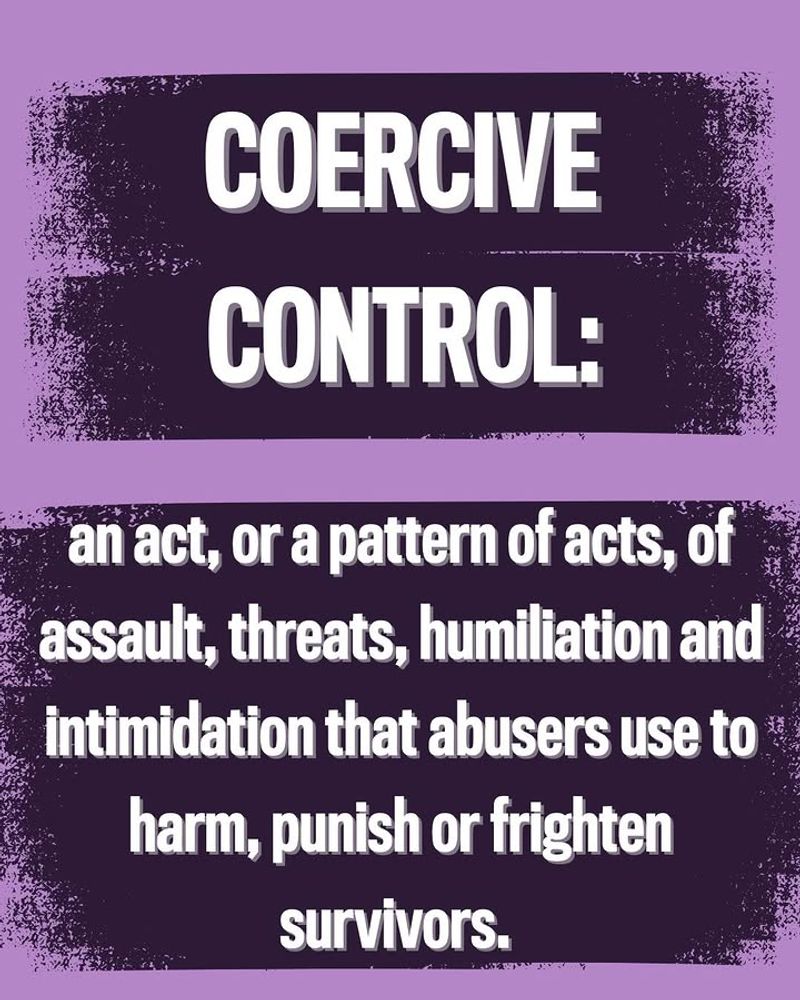
Naming what you need in a relationship and having your partner respond with contempt, threats, or silence designed to frighten you back into compliance is not a communication problem. It is a different category of thing entirely, and it deserves to be treated as one.
Ordinary relationship conflict, even serious conflict, does not involve fear. It involves frustration, hurt, misunderstanding, and sometimes real anger, but both people retain the ability to speak, to leave the room, and to return without consequences. When raising a concern puts you at risk of intimidation, humiliation, sexual pressure, financial restriction, isolation from people you trust, monitoring of your movements or phone, or any form of physical harm, the issue has moved beyond emotional immaturity. The CDC defines psychological aggression as communication intended to harm a partner mentally or emotionally or to exert control, and the WHO framework on intimate partner violence includes emotional abuse and controlling behavior within its definition of harm.
You should not be told to test a partner’s reaction by confronting him or announcing your plans when doing so could put you in danger. That advice applies to relationships where the stakes are hurt feelings. It does not apply to relationships where a boundary could provoke retaliation. Statutory guidance on coercive control identifies the period around separation as potentially high risk, which means leaving is not always the immediate or safest step.
If any of this feels familiar, the most useful resource is confidential support from people who specialize in exactly this. The National Domestic Violence Hotline’s emotional safety planning guide is built around the reality that leaving is not always immediately possible, and that safety planning can begin wherever you are right now. Their guidance on talking about relationship abuse can also help you figure out who in your life is safe to confide in. Joint counseling is not appropriate where fear or coercive control is present; survivor-centered support is a safer starting point.
You can stop calling endurance devotion

At some point, patience stops being a virtue and starts being a story you tell yourself so the weight feels meaningful. You stayed because you loved him. You adjusted because you wanted it to work. You absorbed, managed, and tried again because that is what you believed love required.
None of that makes you foolish. It makes you someone who took the relationship seriously, probably more seriously than it was being taken on the other side.
Research on partner responsiveness and well-being supports what you may have already felt: being genuinely seen, appreciated, and responded to matters. A reasonable standard for a partnership is not perfection. It is mutual willingness to listen, repair, participate, and keep trying, from both people, not just from you.
You do not need to prove your love by carrying what two people were meant to share. You do not need to soften your standards to make them more comfortable for someone who has not met them. And you do not need anyone’s permission to decide that a relationship asking you to manage both people’s feelings, responsibilities, and growth is asking too much.
Love can be genuine and still fall short of partnership. Knowing the difference is not giving up. It is finally seeing clearly.