The Quiet Moment a Woman Realizes She Has Been Enduring Too Much for Too Long
For many women, the realization that something is deeply wrong does not arrive in a single, dramatic flash. It builds quietly over months or years, one small surrender at a time, until the weight of it becomes impossible to ignore. Understanding how that gradual recognition works, and what it may be telling you, can be one of the most important things you do for yourself.
Recognition Can Begin Quietly After Years of Explaining the Pattern Away

Awareness rarely arrives the way people imagine it will. There is no single argument, no thunderclap moment that suddenly makes everything clear. For many women, recognition builds the way water shapes stone: slowly, through repetition, until the pattern finally becomes impossible to explain away.
You may have spent years finding reasons for what was happening. He was stressed. You had said the wrong thing. The timing was bad.
Each individual incident looked small enough to excuse, and so you excused it, because that felt like the reasonable, loving thing to do. UK statutory guidance on controlling or coercive behaviour specifically notes that individual incidents may appear minor in isolation while the overall pattern creates fear, dependence, loss of freedom, and serious disruption to daily life. Abuse can develop gradually, and a person may not initially recognize or name it as such.
That is not a failure of intelligence. It is not proof that you were naive or in denial. It reflects something true about how these patterns work: they rarely announce themselves. CDC guidance on intimate partner violence describes psychological aggression as communication intended to harm a partner mentally or emotionally or to exert control, and notes that it may occur without any physical violence at all.
The quiet moment the title describes may feel like a sudden knowing, but it is usually the surface of something much longer. It is the point at which accumulated evidence finally outweighs every explanation you have been carrying. What matters is not how long it took to get there. What matters is what you are willing to hear now that you are paying attention.
Keeping the Peace Can Teach You to Silence Yourself

At some point, you learned to edit yourself before you even opened your mouth. You thought about how he might react. You softened the request, then softened it again, then decided it was not worth bringing up at all. You apologized before finishing the sentence.
You stopped asking for things you genuinely needed because the asking had started to cost too much.
That is self-silencing: suppressing your thoughts, needs, feelings, or values to avoid conflict, rejection, retaliation, or the loss of the relationship. Research on self-silencing and depressive symptoms in women links this pattern with lower self-esteem, anxiety, interpersonal dependency, and depression, though much of that research is correlational rather than causal. The association is real and worth taking seriously, even if no single study can draw a straight line from one cause to one outcome.
Not every act of holding back is unhealthy. Ordinary relationships involve compromise, timing, and choosing battles. Studies on silencing-type behaviors in women’s relationships suggest that some women suppress themselves strategically, to avoid conflict or retaliation, and that context matters enormously. Staying quiet once is a choice.
Staying quiet always, about everything that matters to you, because speaking feels dangerous, is something different.
When self-silencing becomes your permanent posture in a relationship, you can begin to feel absent from your own life. You are present in the room but not in the conversation, present in the relationship but not in your own feelings. That slow disappearance does not happen all at once. It happens one swallowed sentence at a time, until one day you realize you cannot remember the last time you said what you actually thought.
You May Be Carrying the Relationship’s Emotional Work Alone

Emotion work is the invisible labor of a relationship: listening when someone needs to talk, smoothing over tension before it becomes a fight, encouraging a partner through his low moods, anticipating what he needs before he asks, and carrying the ongoing project of keeping the emotional atmosphere at home livable. When it is mutual, that kind of care can genuinely strengthen a relationship. A daily diary study on gender, emotion work, and relationship quality found that this work can support closeness when both people participate in it, but that unequal or nonreciprocal emotion work is associated with relational dissatisfaction and inequality.
Picture this: you have had a hard week. You are tired in the kind of way that goes past sleep. You sit down to tell him that, and within two minutes the conversation has shifted to his frustration at work, his worry about money, his need for reassurance. Your exhaustion is still sitting there, unaddressed, while you nod and listen and help him feel better.
This happens once and it is just a bad night. This happens every time and it is a pattern.
Being praised as strong, capable, and endlessly patient can quietly mask the fact that no one is asking how you are doing and meaning it. The praise feels good at first. Over time it starts to feel like a job description you never agreed to. You are allowed to notice when care in a relationship runs mostly in one direction, and you are allowed to find that exhausting without immediately knowing what to call it.
The Key Difference Is What Happens When You Ask for Room

Every relationship has friction. Two people will not always want the same thing, move at the same pace, or respond to needs with perfect consistency. A partner who loves you may still dislike a boundary, feel hurt by it, or need time to understand it. The question is not whether he always agrees with you.
The question is whether you can safely express a need and still retain the freedom to act on it.
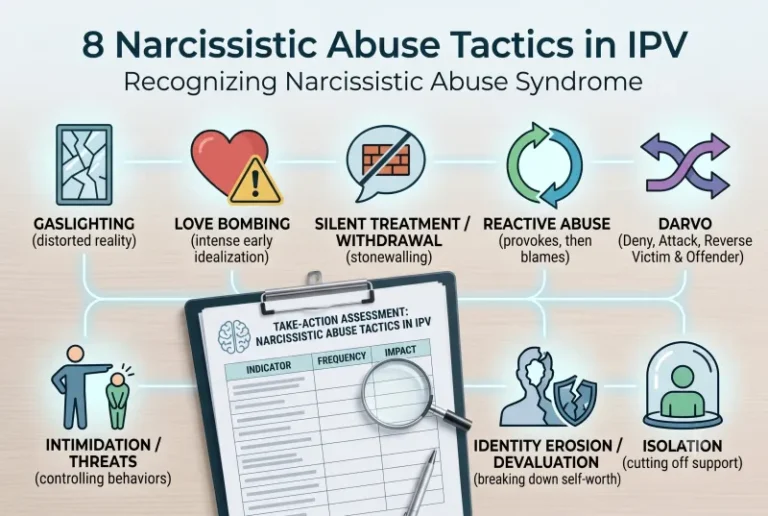
The APA definition of a boundary describes it as a limit that protects a person’s integrity and participation in a relationship. A healthy partner may push back, ask questions, or express disappointment, and then let you make your own choice. That is a disagreement. What looks different is a repeated pattern: humiliation when you ask for space, threats when you say no, isolation from people who support you, monitoring of your movements or phone, financial restriction that limits your independence, or punishment in some form when you exercise any autonomy at all.
WHO documentation on intimate partner violence identifies controlling behaviors as including insults, humiliation, intimidation, threats, isolation, monitoring movements, and restricting access to money, employment, education, or medical care. These are observable behaviors, not character assessments or diagnoses.
This article uses the concept of coercive control as a general behavioral framework, not a legal definition. Legal meanings, protections, and available services vary significantly by location, and what applies in one country or jurisdiction may not apply in another. The behaviors described here are worth taking seriously regardless of what legal category they do or do not fall into. Feeling exhausted or resentful in a relationship is painful and worth addressing, but exhaustion alone does not confirm a pattern of control.
The distinction lies in whether your freedom, safety, and dignity are consistently at risk when you try to exist as yourself.
Repeated Reality-Undermining Can Make You Doubt Your Own Experience

You remember something happening. He says it did not. You bring up how a comment made you feel. He tells you that you are too sensitive, that you misunderstood, that you always do this.
You walk away from the conversation less sure of what you experienced than when you walked in. Over time, that uncertainty can settle into something deeper: a habit of second-guessing your own perceptions before you even voice them.
The APA definition of gaslighting describes it as manipulating someone into doubting their perceptions, experiences, or understanding of events. That is a specific and serious pattern, and it is worth distinguishing from ordinary disagreements, differences in memory, or a partner who sometimes gets things wrong. A mixed-methods systematic review on gaslighting in gender-based violence found that the term is inconsistently defined and is often conflated with general manipulation, which is worth keeping in mind when applying it to your own situation.
What matters is not the label. What matters is the effect. If you consistently leave conversations feeling less certain of your own experience, more confused about what is real, and more dependent on his version of events to understand your own life, that pattern is worth paying attention to. A single disagreement or faulty memory is not the issue.
A repeated dynamic in which your confidence in your own perceptions is steadily undermined is something else entirely.
The focus here is on observable impact: how you feel after these interactions, whether your sense of reality feels stable, and whether expressing your experience is met with curiosity or with correction. You do not need to prove intent or assign a diagnosis to take your own experience seriously.
Your Body and Mind May Reflect What You Have Not Yet Named

Sometimes the body starts speaking before the mind is ready to listen. You are sleeping badly, or sleeping too much. A low-grade headache has become your baseline. You feel anxious without a clear reason, or you feel nothing at all, which is its own kind of alarm.
These experiences are worth taking seriously, even if you cannot yet connect them to a specific cause.
A CDC-linked national study on intimate partner violence and health conditions found associations between psychological aggression and poor mental health and chronic pain in U.S. adults. These are associations, not proof that any one relationship caused a particular diagnosis. Depression, PTSD symptoms, and chronic health problems appear more frequently in people who have experienced intimate partner violence, but that connection does not mean every symptom has one cause or that every person’s experience follows the same path.
WHO research on the health consequences of intimate partner violence notes that effects can persist after abuse ends and may become more severe with repeated incidents or multiple forms of abuse. Recovery is possible, and the picture is not fixed. What the research supports is this: long-term emotional strain in a relationship can show up in your body and your mental health in ways that are real, even when you have not yet found words for what is causing them.
Research on psychological mediators between emotional abuse and depression suggests that the impact of ongoing emotional harm can be cumulative and complex. You do not need a diagnosis or a clear medical explanation to trust that your distress is real and that it deserves attention. Your body has been keeping score even when you were too busy managing everything else to notice.
Recognition Does Not Require a Dangerous Announcement Tonight

Seeing the pattern clearly does not mean you have to act on it tonight. That distinction matters, especially if you are in a situation where announcing your awareness or suddenly changing your behavior could put you at greater risk. Recognition is a beginning, not a deadline.
The National Domestic Violence Hotline’s guidance on emotional safety planning recommends personalized planning whether someone remains in a relationship, is preparing to leave, or has already left. There is no single script that fits every situation. What matters is that you are not planning in isolation if you do not have to be.
A trusted friend, a counselor, a local domestic violence advocate, or a confidential hotline can help you think through options that fit your specific circumstances. Practical considerations in any safety plan may include access to identification documents, medications, financial information, legal papers, emergency contacts, transportation, housing options, and the needs of any children involved. The Hotline’s guidance on leaving an abusive relationship walks through many of these considerations in detail.
Digital safety is also part of this. If devices, accounts, or search histories may be monitored, take that seriously before searching, documenting, changing passwords, or storing any evidence. Documentation can be valuable, but it should be kept somewhere the other person cannot access, and it should not be gathered in a way that alerts them. The Hotline’s information on relationship escalation explains that asserting independence or confronting controlling behavior can sometimes increase risk rather than resolve it.
Confronting a partner as a test of honesty or as a way to get closure is not a safety strategy. The Hotline is direct on this point: there may be no communication approach that makes an abusive partner stop or genuinely validate your experience. Separation or increased independence can raise danger in some coercive relationships, which is exactly why individualized support matters more than a general plan.
You Can Stop Calling Self-Abandonment Strength

Somewhere along the way, enduring became your identity. You were the one who stayed calm, who held it together, who loved through the hard parts without complaint. People admired that about you. Maybe you admired it about yourself.
But there is a difference between strength and the slow disappearance of your own needs.
Love, loyalty, patience, and compassion are real and valuable. They do not require you to surrender your safety, your dignity, your voice, or your sense of what is real. Motherhood, marriage, and long commitment do not come with a clause that says you must shrink to make someone else comfortable indefinitely.
Recognizing this late is not a failure. It means you were paying attention to your values, your commitments, and the people who depended on you. It also means you are paying attention now, and that is not nothing. You are allowed to begin from exactly where you are.
You do not have to carry an entire relationship on your own to deserve peace. One honest moment of recognition, however quiet it arrives, can be the beginning of a supported, careful process of choosing yourself, at whatever pace is safe for you.