

Cheating Doesn’t Just Happen – It Starts With a Choice He Made Earlier
When someone you trusted tells you it “just happened,” something inside you already knows that isn’t the whole story. Affairs rarely appear out of nowhere like a storm – they often grow from a series of smaller moments, decisions, and silences that added up over time. Understanding how infidelity actually works won’t take away your pain, but it can help you stop carrying blame that was never yours to hold. You deserve clarity, not confusion.
Infidelity does not follow one universal script

Somewhere in the middle of trying to make sense of what happened, you may have heard the phrase “it just happened” – as if desire arrived like a weather event and swept away all judgment. The truth is more complicated, and more useful, than that.
Research defines infidelity as sexual, romantic, or emotional behavior outside a primary relationship that violates an agreed or understood boundary. That boundary matters because a methodological review of infidelity research found that what counts as cheating varies across couples – sexual behavior is judged most consistently as a violation, while emotional closeness, online contact, and affectionate behavior are judged more ambiguously. Consensual non-monogamy is different precisely because all partners are aware and have agreed; the deception is what makes betrayal a betrayal.
Desire or opportunity may arise without a fully formed plan. Attraction, a moment of weakness, alcohol, or a situation that escalated can all play a role in how things begin. But pursuing contact after that moment, crossing the line that was understood between you, continuing involvement, and concealing what happened – each of those steps involves a person making a choice.
The fact that something felt irresistible does not mean it was uncontrollable. A 2021 study on infidelity predictors found that lower commitment, permissive attitudes, and access to alternative partners were among the most relevant factors – none of which erases agency. There is no single script for how an affair unfolds, but there is almost always a point where a person decided to keep going rather than stop. That decision belongs to them, not to you.
Rationalization can make a boundary feel negotiable

Before a boundary is crossed, something else often happens first: the boundary gets quietly renegotiated – inside one person’s head, without you knowing.
Psychological research on moral disengagement shows that people can justify dishonest behavior in ways that feel entirely reasonable to them in the moment. Research on cheating and moral disengagement found that after acting dishonestly, people could distance themselves from their own moral standards – minimizing the consequences, shifting responsibility onto circumstances or a partner’s behavior, and even forgetting the discomfort they felt. The internal story becomes: “She doesn’t understand me,” or “We’ve been disconnected for months,” or “This doesn’t count as real cheating.”
Compartmentalization is a related move. A person may keep the outside connection in a completely separate mental space – telling himself it has nothing to do with his relationship with you, that it is not hurting anyone, or that he will end it before it becomes serious. That mental separation is not a sign that the relationship is meaningless to him; it is a sign that he has found a way to hold two realities at once without fully feeling the weight of either.
None of these mechanisms are inevitable or universal. Not everyone who crosses a line has run an elaborate internal script. But rationalization – in whatever form it takes – is one of the ways a person can reduce their own discomfort with betrayal enough to keep going. The important thing for you to know is that when rationalization is at work, the story you eventually hear may sound coherent and even sympathetic, while missing the part where he decided the boundary did not apply to him anymore.
Context may open the door without making the decision

Relationship dissatisfaction, distance, poor communication, and loneliness are real. They are worth talking about, working through, and taking seriously. What they are not is a transfer of responsibility.
Research using machine learning to identify infidelity predictors found that lower relationship satisfaction, weaker dedication, and access to alternative partners were among the strongest associated factors. Studies also identify negative communication patterns, permissive attitudes toward infidelity, and opportunity as relevant contributors. These findings describe what may make an affair more likely – they do not describe what made it inevitable, and they certainly do not make you responsible for someone else’s decision to deceive you.
Impulsivity and alcohol are also part of the picture for some people. Research on extradyadic sex across different relationship types identifies situational and individual factors – including opportunity and attitudes toward fidelity – that can influence behavior. A moment of lowered inhibition can contribute to how something begins. But even then, what happens next – whether contact continues, whether the truth is told, whether you are protected – still involves choices made with a functioning mind.
Context opens a door. It does not walk through it. Every relationship has friction. Many couples go through disconnected seasons, hard conversations that don’t happen, and stretches of feeling unseen.
Most of those couples do not involve deception. The difference is not the difficulty of the relationship – it is what a person decides to do when the door appears.
You were not responsible for managing his fidelity. Shared problems can exist in a relationship without either partner earning the right to betray the other. Whatever was hard between you was yours to face together. The deception was his alone.
Concealment can turn a private act into an ongoing burden

Once something is being hidden, a whole second life begins – not necessarily dramatic or elaborate, but persistent. Keeping a secret has a weight that does not stay still.
Research on secret-keeping found that fear of discovery, the perceived cost of telling the truth, and repeated reminders of the secret predicted greater preoccupation with it over time. In plain terms: the more someone worries about being found out, the more mental energy the secret demands. That preoccupation can show up as distraction, irritability, emotional distance, or an odd new attentiveness – whatever it takes to manage the gap between what is real and what is being presented to you.
Concealment does not always mean elaborate planning. For some people, it is as simple as deleting a message, offering a vague answer about where they were, or changing the subject when you ask something that gets too close. A study on disclosing sexual secrets found that keeping more secrets was associated with lower relationship satisfaction, while disclosure was often neutral or positive in that sample – suggesting that the secret itself, not just the act, takes a toll on a relationship’s quality.
What you may have been sensing is real, even if you couldn’t name it. That feeling of being slightly outside your own relationship, of reaching for someone who seems just out of reach, is sometimes what living next to a concealed secret feels like from your side of it.
One thing worth saying clearly: inconsistencies in someone’s story, a changed phone habit, or a new guardedness are worth noticing – but they are not proof of anything on their own. They are signals to pay attention to your own instincts, talk to someone you trust, and seek support. They are not an invitation to hack accounts, track locations, or investigate in ways that could put you in a vulnerable or unsafe position.
Calling it a mistake does not answer what happened

“It was a mistake” is one of the most common things a person says after being caught. It can be true. It can also be incomplete in ways that matter enormously.
A mistake can mean three very different things: an accidental error, an impulsive act made without full forethought, or a deliberate wrong choice that the person now regrets. The word itself does not tell you which one applies. What the word “mistake” cannot do, on its own, is settle whether the behavior was accidental, whether it continued, whether it was hidden, or whether the person accepts responsibility for the harm it caused.
The questions that actually help you understand what happened are more specific. What boundary existed between you, spoken or understood? What conduct occurred, and did it happen more than once? Was there active concealment – deleted messages, invented explanations, lies told directly to your face?
And when the truth came out, did the person take responsibility without redirecting blame toward your shortcomings, the state of the relationship, or the circumstances?
Research on moral disengagement describes how a person can minimize the consequences of dishonest behavior in ways that feel, to them, like a reasonable account of events. A version of “it was a mistake” that is followed by blame-shifting, minimizing, or a focus on your reaction rather than their conduct may be less an apology than another form of the same avoidance.
Infidelity does not prove a relationship was already over, and it does not prove that love was never real. People can feel genuine attachment and still act dishonestly. Love does not erase accountability, and the presence of love does not make deception acceptable. What matters most is not the label applied to what happened – it is what the person does with the truth once it is out.
Your distress deserves support, not a diagnosis

Finding out – or even suspecting – that someone you trusted has betrayed you is not something you just move past. What you feel in the aftermath is not an overreaction, and it is not a sign that something is wrong with you.
Research on partner affair discovery and depression found that discovering a partner’s infidelity was associated with poorer relationship adjustment and, in some samples, major depressive episodes. A separate body of betrayal-trauma research found that negative responses from others after disclosure – being dismissed, blamed, or disbelieved – were associated with more severe trauma symptoms, while general positive social support was linked to fewer symptoms. These findings do not mean every person who experiences betrayal will develop depression or PTSD. Distress varies widely, and outcomes depend on many factors including the support available and the circumstances of discovery.
What many women describe in the weeks after discovery includes a loop of thoughts that won’t stop, sudden surges of anger followed by exhaustion, difficulty sleeping, a shaky sense of self, and a strange kind of grief for the version of the relationship they thought they had. All of that is a reasonable response to an unreasonable situation. You are not falling apart – you are processing something that was genuinely destabilizing.
Shame is often part of the experience too, which is one of the cruelest parts of betrayal. You may find yourself wondering what you missed, what you did wrong, whether you were not enough. Those questions are understandable, but they belong to a story that puts the responsibility in the wrong place. The distress you feel is evidence of how much you invested in something real.
It is not evidence of a flaw in you.
Talking to a therapist, a counselor, or even one trusted person who will not minimize what you are going through can make a real difference. You do not have to process this alone, and you do not have to have all the answers before you reach out.
Choose truth-seeking steps that protect your safety
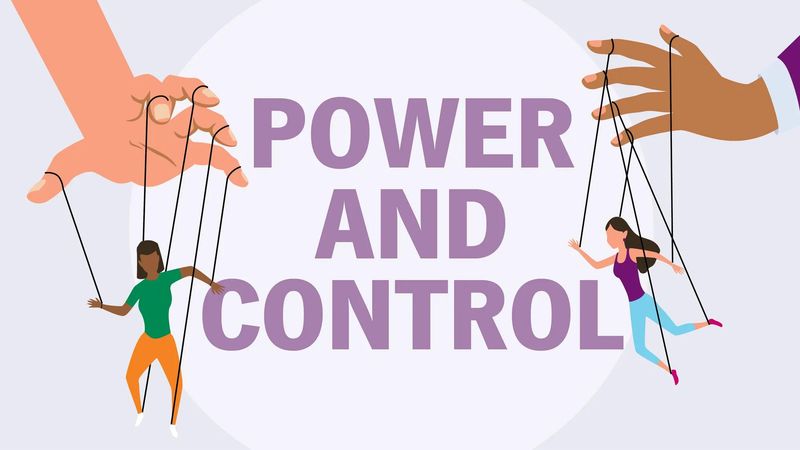
Wanting answers is not weakness – it is a completely natural response to feeling like the ground has shifted under your life. But how you look for those answers matters, especially if the relationship has any history of control, intimidation, or emotional pressure.
CDC guidance on intimate partner violence describes psychological aggression as verbal or nonverbal behavior intended to harm or control a partner, including blame, coercion, gaslighting, threats, and manipulation. If your partner has responded to your questions, concerns, or boundaries with anger, threats, contempt, or behavior that makes you feel unsafe, that context changes what the next step should be. Confrontation can escalate danger in relationships where control is already a pattern.
Before deciding whether to raise what you know or suspect, consider whether you have someone confidential to talk to first. The National Domestic Violence Hotline offers individualized safety planning for people navigating situations where a partner’s reaction is unpredictable or potentially harmful. If there is any concern about your physical or emotional safety, safety planning around sexual abuse and relationship betrayal is a resource worth knowing about before any conversation happens.
On the subject of disclosure more broadly: research on the impacts of secrecy versus telling the truth found that disclosure can be beneficial in some circumstances and harmful in others, depending significantly on how the recipient responds. There is no single right answer about whether to confront, when to confront, or what to demand. Your safety and your wellbeing come first.
One practical step that often gets overlooked: if there is any possibility that your partner had sexual contact outside the relationship, a conversation with your own healthcare provider about STI testing is worth having. CDC guidance on STI testing notes that many infections have no symptoms, and the appropriate type of testing depends on your specific exposure, practices, symptoms, age, and other individual factors. Asking your doctor is not an accusation – it is taking care of yourself, which is exactly what this moment calls for.
His explanation does not define your worth

Whatever story he told – that it meant nothing, that you pushed him there, that it was a moment of weakness, that you were too distant or too present or too something – none of it is a verdict on who you are.
Another person’s decision to deceive you says something about their choices, not about your value. You do not need to audit your appearance, your warmth, your effort, or your love to understand what happened. Relationship problems may be something two people share, but the decision to lie, hide, and violate a boundary belongs entirely to the person who made it.
You are allowed to take time. You are allowed to seek therapy, lean on support, ask hard questions, and sit with uncertainty before deciding anything. Staying, leaving, or taking space to figure it out are all valid – and none of them need to be decided today under the pressure of his explanation or your own grief.
You were not too much, and you were not too little. You were a person who trusted someone, and that trust deserved to be honored. The clearest thing you can walk away from this article knowing is that his choices were his to make and his to own – and your worth was never part of the equation.