When You Get Sick, You Finally See What the Relationship Was Built On
Getting sick is supposed to be one of those moments when the people who love you show up. But for some women, illness or exhaustion does the opposite of bringing a partner closer – it exposes a gap that was always there, quietly hidden beneath the daily routine of doing, giving, and managing everything. If your partner’s patience disappeared the moment you stopped being fully functional, you are not imagining things. What you may be seeing more clearly now is a pattern that was harder to spot when you were well.
When illness makes the relationship’s exchange easier to see

Picture this: you’ve had a brutal week. A migraine that won’t quit, a grief that sits on your chest, or a diagnosis that changes everything. You ask your partner to handle dinner. You cancel the weekend plans you’d been keeping together.
You stop being the one who smooths things over, keeps the house running, and asks how his day went. And something shifts – not in a loving way.
His mood changes. He becomes distant, irritable, or quietly resentful. The help he offers feels transactional or comes with a cost. You find yourself apologizing for being sick.
That shift you’re feeling is real, and it matters. But one difficult reaction during a hard week does not reveal everything about who he is.
A partner who is temporarily overwhelmed by a sudden change in household routine is not the same as a partner whose care for you has always been conditional. The American Psychiatric Association notes that patterns of entitlement and exploitation, when they exist, tend to be persistent and present across many situations – not just one stressful month. What illness can do is reduce the usual noise enough that an existing imbalance becomes harder to ignore.
Healthy relationships can hold unequal periods. When one partner is sick, grieving, or exhausted, the other may carry more for a while. What keeps that arrangement healthy is respect, adaptation, and the understanding that vulnerability is part of being human – not a failure to perform. The National Institute on Aging recognizes that caregiving is genuinely hard and that even loving partners feel strain.
The question worth asking over time is not whether he struggled. It is whether he treated your need for rest as a temporary human reality or as an inconvenience he resented you for.
The label matters less than the pattern he repeats
The word “narcissist” is everywhere right now, and for good reason – it gives a name to something many women have felt but struggled to describe. But the label can also become a trap. You spend your energy trying to confirm the diagnosis instead of paying attention to what his behavior is actually doing to you.
Narcissistic personality disorder, or NPD, is a clinical diagnosis. According to the American Psychiatric Association, it involves a persistent pattern of grandiosity, a need for admiration, a sense of entitlement, exploiting others, and impaired empathy. It requires assessment by a qualified clinician. A social-media checklist, a painful anecdote, or even years of difficult experiences cannot substitute for that evaluation.
And here is the part that matters most: you do not need a diagnosis to take repeated harm seriously.
Narcissistic traits – self-centeredness, defensiveness, difficulty acknowledging others’ needs – exist on a spectrum. Many people show some of these qualities without meeting the clinical threshold for a disorder. The clinically relevant question is whether the pattern is enduring, inflexible, and harmful across many areas of life. A study of 683 partners and family members of people with pathological narcissism found very high reported burden, with depression and anxiety common in the sample – though the authors caution that how participants were recruited limits how broadly those results apply.
You do not need to prove he has a disorder to trust that something is wrong. Concepts like entitlement, exploitation, dismissiveness, and self-preoccupation can help you describe what you are experiencing without turning a checklist into a verdict. The pattern he repeats, and whether it changes when you ask him to, tells you far more than any label ever could.
A partner may react to lost access—not because illness proves his motive

When you are sick, exhausted, or heartbroken, you stop producing the things the relationship may have quietly depended on: the emotional warmth, the sexual availability, the household management, the social performance, the steady stream of reassurance. For a partner whose sense of comfort depends heavily on those inputs, your absence from that role can feel – to him – like a problem that needs fixing. Fast.
You might notice him getting angry when you rest instead of pushing through. He asks for reassurance about his day while offering none about yours. He brings up a canceled plan more than once, with an edge in his voice. He becomes noticeably warmer once you start functioning again – once you resume the cooking, the sex, the listening, the managing.
These are behavioral patterns worth paying attention to, not a diagnosis, but a pattern. Research on narcissism consistently links the condition to impaired empathy, entitlement, and exploitative interpersonal patterns, but the picture is more complicated than a simple on-off switch.
A clinical and empirical review of empathy in narcissistic personality disorder found that empathic capacity in narcissism appears compromised and inconsistent rather than completely absent. Some studies suggest that perspective-taking – being asked to consciously consider another person’s experience – can improve empathic responses under certain conditions. That means the picture is not as simple as “he feels nothing.” It also means that impaired empathy, even when it is not total, can still cause real harm when you are the one who needs care.
Framing his reaction as “lost access” rather than “proof of his true nature” keeps the focus where it belongs: on what his behavior does to you, what it has done repeatedly, and whether it reflects a pattern of treating your needs as secondary to his comfort. That is the question worth sitting with.
A difficult caregiving response can change—or become a pattern

Caregiving is hard. That is not a soft excuse – it is a real fact. A partner who suddenly has to manage more of the household, watch you suffer, worry about money, or face his own fears about illness and mortality may react in ways that are clumsy, withdrawn, or even hurtful. Fear can look like irritability.
Helplessness can look like detachment. The National Institute on Aging acknowledges that caregivers, including spouses and partners, often experience significant psychological strain, including anxiety and depression, when a loved one is ill.
A partner who is genuinely struggling but fundamentally decent will do something specific over time: he will hear you. He may get it wrong at first – say something dismissive, disappear emotionally for a week, fail to understand what you actually need. But when you tell him how his behavior landed, he listens. He adjusts.
He apologizes without making the apology about his own feelings. He respects your need for rest without treating it as a personal affront. The repair matters as much as the rupture.
The pattern that signals something more serious looks different. He dismisses your symptoms repeatedly, even after you’ve explained them clearly. He treats the care he provides as a debt you owe him. He punishes you for canceling plans by going cold, picking fights, or reminding you of everything he’s done.
He refuses to take accountability when you tell him he hurt you. The National Domestic Violence Hotline defines emotional abuse as including humiliation, intimidation, dismissiveness, manipulation, and withholding affection – behaviors that are distinct from ordinary caregiver overwhelm.
Explanation is not the same as excuse. A partner can be genuinely stressed and still be causing you harm. The difference between temporary overwhelm and a lasting pattern is whether the behavior changes – and whether it changes because he chose to grow, or only because you stopped asking for anything.
Care becomes control when he holds the keys to your health

When illness or disability makes you depend on a partner for transportation to appointments, access to medication, communication with your doctors, or management of your finances, the relationship dynamic shifts in ways that can be invisible from the outside. Dependence is not inherently dangerous. But when a partner uses that dependence as leverage, the situation becomes something more serious than a difficult relationship.
The National Domestic Violence Hotline specifically identifies a set of behaviors that cross from caregiving into abuse: withholding medication or controlling when and whether you take it, preventing you from having private conversations with your doctors, isolating you from other sources of support or care, and humiliating you about your disability, symptoms, or health needs. These are not signs of a partner who is struggling to cope. They are methods of control.
If he decides whether you see a doctor, controls who drives you, manages your prescriptions, or monitors what you say to your healthcare providers, your access to your own health is being restricted. That restriction may feel protective on the surface – he says he is just helping, just keeping things organized, just making sure you don’t overdo it. But help that cannot be refused, and care that comes with conditions, is not care in the way that word is meant.
The practical reality is that medical dependence can make it harder to recognize and respond to control because the tools of your safety – your phone, your records, your transportation, your prescriptions – may be in his hands. If any of this feels familiar, you are not overreacting. Keeping a trusted person outside the home who knows your medical situation, and maintaining your own relationship with your healthcare providers whenever possible, are quiet but meaningful steps toward protecting your choices.
When repeated invalidation makes you question your own experience

Something strange can happen when your pain, symptoms, grief, or exhaustion are dismissed often enough. You stop reporting them with confidence and start presenting them as a case to be argued. You find yourself gathering evidence before you mention that you feel unwell – timing it carefully, softening the language, bracing for his reaction. You have become the lawyer for your own body, and you are not sure when that started.
That experience – the slow erosion of trust in your own perceptions – has a specific name when it is the result of a sustained pattern of manipulation. The APA Dictionary of Psychology defines gaslighting as a form of manipulation in which a person is caused to doubt her own perceptions, experiences, or understanding of events. It is not a synonym for every disagreement, imperfect memory, or insensitive comment. One dismissive remark after a hard day is not gaslighting.
A years-long pattern in which you consistently end up doubting your own reality is.
The difference matters because it changes how you understand what has been happening to you. Gaslighting as a pattern typically appears alongside other behaviors described by the Hotline as components of emotional abuse: humiliation, intimidation, monitoring, dismissiveness, withholding affection, and threats. Emotional abuse, according to the Hotline, is nonphysical but serious, and it can escalate.
If you have started to feel uncertain about whether your symptoms are real, whether you are “too sensitive,” or whether you are asking for too much by needing rest and care, that uncertainty deserves attention. It is worth asking whether that doubt came from inside you – or whether it was taught to you, one dismissal at a time.
Your safety comes before confronting him or proving what he is
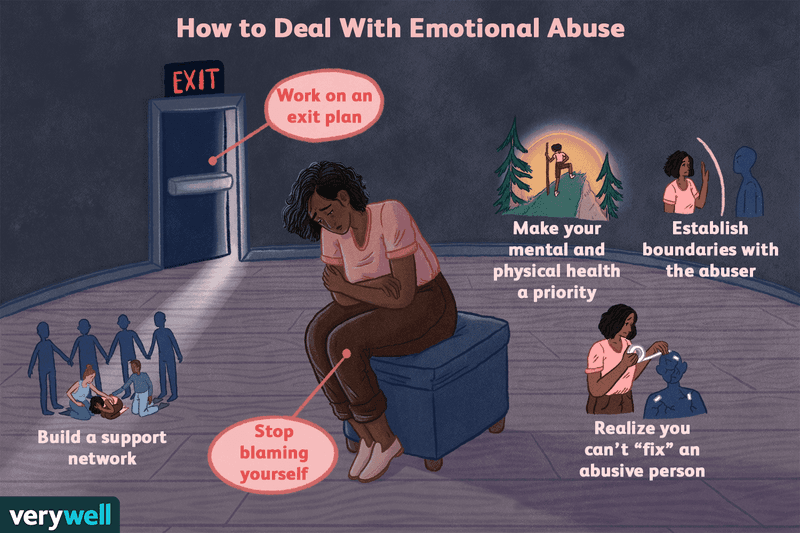
Recognition is not the same as a plan, and clarity about what is happening does not automatically tell you what to do next. If any part of this article has described your life, the most important next step is not confronting him, naming the pattern to his face, or demanding that he acknowledge what he has done. In relationships where control, coercion, or fear are present, confrontation can increase danger rather than create safety.
RAINN’s safety-planning guidance emphasizes individualized, behavior-focused steps rather than a single prescribed action. That means thinking through your specific circumstances: who you trust, what resources you have access to, and what risks a particular action might create. Some concrete starting points include speaking privately with a healthcare provider, therapist, trusted friend, or domestic-violence advocate; keeping your own access to your medication, identification documents, and any financial accounts if you can do so safely; and maintaining your own relationship with your doctors rather than routing all communication through him.
Document concerning incidents only if doing so will not increase your risk. If he monitors your devices, your email, or your accounts, use a device he does not have access to – a library computer, a friend’s phone, or a new private account – for any sensitive communication. The Hotline’s safety-planning tool notes that information entered there is not saved or transmitted, but any online tool should be used on a device he cannot access.
Think about safe contacts: people who know your situation and can be reached without raising suspicion. Think about a safe destination if you ever need to leave quickly. Consider a code word with a trusted person that signals you need help without having to say it directly. None of this requires you to have a plan figured out completely before you take a first step.
In the United States, the National Domestic Violence Hotline is available at 800-799-SAFE (7233) or by texting START to 88788. The Hotline is clear that abuse is the abusive partner’s responsibility, regardless of any mental health diagnosis he may or may not have. If you are in immediate danger, call 911.
You do not have to become useful again to deserve care

Your worth in a relationship was never supposed to depend on how much you could produce. Not how much you cooked, managed, earned, performed, or gave. Not how available you were sexually, emotionally, or practically. Those things may have been part of your life together, but they were never supposed to be the price of being loved.
A relationship that holds up through illness looks different from one that falls apart when you stop performing. In a healthy partnership, your vulnerability is met with adaptation, not resentment. Your need for rest is treated as temporary and human, not as a withdrawal from a contract you never knew you signed. When a partner makes you feel like a burden for being sick, that feeling is information – not about your worth, but about the terms he has been operating under.
You are allowed to stop over-functioning before you have a diagnosis, a confession, or his permission. You are allowed to seek support, trust the pattern you have observed, and protect yourself without first proving to him – or anyone else – that what you experienced was real. The behavior you have lived through is the evidence. You do not need a label to act on what you know.
What you need, and what you deserve, is care that does not come with conditions.