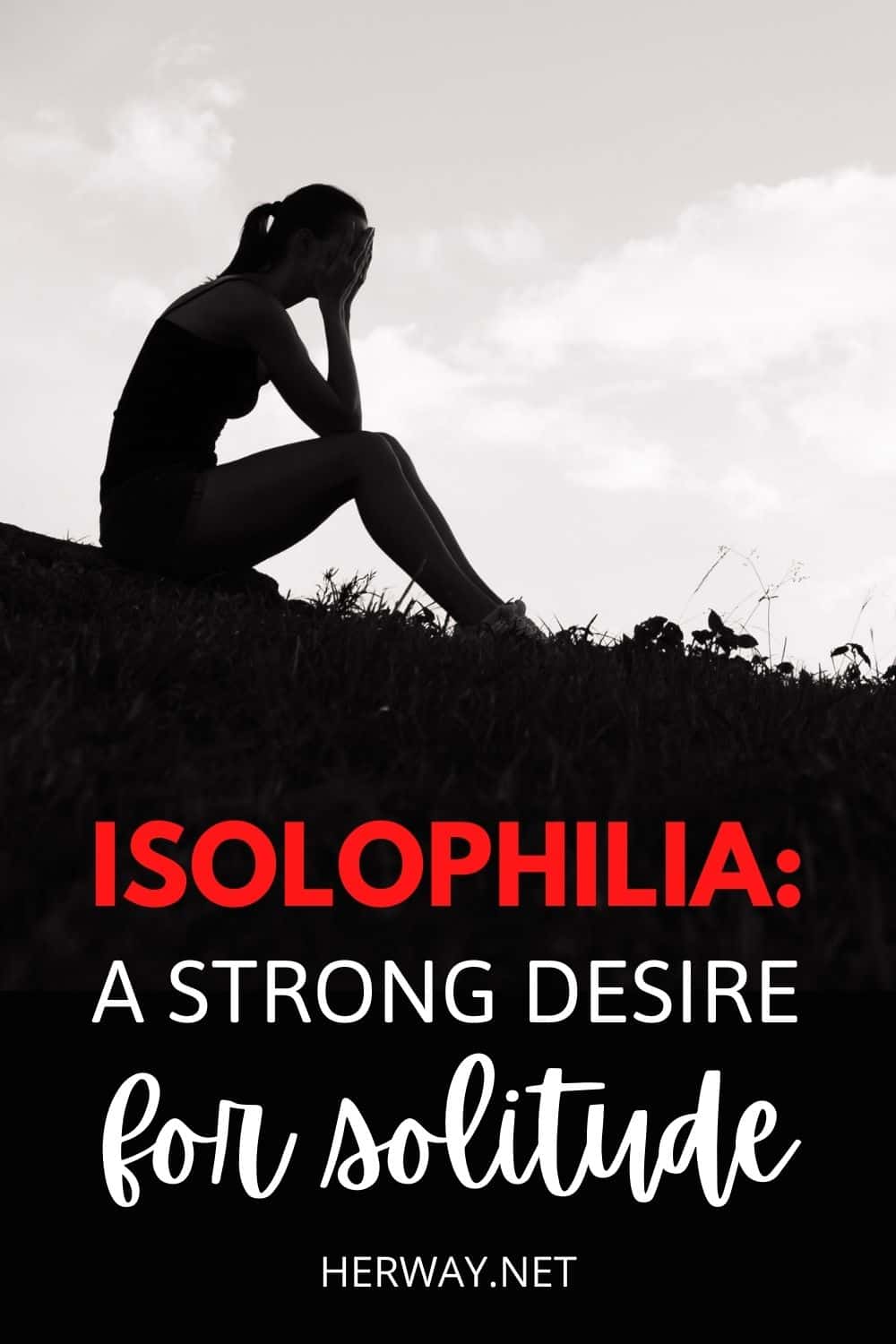

Isolofilia: Uma forte preferência pela solidão
Tem uma forte preferência por tempo a sós? As interacções sociais esgotam-no a maior parte do tempo e não lhe dão uma sensação de satisfação?
If yes, I wish you a warm welcome to the club known as Isolophilia – having a strong preference for solitude.
Here’s the thing. Some of us prefer spending time with others, and some of us prefer our own company. No one is wrong or right – just different. (Demorei algum tempo a absorver verdadeiramente esta hipótese).
Right now, I’m truly enjoying spending time with my laptop, so I’ll use this opportunity to go into the depths of isolophilia, its connection with introversãoe muito mais.
I hope you’ll enjoy my virtual company. ?
Qual é o significado de isolofilia?

Isolofilia é uma bela palavra inglesa feita de dois termos separados: isolo (isolamento, solidão) e philia (amor, inclinação).
Por conseguinte, o termo Isolofilia significa ter uma necessidade profunda e uma forte preferência para a solidão. E não, não se trata de algo negativo.
And no, I’m not saying (read: typing) this just because I myself have felt the same way for some time now. We’re all wired differently, and that’s the beauty of the world we live in.
Isolophilia shouldn’t be treated as something that needs fixing, and you’ll find all the reasons why below.
Isolofilia e introversão

How is isolophilia linked to introversion? It’s universally acknowledged that introverts have a strong affection for solitude. As an introvert, I can confirm this statement.
After some time spent in a group of people, my “social battery” empties, and I feel the urgent need to recharge myself in solitude. Parece que alguém está literalmente a drenar a sua energia durante os hábitos sociais.
Psicologia Hoje explica este fenómeno da seguinte forma:
“Having a less active dopamine reward system also means that introverts may find certain levels of stimulation — like noise and activity — to be punishing and tiring. This explains why the introvert in our bar example had fun for a little while but felt drained as he became overstimulated.”
Assim, quando um introvertido fica sobre-estimulado, deixa de gostar de socializar. Instead, they start seeking solitude to “recover.”
POPULAR MEME: “When you find out your normal daily lifestyle is called ‘quarantine.’” ?

When I stumbled upon this popular meme, I couldn’t help but burst out laughing because of the truthfulness of the statement. (“It’s funny because it’s true.”)
So, people who have isolophilia seldom have the fear of missing out because they don’t really enjoy overcrowded, overly stimulating environments, and hanging out in large groups of people.
Bem, eles gostam disso durante algum tempo e até certo ponto. Por vezes, as pessoas que lhes são próximas têm dificuldade em compreender este facto e começam a pressioná-las para que saiam mais.
Como sempre, a pressão cria uma contra-ação (falando também por experiência própria).
I feel like it’s my holy duty to emphasize that isolophilia is not something that should be healed or treated. We could say it’s a lifestyle just like any other.
Isolofilia no mundo moderno

Redes sociais, memes, sites de encontros, Snapchat, tudo. Isto fez-me pensar:
Is it even possible to be a legit “isolophilist” when spending time alone usually means spending time in the virtual world?
Mas, na verdade, faz sentido. O mundo virtual evita a solidão e proporciona uma alternativa segura para manter ligações com os outros.
No entanto, atrevo-me a dizer que o mundo virtual (especialmente redes sociais) também pode ser demasiado estimulante para nós, introvertidos/isolófilos.
Pode também ter um efeito negativo na nossa saúde mental, porque pode, por vezes, criar o medo de perder em vez de ser motivador.
It’s when you see your close friends clubbing and having fun while you’re watching TV shows at home, you start thinking that maybe you’re missing out on all the fun.
But here’s a plot twist.
Chances are your friends who are clubbing feel the same way. Some of them regret not staying home. Here’s the potential conclusion:
If you enjoy where you are with all your heart, then you’re not missing out on anything.
You’re welcome!
Isolofilia vs. Autofobia

While isolophilia means having a strong preference for solitude, autophobia is completely the opposite – the antonym of isolophilia.
A autofobia, ou o seu sinónimo monofobia, é o medo de estar sozinho. It’s when even the idea of spending time alone makes you feel uneasy and causes stress and ansiedade.
You would be surprised how many people have a fear of being alone. With that said, here’s one statement that’s been ringing in my ears ever since:
A verdade é que nunca estivemos tão ligados uns aos outros e, no entanto, nunca nos sentimos tão sós.
For that, I blame our hectic lifestyles and social media. Basically, when we’re not busy doing something, we even bring our smartphones to the toilets. We’ve created this virtual need to constantly be connected with others and the rest of the world.
PARA REFLECTIR: Mas será que isso faz com que nos sintamos mais sós e, ao mesmo tempo, cria um medo de estarmos sozinhos?
O tempo a sós é igualmente importante para todos

The importance of spending time alone shouldn’t be neglected regardless of whether you belong to the category of isolophilia individuals or not because it is a form of autocuidado.
If you have isolophilia, you’ll spend more time alone than others. If you don’t have isolophilia and are not an introvert, this doesn’t mean you should never seek solitude.
Passar algum tempo sozinho é crucial para a nossa crescimentodesenvolvimento pessoal, e autorreflexão.
This helps you detach from other people’s opinions, needs, and interests. It helps you deixar tudo de lado. Pense nisso como uma atualização ou uma avaliação periódica dos seus progressos e de tudo o que aconteceu.
Além disso, a solidão ajuda-nos a filtrar e a libertarmo-nos de qualquer toxicidade que tenhamos acumulado ao passar tempo com pessoas negativas.
Alone time is not something we should fear or judge. It’s completely natural and desirable.
After all, if you don’t enjoy your own company, how can you enjoy the company of others? Or how can others enjoy your own company?
Tudo está interligado, e tudo tem origem na relação que temos connosco próprios.
Mais ideias para a vida
In the world of fake ideals and all kinds of manipulation, isolophilia shouldn’t be treated as a condition but a necessity. Sometimes, the only way to find answers and conquer fears is to dig deep within yourself.
Estas são as perguntas que devemos fazer a nós próprios (em solidão):
Está em paz consigo mesmo ou precisa do barulho para se distrair dos seus próprios demónios? Consegues estar sozinho sem se tornar solitário ?
Can you respect other people’s need for solitude if you don’t have one?