

While You’re Still Crying Over Him, His Apparent Charm and New Relationship Don’t Reveal What You Think
Watching someone who hurt you appear to glide effortlessly into a new relationship while you’re still piecing yourself back together is one of the most disorienting experiences a breakup can bring. You’re replaying conversations at 2 a.m., and he’s posting smiling photos with someone new. That contrast doesn’t mean you loved more, healed wrong, or lost something he has already replaced. It means two people are moving through the same ending in completely different ways, and his visible speed tells you far less than it feels like it does.
Your private grief can feel unbearable beside his public momentum

Some mornings you wake up and the loss hits you before you even open your eyes. You replay things he said, things you said, moments that seemed fine and then weren’t. Meanwhile, somewhere on a screen you didn’t mean to check, he looks like a man who has never had a heavy day in his life.
That contrast is real, and it hurts in a specific way that is hard to explain to people who haven’t felt it. Research on post-breakup reactions confirms that distress after a relationship ends is a legitimate psychological response, not a sign of weakness or excess. How intensely you grieve depends on factors like how attached you were, how much uncertainty surrounds the ending, whether you tend toward rumination, and how much control you felt you had over what happened. None of those factors are character flaws.
Studies on attachment and breakup distress show that people with anxious attachment styles, higher self-criticism, or fewer coping resources tend to experience sharper and longer-lasting pain after a separation. That is not the same as loving too much. It reflects the architecture of how you learned to connect, often shaped long before this relationship began.
His apparent ease is not a verdict on what you shared or on how much you mattered. Trajectory research on depressive symptoms after breakups shows that grief tends to shift over time, even when early distress feels permanent. You are not falling behind. You are not losing a race.
The two of you are simply not on the same emotional calendar, and his public momentum cannot tell you what is actually happening inside him.
A new relationship shows dating activity, not completed healing

Seeing him with someone new can feel like confirmation that you were replaceable, that what you had meant nothing, or that he has processed everything and come out fine. But a new relationship is evidence of one thing only: he is dating someone new.
A large longitudinal study on post-separation adjustment found that having a new partner was associated with better short-term outcomes after a breakup, but the research did not establish that those new relationships were emotionally healthy, lasting, sincere, or fully processed. Being with someone new and having genuinely worked through the previous relationship are two separate things, and one does not guarantee the other.
There are many reasons a person might move quickly into a new relationship. He may have emotionally checked out of your relationship before it officially ended. He may be using connection as a way to avoid sitting with discomfort. It could be a rebound driven by loneliness, a relationship that was already forming before the breakup, an opportunity that appeared at the right moment, or something that turns out to be genuinely compatible.
You cannot know which explanation is true from the outside, and honestly, none of them change what you are going through.
Public momentum and private healing are not the same thing. A person can post, charm, and appear delighted while quietly carrying unresolved feelings, or they may genuinely be moving forward. What you see on a screen or hear through mutual friends is a performance of a life, not a complete picture of one. Releasing yourself from the task of decoding his new relationship is not giving up.
It is recognizing that the answer you find there will not actually give you what you are looking for.
Use the word narcissist carefully and judge repeated behavior instead
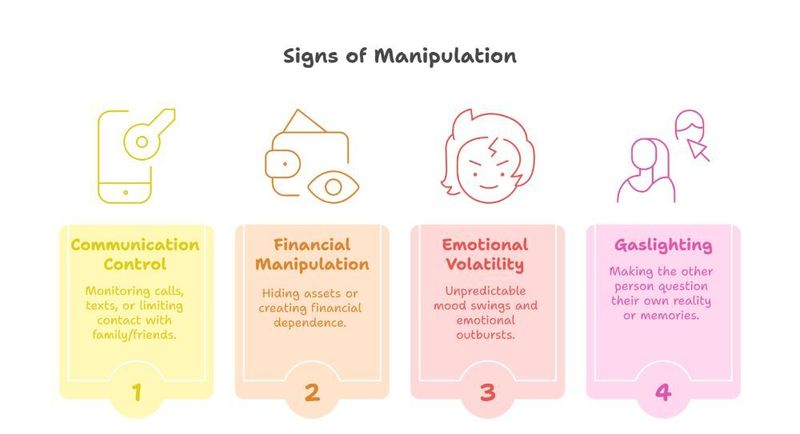
When a relationship leaves you feeling confused, diminished, and repeatedly questioned, it is natural to look for a word that explains it. “Narcissist” has become that word for a lot of people, and sometimes it fits the feeling perfectly even when it doesn’t fit the clinical picture.
Narcissistic personality disorder is a specific clinical diagnosis. The American Psychiatric Association describes NPD as a persistent, inflexible pattern of grandiosity, need for admiration, entitlement, exploitation of others, and impaired empathy that shows up across situations and over time. Ordinary selfishness, emotional unavailability, infidelity, or cruelty, as painful as those things are, do not automatically meet that threshold. Diagnosis requires assessment by a qualified mental-health professional, not a quiz or a pattern recognized after the fact.
That said, research does document recognizable patterns in relationships involving pathological narcissism. Clinical analysis of interpersonal dysfunction in narcissistic relationships describes cycles of idealization followed by devaluation, difficulty sustaining genuine mutual intimacy, controlling behavior, and antagonism. Related research on lived experience in these relationships reflects the confusion and self-doubt partners often carry. These patterns matter.
But they are drawn from clinical and self-selected samples and should not be applied as a blanket description of every ex-partner who was cruel or dismissive.
What you can trust is repeated, observable behavior, not a label that promises certainty. Did he consistently minimize your concerns? Did he shift blame, use your vulnerabilities against you, or treat your needs as inconvenient? Those patterns are worth naming and learning from regardless of any diagnosis.
Focusing on what he actually did, rather than on what category he belongs to, gives you something real to work with as you rebuild.
His charm with someone new cannot reveal his motive or future

There is a particular kind of pain in watching someone who hurt you appear magnetic and attentive with someone else. Part of you wonders whether he was simply saving that version of himself for someone more deserving. Another part wants to believe it is all performance. Both interpretations feel urgent, and neither one can actually be confirmed.
Some research does link narcissistic traits with greater intentions toward infidelity and lower relationship satisfaction, but those are statistical associations across groups, not a prediction for any individual person. An association means the pattern appears more often in one group than another. It does not mean every person with those traits will behave identically, or that his charm with someone new is definitely strategic.
A 2025 study on post-separation adjustment after presumably narcissistic relationships specifically cautions against overstating claims of inevitable harm or assuming a scientifically validated replacement cycle. The research in this area is still developing, and popular explanations like a predictable “discard and replace” sequence are not backed by reliable evidence about universal timelines or guaranteed outcomes.
His charm does not prove he has healed, and it does not prove he is secretly miserable. Both of those conclusions require reading his inner life from the outside, which nobody can do reliably. Separation research consistently shows that visible dating behavior and internal emotional recovery are separate processes. The most honest thing you can say about his new relationship is that it exists, and that what it means for him, or for her, or for your future is genuinely unknown.
That uncertainty is uncomfortable, but it is also the truth.
Recovery begins when his dating life stops measuring your worth

Checking his profile one more time, comparing where he is with where you are, trying to figure out whether the new person is better or worse than you, searching for the one explanation that will finally make sense of everything: all of it keeps your attention anchored to him. And as long as your focus is on his life, your own recovery gets very little room to breathe.
Research on attachment and post-breakup coping identifies rumination, self-punishment, and avoidance as patterns that extend distress after a separation. Rumination in particular, replaying what happened, searching for what you missed, rehearsing what you should have said, keeps the nervous system in a state of unresolved alert. That is not a moral failing. It is a pattern, and patterns can be interrupted.
Healing can move forward without a confession, an apology, or a complete account of his motives. You do not need him to admit what he did, explain why he did it, or show remorse before you are allowed to get better. Waiting for that explanation is one of the quieter ways grief keeps you stuck. Studies on physical, emotional, and behavioral reactions to breakups show that recovery is shaped far more by your own coping strategies, social support, and perceived sense of control than by anything the other person does or says afterward.
If you are experiencing persistent inability to function, severe depression, panic, or thoughts of self-harm, which research has documented as a risk in some post-breakup populations, please reach out to a mental-health professional. Not every wave of grief requires therapy, but some do, and asking for support is not evidence that you are falling apart. It is evidence that you are taking your own wellbeing seriously. Reframe the slowness of your healing not as losing ground, but as the careful, unglamorous work of rebuilding trust in yourself.
When charm came with control, treat the breakup as a safety issue
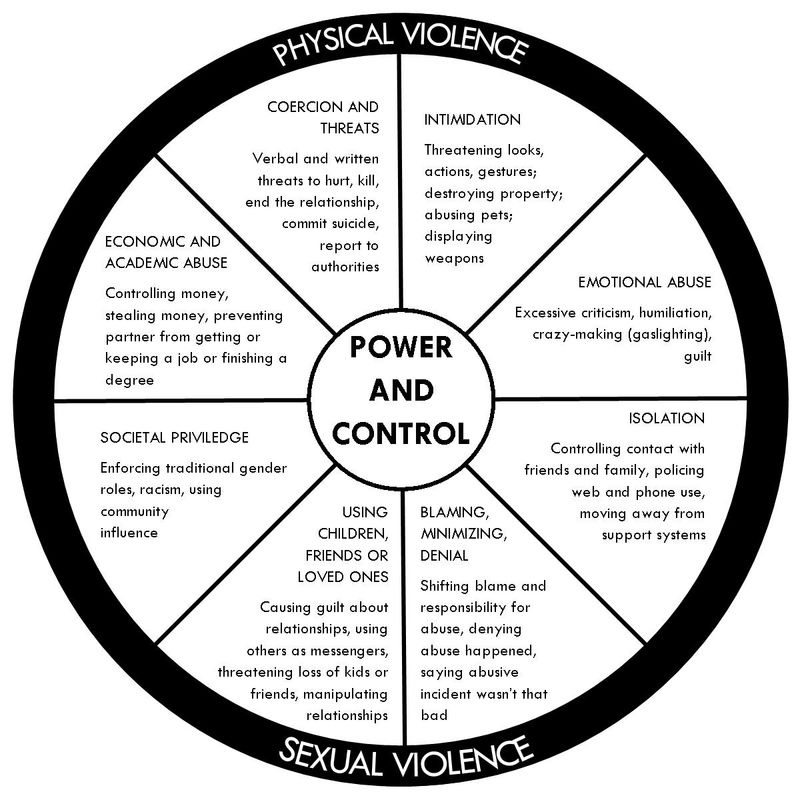
For some readers, the pain of watching an ex move on is layered over something more serious than heartbreak. If your relationship included threats, intimidation, controlling behavior, harassment, surveillance, or physical violence, the end of that relationship is not just emotionally complicated. It is a safety situation, and it deserves to be treated as one.
CDC guidance on intimate partner violence defines psychological aggression as communication intended to harm a partner mentally or emotionally or to exert control. Stalking is defined as a pattern of repeated, unwanted attention or contact that causes fear. These are not relationship problems to be processed through reflection alone. They are conduct patterns that can continue or escalate after a breakup.
The National Domestic Violence Hotline notes that stalking often intensifies after separation and can occur through phone calls, social media, spyware installed on devices, GPS trackers, or contact through children, mutual friends, and family members. If any of those patterns are present in your situation, the question of whether he is charming someone new is far less urgent than the question of your physical and digital security.
Practical steps worth considering include documenting unwanted contact with dates, times, and screenshots; telling trusted people in your life what is happening; and reviewing your digital security, including passwords, shared accounts, and location-sharing settings. Hotline guidance on leaving difficult relationships and CDC prevention resources both emphasize that leaving or blocking can sometimes increase danger rather than reduce it, depending on the person’s prior behavior, access to weapons, and your specific circumstances.
There is no single instruction that is safe for every person in every situation. Children, housing, finances, immigration status, disability, legal proceedings, and the likelihood of retaliation all affect what is safest for you specifically. A domestic-violence advocate can help you build a safety plan that fits your actual life rather than a general template. The National Domestic Violence Hotline is available at 1-800-799-7233 and at thehotline.org.
Your slower healing is not evidence that he won

Grief that moves at its own pace is not a concession. Research tracking depressive symptoms after breakups shows that recovery timelines vary widely and are shaped by attachment history, relationship quality, and circumstances of the ending, not by how much someone deserved to be loved. His speed is not a score. Your slowness is not a forfeit.
Separation research makes clear that visible dating activity and internal emotional recovery are separate things. You do not need to keep watching his life to validate what yours cost you. You are allowed to grieve at your own pace, choose support over surveillance, and stop measuring your healing against someone who may not be healing at all.
The relationship is over. What he does next is his story. The one worth paying attention to now is yours.