

Strong Women Don’t Keep Begging for Love Once They See They’re Carrying It Alone
There is a particular kind of loneliness that lives inside a relationship, not outside of one. You are not alone in the physical sense, but you are the only one reaching, the only one repairing, the only one holding the whole thing together. Recognizing that pattern, and deciding what to do with that recognition, might be one of the most honest and courageous things you ever do for yourself.
When You Are the Relationship’s Permanent Organizer and Repairer

You know the feeling of waking up already composing the conversation you need to have. You rehearse the words in the shower, soften them at the breakfast table, and then swallow them entirely because the moment never feels right. That mental rehearsal is work, even when no one witnesses it.
Emotional and mental labor in a relationship includes far more than visible tasks. It means noticing when something is wrong and deciding whether to say so. It means tracking everyone’s appointments, smoothing over friction before it becomes a fight, monitoring a partner’s mood so you can adjust your own, and initiating the repair conversations that keep a relationship from quietly falling apart. A daily diary study on gender, emotion work, and relationship quality found that relationship satisfaction tends to be higher when both partners contribute to the emotional work of maintaining closeness, while unequal responsibility is linked to dissatisfaction over time.
The mental load is not the same as the chore list. A partner can wash dishes every night while you remain the one who remembers which child has a doctor’s appointment, plans every meal, anticipates every conflict, and keeps track of what the relationship still needs. Research on cognitive household labor found that this kind of invisible planning work was more unevenly distributed than physical tasks and was associated with stress, burnout, and poorer mental health among the mothers of young children studied.
A separate study of partnered mothers as household managers linked disproportionate responsibility for household coordination with lower partner satisfaction, role overload, and feelings of emptiness. Those findings describe mothers of young children specifically, not every woman or every kind of relationship. What they do confirm is that carrying the organizing and repairing role alone, day after day, has real costs. The concern here is not a single exhausting week.
It is a persistent pattern in which the responsibility never rotates, the effort never evens out, and the other person never seems to notice the weight you are holding.
A Difficult Season Deserves Context Before It Becomes a Verdict

Grief changes people. So does job loss, a health scare, a new baby, or the slow grind of caring for an aging parent. There are seasons in a relationship when one person genuinely cannot carry their share, and the other person steps up out of love. That is not a red flag.
That is partnership.
The harder question is what happens when the difficult season passes, or stretches on so long that you can no longer find the edge of it. Research on partner responsiveness across the transition to new parenthood found that stress can affect how responsive partners feel toward each other, which means context genuinely matters when you are trying to read a period of imbalance.
A few questions worth sitting with, not as a diagnostic test but as honest reflection: How long has this been going on? Does your partner acknowledge the strain you are carrying, or does the subject get changed when you raise it? When the pressure lifts even briefly, does anything shift, or does the same pattern reassert itself immediately?
A ten-year longitudinal study on partner responsiveness and well-being found that feeling consistently understood, valued, and cared for by a partner was linked to better long-term well-being, while repeated indifference carried more weight than a single disappointing moment. That is the distinction worth making: one hard month is not evidence of a broken relationship. A repeating cycle in which you bring the need, receive no real response, and eventually stop bringing it at all, is a different kind of story.
Giving a difficult season its proper context does not mean excusing a pattern indefinitely. It means being honest with yourself about which one you are actually living in.
What Happens After a Clear Request Matters More Than Mind-Reading

Love does not require telepathy. A partner who genuinely cares about you does not need to read your mind; they need to listen when you speak. The difference between a relationship with real reciprocity and one without it often becomes most visible not in the big romantic gestures, but in what happens right after you say, clearly and specifically, what you need.
Responsiveness, as researchers define it, involves feeling understood, valued, and cared for by a partner. The ten-year study on partner responsiveness found that this kind of felt care was linked to both relationship satisfaction and longer-term personal well-being. A responsive partner does not have to agree with everything or handle every request perfectly. What they do is take the concern seriously, stay present in the conversation, and make some observable effort toward what you asked for.
The opposite pattern is recognizable too. You raise the concern. The subject changes. You raise it again.
A promise is made and forgotten. You try once more and the conversation somehow circles back to what you did wrong. Over time, you start softening the request before it leaves your mouth, or you stop making it at all. That exhaustion is real, and it tells you something.
What researchers call demand-withdraw describes a cycle in which one partner keeps pursuing resolution while the other pulls back or shuts down. Research on demand-withdraw patterns in marital conflict describes it as a reciprocal dynamic: each person’s behavior can intensify the other’s, meaning the person who keeps asking is not automatically the problem. Related findings on responsiveness across stressful transitions reinforce that context shapes how both partners show up in these moments.
Your need for engagement and resolution is not the issue. The pattern of what happens when you express that need is what deserves a closer look. Asking clearly and watching what follows, over time and across different situations, gives you more honest information than any single conversation or promise ever could.
Measure Mutual Responsibility by Behavior, Not by Another Promise

Apologies feel like change. Emotional promises feel like turning points. And sometimes they are. But a single heartfelt conversation, however real it feels in the moment, is not the same as a sustained shift in how responsibility actually moves between two people.
A grounded way to assess the pattern is to put it in observable terms. Not accusations, not ultimatums, just honest description. “I have initiated every difficult conversation we have had in the past six months.” “I am the only one who remembers the appointments, the follow-ups, and the things we said we would do differently.” “When I tell you I am hurt, the topic shifts within two minutes.” These are not attacks. They are data points.
The goal is not to prove that your partner is a bad person. The goal is to find out whether responsibility can actually become more mutual in practice, not just in intention. Research on invisible household labor supports looking at both the visible work and the coordinating, planning, and remembering work when assessing how responsibility is shared. Findings on cognitive household labor confirm that the mental organizing layer is often the most unevenly distributed and the hardest to name.
Once you have named the specific pattern, you can make a specific request: not “be more present” but “please take over scheduling the next three appointments without me reminding you.” Then you watch. Not for perfection, not for a flawless record, but for genuine, consistent effort over time. The research on partner responsiveness is clear that repeated behavior across time carries far more weight than a single promise, however sincerely it is made.
Behavior across weeks and months tells you what you are actually working with. That is not pessimism. That is clarity, and clarity is something you have earned the right to have.
When Fear or Control Appears, Safety Comes Before Better Communication
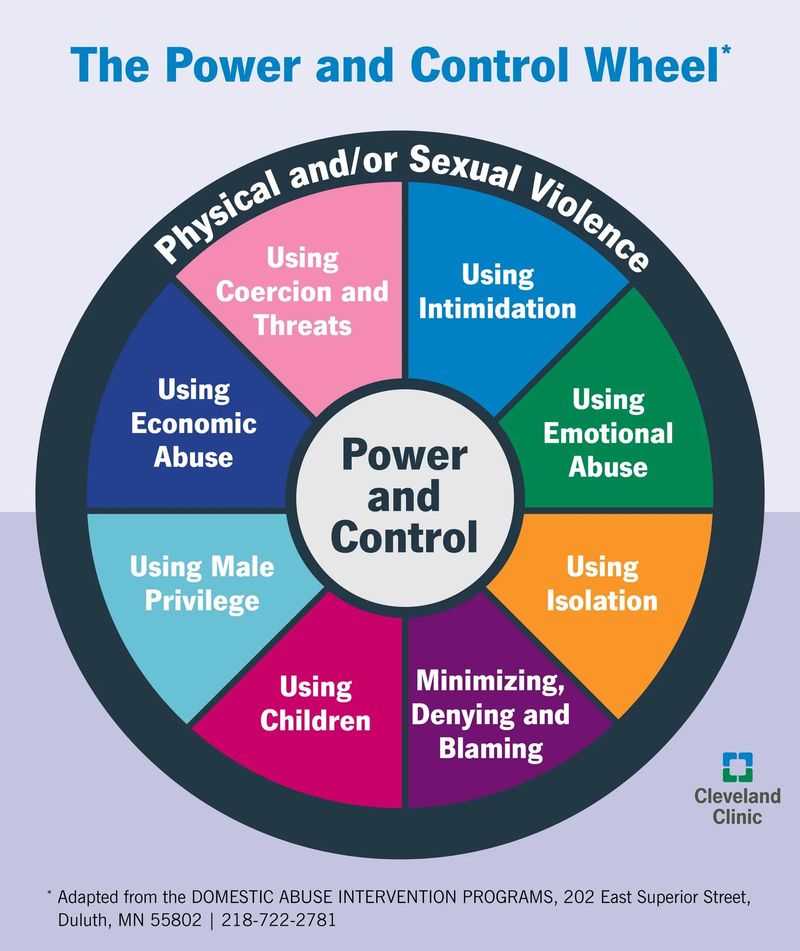
Not every painful or unequal relationship is an abusive one. Disappointment, emotional immaturity, poor communication, and mismatched needs can cause real harm without crossing into abuse. Holding that distinction matters, because the guidance that helps in one situation can carry risk in another.
Abuse involves a pattern of behavior intended to gain or maintain power and control over another person. The U.S. Department of Justice defines domestic violence as a pattern that can include physical, sexual, emotional, economic, or psychological harm. Warning signs include intimidation, humiliation, manipulation, isolation from friends or family, monitoring of your movements or phone, threats, stalking, financial restriction, destruction of property, and persistent fear about how your partner will react to ordinary things you say or do.
CDC data on intimate partner violence indicate that nearly 1 in 3 women in the United States report experiencing psychological aggression by an intimate partner during their lifetimes, and that psychological aggression can co-occur with or precede physical or sexual violence in some abusive relationships, though not every emotionally harmful relationship becomes physically violent.
When fear or control is present, the advice that applies to ordinary relationship imbalance, such as setting a clear boundary or announcing what you plan to do differently, can sometimes provoke retaliation. Research on coercive control in intimate partner relationships notes that separation and the loss of control it represents can increase danger in some situations. This is why confronting a controlling partner, documenting concerns openly, or cutting contact without preparation can carry real risk.
Couples counseling is sometimes helpful in relationships with conflict and communication struggles. Where coercive control, intimidation, or violence may be present, however, it is worth consulting a domestic-violence advocate before deciding whether joint counseling is a safe option, rather than assuming it is appropriate for every situation.
If any of this feels familiar, the National Domestic Violence Hotline’s emotional safety planning resource offers guidance on creating safer conditions while you think through your options. The Hotline’s personal safety planning tool can help you build a plan that fits your specific situation. In an immediate emergency, call 911.
Self-Respect Does Not Require an Immediate, One-Size-Fits-All Decision

Strength is not a personality type that never asks for reassurance, never tries to repair a relationship, and never stays in something difficult. That version of strength is a myth, and it is not particularly useful to anyone who is living in the complicated middle of a real life.
What self-respect can look like, in practice, is deciding to stop running a one-person maintenance operation for a connection that has not been tended by both people in a long time. It can look like reaching out to someone you trust and saying, out loud, what you have been carrying. It can look like getting clear on your practical options, whether that involves housing, finances, legal questions, or childcare, before making any large decision. The Hotline is direct on this point: survivors should not be pressured into a decision by anyone outside the situation, because the person living it is the one best positioned to assess what is safest.
Children, finances, housing, disability, immigration concerns, caregiving responsibilities, emotional attachment, and safety can all shape what is possible and when. Support resources for survivors acknowledge that leaving can be a complex, staged process that requires preparation, not a single decisive moment. Emotional safety planning can help create more stability even before any external change happens.
You are allowed to take the time you need to see clearly, gather support, and choose what comes next from a place of information rather than panic or pressure. In a relationship that is not abusive, you might set a specific, observable limit and watch honestly what follows. In a relationship where fear or control is present, building a confidential plan with a qualified advocate comes first.
Hope is not the problem. Hope that responds to real, sustained change is one of the most human things there is. What is worth examining is hope that has quietly become the only thing holding a relationship together, while one person does all the work of keeping it alive.