

Being Alone Hurts Less Than Loving Someone Who Never Felt Like Home
There is a particular kind of loneliness that does not come from being by yourself. It comes from sitting next to someone who makes you feel invisible, dismissed, or quietly afraid of saying the wrong thing. For many women, the silence of an empty house eventually feels less exhausting than the silence of a relationship where they stopped mattering. This article is not about telling you to leave or stay – it is about helping you see what you are actually carrying, and whether you deserve something lighter.
Being Alone and Being Lonely Are Different Experiences

Somewhere along the way, most of us were taught that a partner equals connection. That having someone – anyone – in your life means you are not alone. But you can share a bed with someone for years and still feel completely unseen. The presence of another person does not automatically fill the space where real intimacy is supposed to live.
Loneliness, at its core, is about the absence of meaningful understanding, responsiveness, and emotional closeness – not just the absence of a warm body nearby. Qualitative research on loneliness across the lifespan describes it as a felt lack of genuine connection, which means a partnered woman can experience profound loneliness while a single woman surrounded by close friends may feel deeply held.
Singlehood is not the same as social isolation. A woman living alone may have friendships that go back twenty years, family who calls just to hear her voice, a community she shows up for, and meaningful work that reminds her who she is. Research on well-being in singlehood consistently shows wide variation: some single women thrive through these broader connections, some want a partner, and some feel content without one.
This article is not arguing that all single women are happier than all partnered women. The real comparison is between peaceful solitude and the specific kind of loneliness that lives inside a relationship where you are chronically dismissed, controlled, or made to feel small. Those are not the same thing, and the difference matters enormously.
Relationship Quality Matters More Than Relationship Status
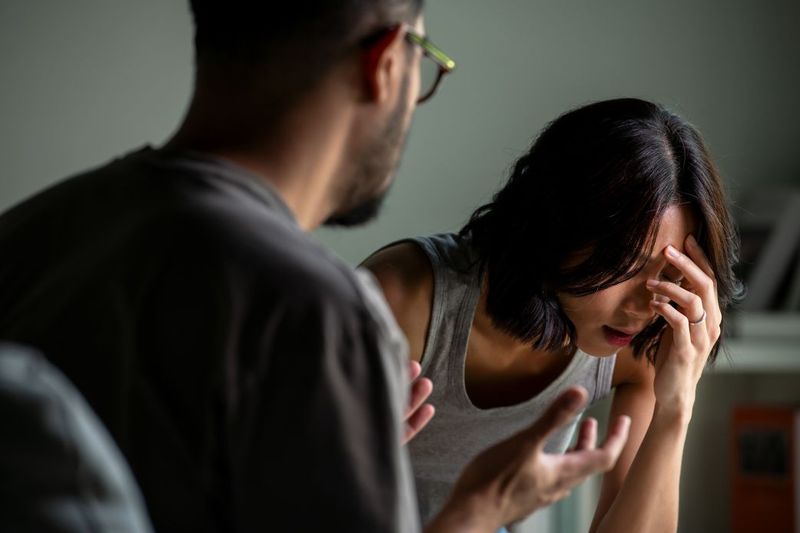
Married, dating, cohabiting, single – none of these labels can tell you whether a relationship is healthy. A wedding ring does not guarantee warmth. A long relationship does not prove it has been a good one. What actually shapes how a relationship affects your mental and emotional health is its quality: whether you feel appreciated, whether conflict gets resolved or just recycled, whether you trust each other, and whether the day-to-day experience of being together adds to your life or quietly drains it.
A large study analyzing data from 43 longitudinal couples studies found that factors like satisfaction, appreciation, and the way conflict is handled were among the strongest predictors of relationship quality – not the formal status of the relationship itself. The label on the relationship does not do the work. The daily lived reality does.
A study of older adults in England, conducted during the COVID-19 pandemic, found something that many women already feel in their bodies: poor partnership quality was associated with higher odds of depression, anxiety, and lower life satisfaction, at levels comparable to having no cohabiting partner at all. This was an observational study of a specific older adult population, so it cannot tell us what will happen for any individual woman, and it does not prove that leaving will automatically improve anyone’s mental health. But it does quietly confirm what many women sense: a poor-quality relationship is not a neutral experience just because it is technically a relationship.
You are not being dramatic when you notice that being with him leaves you feeling worse than being without him. That feeling is worth taking seriously, not explaining away.
When a Difficult Relationship Becomes a Pattern of Control
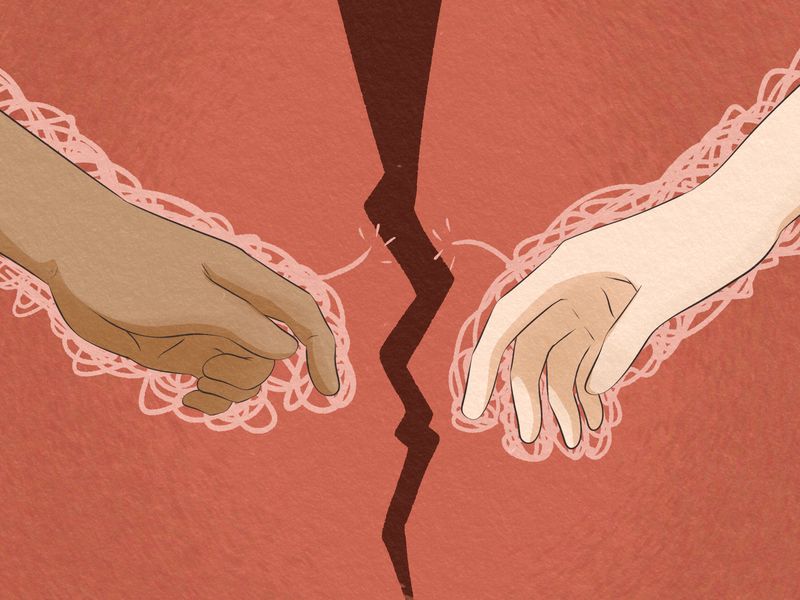
Every relationship has friction. Two people who care about each other will sometimes say the wrong thing, get defensive, or handle conflict badly. One painful conversation does not make a relationship abusive. What changes the picture is repetition, fear, and the way power operates between you.
The CDC defines psychological aggression as verbal or nonverbal communication intended to harm a partner mentally or emotionally or to exert control. This includes name-calling, humiliation, threats, and excessive monitoring – but it also includes quieter forms of control: limiting your access to money, interfering with your transportation, cutting you off from friends or family, or making it harder for you to keep a job or see a doctor. Control does not always look like shouting. Sometimes it looks like a hundred small permissions you have to ask for.
The World Health Organization identifies psychological abuse and controlling behaviors – including isolation, monitoring movements, and restricting financial resources, employment, education, or medical care – as forms of intimate partner violence. These are not communication problems. They are patterns of power.
Emotional invalidation deserves its own mention here. When he repeatedly denies things that clearly happened, insists you are too sensitive every time you raise a concern, shifts blame onto you after causing harm, or leaves you doubting your own memory and judgment over and over again – that is a specific and damaging pattern. A 2025 systematic review on gaslighting in gender-based violence describes it as involving perceptual and cognitive manipulation, power dynamics, control, and social isolation. The word is worth reserving for that sustained, confidence-eroding pattern – not for every argument where he sees things differently than you do.
The question is not whether any single moment was bad enough. The question is whether fear, restriction, and a shrinking sense of yourself have become the background noise of your everyday life. That pattern is the signal worth paying attention to.
Use Patterns and Impact as Your Self-Check

Putting a name to what you are experiencing can feel overwhelming, especially when the person involved sometimes treats you well, or when you have spent years second-guessing your own reactions. You do not need a diagnosis to start paying attention. What you need is honesty about patterns and their impact on you.
A few questions worth sitting with, privately: Do you feel afraid to disagree, even about small things? Are you constantly monitoring your words or behavior to avoid punishment, withdrawal, or a shift in his mood? Has your access to money, transportation, friends, family, or your own health care been restricted or made to feel conditional? When he apologizes, does something actually change over time, or does the same cycle repeat?
These patterns align with recognized indicators of psychological aggression and coercive control that researchers and advocates use to distinguish relational distress from more serious harm.
Your body may also be telling you something. Chronic tension, hypervigilance, exhaustion that does not go away after rest, or a low-level dread before he comes home are all signs of significant stress. They are real and worth taking seriously. What they cannot do on their own is prove a partner’s motives or establish the legal or clinical definition of abuse.
Think of physical and emotional exhaustion as a reason to seek support, not as a verdict.
Record what you notice somewhere private, whether that is a journal, a notes app with a password, or a trusted friend. Patterns become clearer over time when you have something to look back at. And when you are ready to talk to someone, a counselor, advocate, or trusted person in your life can help you make sense of what you have been living with – without pressure to arrive at a particular conclusion before you are ready.
Relief and Grief Can Exist at the Same Time
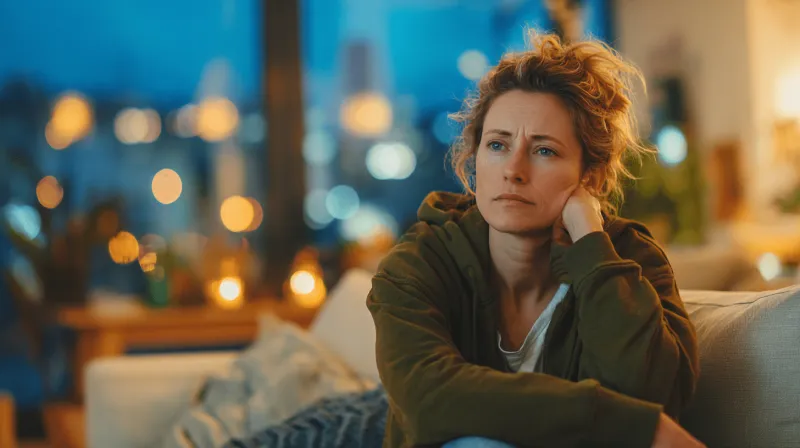
If you have ever stepped away from a relationship that was hurting you, you may have expected to feel purely better. Sometimes that happens. Sometimes the first thing you feel is a quiet, unfamiliar stillness – and it takes a moment to recognize it as peace rather than emptiness. But for many women, separation or emotional detachment brings something more complicated than simple relief.
The National Domestic Violence Hotline notes that people may still feel grief, confusion, shame, attachment, or a strong urge to reconnect after a painful relationship ends. These feelings can live right alongside relief. They do not prove that the relationship was actually fine, and they do not mean you made the wrong choice. They mean you are human, and that you were genuinely attached to someone, even if that attachment cost you.
Grief after leaving a difficult relationship is not evidence that you should go back. It is evidence that you loved someone, and that love does not switch off cleanly just because the relationship needed to end.
Research on well-being in singlehood shows that outcomes vary widely based on social support, personal preference, and whether someone feels satisfied with their situation – not just on whether they are partnered or not. Studies on personality and well-being across relationship statuses further confirm that no single status guarantees happiness. What singlehood can offer, at its best, is room. Room to make choices without fear, to rebuild connections that may have been restricted, and to find out what it feels like to be in your own life without bracing for the next difficult moment.
That room is not the same as guaranteed happiness. But for some women, it is the first real breath they have taken in years.
Put Safety Planning Before a Dramatic Exit
There is a version of this conversation that goes: once you see the truth, just leave. Pack a bag, send a final text, block his number, and start fresh. That advice sounds clean and empowering, and for some women in some situations, a clear exit is genuinely possible. But for others, leaving – or even signaling that you are thinking about leaving – can be the most dangerous moment in the entire relationship.
When a controlling or abusive partner senses that he is losing power, the risk of escalation can increase significantly. The National Domestic Violence Hotline warns that situations involving stalking, threats, access to weapons, a history of strangulation, severe jealousy, or escalating violence require individualized safety planning – not a generic instruction to leave tonight. Announcing your plans, publicly confronting him, or immediately blocking him across all platforms may feel satisfying in theory, but each of these steps can complicate your safety depending on your specific circumstances.
A personal safety plan considers the practical details that a dramatic exit ignores: where you will go, how you will access money, whether children or pets are involved, what your housing situation looks like, and whether your internet and phone use may be monitored. These are not small logistical details. They are the difference between a plan that works and one that puts you at greater risk.
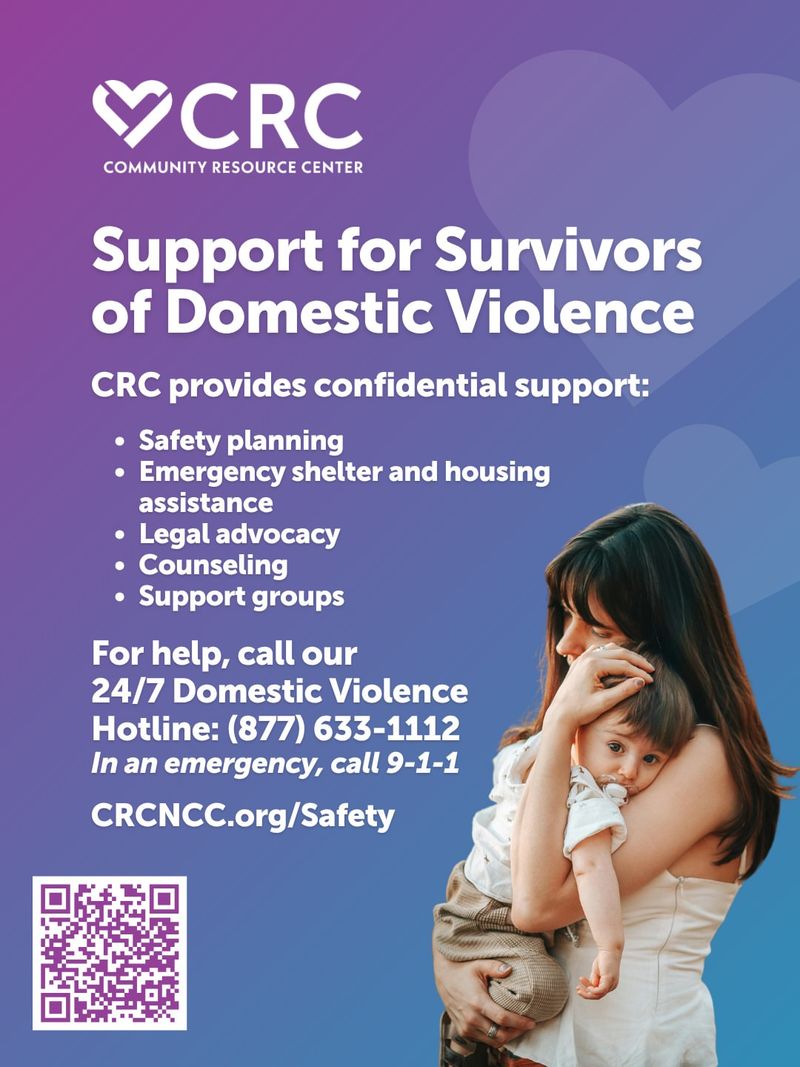
Trauma-informed guidance emphasizes safety, trust, and your right to make decisions at your own pace with support – not pressure. Staying temporarily while you build a plan does not make you weak. It makes you careful with your own life. If you are in the United States, the National Domestic Violence Hotline is available at 1-800-799-7233, and their online chat is confidential.
If you are concerned about your internet history being seen, you can open a private or incognito browser window before visiting any resource.
You deserve support that meets you where you actually are, not advice written for a situation simpler than yours.
Choose Dignity Without Treating Singlehood as a Universal Cure

You do not have to endure a relationship that repeatedly diminishes you. That is not a dramatic statement – it is a quiet, foundational truth about what you are allowed to want from your own life. Choosing peace is not the same as giving up on love. Sometimes it is the first honest act of self-respect you have allowed yourself in a very long time.
Well-being in singlehood depends on many things, including your social connections, your sense of satisfaction with your situation, and the support available to you – not on singlehood itself as a magical state. And trauma-informed care reminds us that healing looks different for every person, unfolds at its own pace, and belongs to you to define.
You may not know yet what you want your life to look like. You may need time, support, or simply more information before you make any decision at all. All of that is allowed. What matters right now is that you stop measuring your worth by how much you can absorb without breaking.
A relationship that consistently leaves you feeling more alone than you would feel without it is not a relationship holding you together. It is one you have been holding together, alone, for far too long. The quietest, bravest thing you can do is decide that your peace matters too.