

When Love Feels Like a Trap: How Coercive Control Can Leave You Too Exhausted to Walk Away
Some relationships don’t hurt all at once. The confusion builds slowly, quietly, until one day you realize you spend more energy defending your own memory than living your life. If you’ve been wondering whether what you’re going through is “really that bad,” this article is for you. You don’t need a diagnosis or a label to take what you’re feeling seriously.
The Real Question Is What His Behavior Is Doing to You

You may have come across the word “narcissist” and felt a flash of recognition. Maybe it finally seemed to name something you’ve been circling for years. That impulse to find the right word makes complete sense, but a label pulled from an article or a quiz cannot tell you whether your partner has narcissistic personality disorder. Narcissistic personality disorder is a formal clinical diagnosis that requires professional assessment of a persistent, inflexible pattern across many areas of a person’s life, not a checklist a partner can fail from the outside.
Many people show some narcissistic traits without having the disorder at all.
What no one can read from behavior alone is a partner’s private intention. Whether he consciously wants to break you, or whether harm is the by-product of patterns he has never examined, is genuinely unknowable from where you’re standing. What you can see, and what matters most right now, is what his behavior is actually doing to you.
Psychological aggression is recognized as a form of intimate-partner violence. The CDC defines it as communication intended to harm a partner mentally or emotionally or to exert control, and it includes insults, humiliation, intimidation, threats, monitoring, isolation, and coercive decision-making. You don’t need to prove a diagnosis to take those patterns seriously.
Behavior, impact, fear, and the slow loss of your own autonomy are the anchors here, not a medical label. The Hotline specifically notes that not all abusive partners have NPD, and not all people with NPD abuse their partners. Focusing on what is happening to you, rather than on what category he fits, is a more honest and more useful place to start.
Control Can Shrink Your World One Restriction at a Time
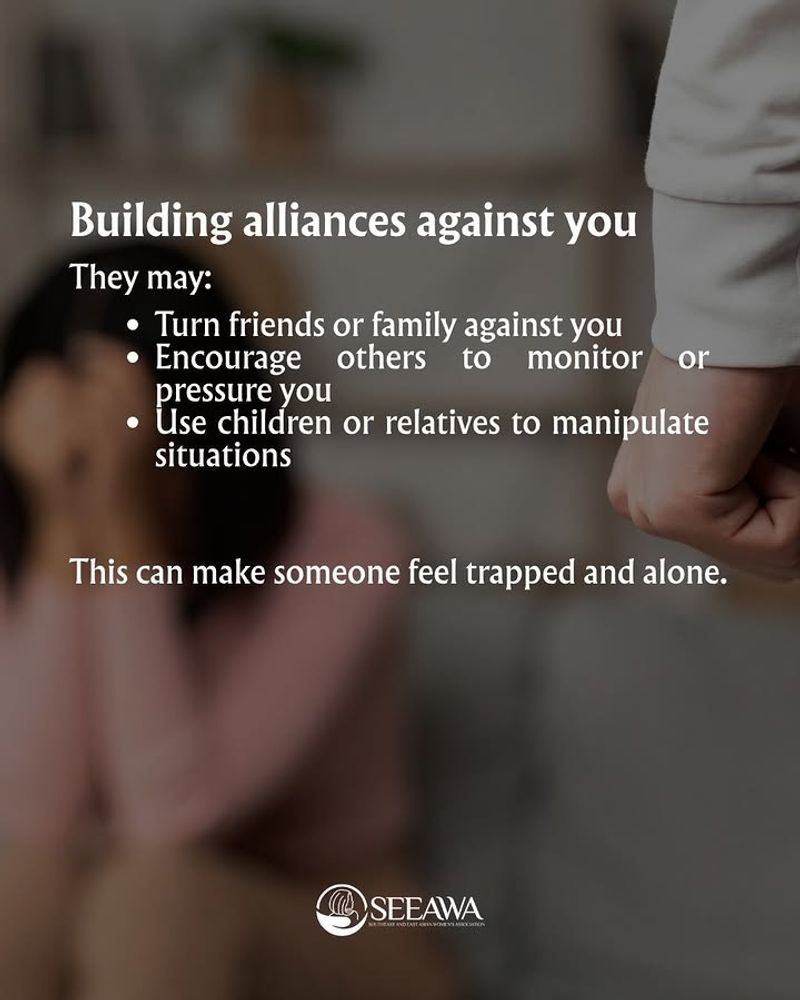
Coercive control rarely announces itself. There’s usually no single moment you could point to and say, “that’s when it started.” Instead, restrictions accumulate the way small debts do, quietly, until one day you look up and realize how little of your old life remains.
Maybe he started handling the finances “to help,” and now you ask permission to spend your own money. Maybe he made a comment about a friend of yours, then another, until you stopped calling them because it was easier than the argument. The 2023/2024 CDC National Intimate Partner and Sexual Violence Survey found that 30.2% of U.S. women – roughly 38.6 million people – reported experiencing psychological aggression from an intimate partner during their lifetimes, and 27.2% reported at least one form of coercive control or entrapment. These numbers reflect how common these patterns are, not how inevitable any single outcome must be.
The specific behaviors the CDC measures include keeping a partner from having her own money, restricting contact with family or friends, demanding to know her location at all times, making decisions that should be hers, threatening physical harm, threatening suicide to influence her choices, and destroying possessions that matter to her. Individually, some of these might seem like quirks or overreactions. Together, they can build a structure that makes independence feel impossible.
Dependency doesn’t always feel like a cage. Sometimes it feels like being taken care of, until you try to leave and realize you’ve lost the resources, relationships, and confidence to do it on your own. Research on the psychological entrapment of partner abuse shows that eroded autonomy and increased dependency are among the clearest documented effects of sustained coercive control. Your world didn’t shrink because you were weak.
It shrank because it was being made smaller.
Gaslighting Makes You Defend Your Own Memory
Picture this: you bring up something that hurt you. Maybe he said something cutting in front of friends, or he agreed to be somewhere and didn’t show up. You’ve thought about how to say it calmly. You sit down and bring it up.
Within minutes, somehow, you are the one apologizing. You’re explaining whether the thing even happened. You’re defending your own memory to the person who was there.
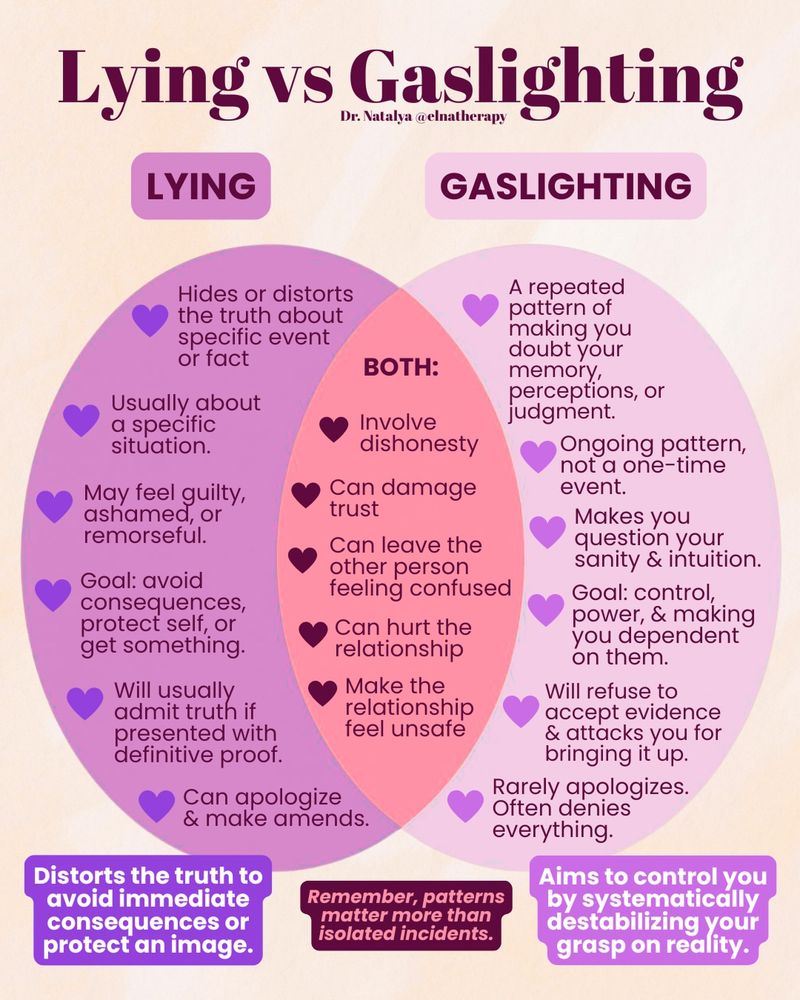
That experience has a name. Gaslighting describes a repeated pattern of denial, contradiction, trivialization, and redirection that causes someone to question her own perceptions, memories, feelings, or understanding of events. The key word is repeated. One disagreement about what was said, one genuine difference in how two people remember a moment, is not gaslighting.
Gaslighting is what happens when the pattern is consistent enough that you start to distrust yourself more than you distrust him.
A systematic review on defining gaslighting in gender-based violence found that the term is most accurately applied to sustained manipulation that destabilizes a person’s trust in her own perceptions, not to ordinary conflict or memory differences. That distinction matters, because it protects the word’s usefulness and protects you from minimizing something real by calling it a misunderstanding.
Gaslighting is also not a diagnostic test. Finding this pattern in your relationship does not prove your partner has any particular personality disorder. What it does tell you is something worth taking seriously: when you regularly leave conversations more confused about your own reality than when you entered them, that is a problem with the pattern, not with your perception.
Affection and Calm Do Not Erase a Controlling Pattern

He brings you flowers after a terrible week. He’s tender in a way that reminds you of the beginning. He apologizes, or explains, or just acts like nothing happened, and for a little while the relief is so strong that you wonder if you imagined the bad parts. That relief is real.
The affection may be real. But warmth in the good moments does not cancel out what happens in the hard ones.
Abuse and affection can coexist. A partner can be generous and controlling, funny and humiliating, loving in public and frightening in private. The Hotline notes that emotional abuse often appears alongside genuine moments of care, which is part of what makes it so disorienting. The good moments are not evidence that the harmful ones didn’t happen.
Not every relationship follows a predictable cycle, and it would be an oversimplification to say yours must. What’s worth paying attention to is a different set of questions. After the calm returns, does anything actually change? Are the behaviors that frightened or diminished you acknowledged and addressed, or just paused?
Do you feel free to bring up a concern without bracing for consequences? Research on psychological entrapment suggests that intermittent positive experiences can deepen attachment in ways that make sustained control harder to recognize and harder to leave.
Hope is not the problem. The problem is when hope becomes the reason you stop trusting what you clearly saw. The measure of a relationship isn’t its best days. It’s whether you feel safe, respected, and free to be yourself on an ordinary Tuesday.
Entrapment Can Look Like Personal Failure

“Why didn’t I leave sooner?” That question can feel like an accusation you’re directing at yourself. The honest answer is that staying is rarely about weakness, and it almost never comes down to one simple choice. When isolation, financial dependency, fear, and eroded self-trust have been building for years, leaving is not a matter of courage. It’s a matter of resources, safety, and opportunity that may have been systematically reduced.
Research on the psychological entrapment of partner abuse describes how controlling relationships can progressively narrow a person’s perceived and actual options. Isolation cuts off the people who might have reflected your reality back to you. Financial control limits your practical ability to go. Repeated humiliation and gaslighting chip away at the confidence that might have told you that you deserve better.
By the time many women seriously consider leaving, the version of themselves who had easy access to those resources may feel very far away.
The mental-health toll is also real and documented. A systematic review and meta-analysis on intimate-partner violence and mental health outcomes found elevated odds of depression, PTSD symptoms, and suicidality among women who experienced IPV. These are associations, not certainties, and not every woman who experiences coercive control will develop these conditions. But if you have been feeling numb, anxious, exhausted in ways you can’t explain, or like a flattened version of yourself, those feelings are not personal failures.
They are recognizable responses to sustained stress.
World Health Organization guidance on intimate-partner violence recognizes that women in controlling relationships face structural, economic, and psychological barriers to leaving that go far beyond willpower. You did not stay because something is wrong with you. You stayed inside a situation that was designed, whether consciously or not, to make leaving feel impossible.
Leaving Requires a Safety Plan, Not a Dramatic Announcement
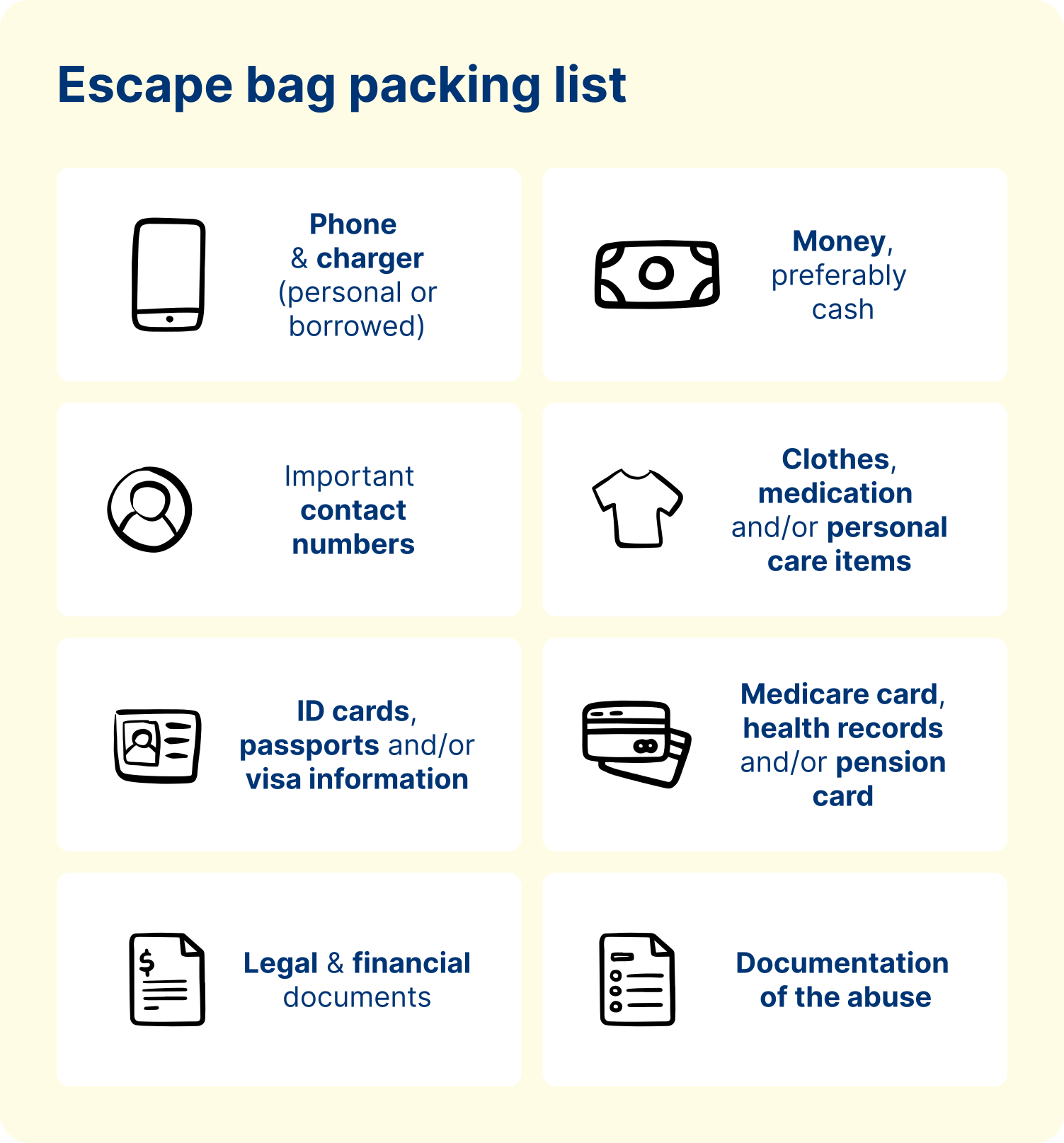
If you are thinking about leaving, the most important thing to know first is that the moment a controlling partner senses he is losing control can be a period of increased risk. That is not meant to frighten you into staying. It is meant to help you plan in a way that protects you. The National Domestic Violence Hotline advises that internet use can be monitored and offers phone support at 1-800-799-SAFE (7233), text support by texting START to 88788, and confidential online chat, all of which can be accessed privately.
A confrontation, an ultimatum delivered in a heated moment, or an abrupt announcement is not the same as a plan. Safety planning means thinking through housing, finances, documents like your ID and any children’s documents, transportation, pets, digital privacy on your phone and accounts, and whether there are children or custody concerns involved. WomensLaw.org offers detailed, individualized safety-planning guidance that accounts for the specific complications many women face.
If threats, stalking, firearms, strangulation, reproductive coercion, threats of suicide or homicide, property destruction, or custody disputes are part of your situation, please connect with a domestic-violence advocate, a medical professional, or a qualified local legal service before making any moves. ACOG guidance for clinicians recommends private assessment, immediate safety evaluation, and individualized safety planning when intimate-partner violence is identified. A legal protection order may be one tool among many, but it is not a guarantee of safety on its own.
One more thing worth saying clearly: couples counseling is not a recommended starting point when coercive control or abuse is present. The Hotline explains that joint sessions can give an abusive partner access to disclosures he may use against you, and can reinforce the idea that abuse is a communication problem you share equally. You do not need to fix this together. You need support that is yours alone.
You Do Not Need His Diagnosis to Trust What You Lived Through

You do not need a clinical label, a confession, or his agreement that what happened was real. You do not need to decode his exact motives or prove to anyone else that things were as bad as they felt. Fear, humiliation, confusion, and the slow disappearance of your own voice are things you are allowed to take seriously without a diagnosis attached to them.
The Hotline is clear that behavior, impact, and the presence of fear and control are more useful anchors than any label. What matters is what you experienced and what it cost you, not what category it fits. Reaching out for support, whether through a hotline, a trusted advocate, a therapist who specializes in this area, or a confidential resource, does not require you to have everything figured out first.
Your experience is the evidence. A relationship that asks you to become smaller, more confused, and more dependent over time is not a love story with a rough patch. Someone who genuinely loves you does not need you to doubt yourself in order to stay.