

Life Is Too Short to Keep Bleeding for People Who Lie to You
You have probably spent more time than you want to admit trying to make sense of something that never quite added up. The stories changed, the apologies came and went, and somehow you kept finding yourself apologizing too. When someone’s dishonesty becomes the air you breathe in a relationship, your body and your sense of reality start paying the price. You deserve to understand what that pattern is actually costing you, and what you are allowed to do about it.
The lie matters less than the pattern it keeps creating

Most people have told a lie they are not proud of. A tactful omission here, an awkward deflection there. A 2026 study found that some people even prefer so-called prosocial lies when they believe the truth would cause unnecessary harm. That does not excuse betrayal or manipulation, but it is a useful starting point: research on prosocial deception confirms that not every lie carries the same weight or intent, which is exactly why the pattern around a lie matters far more than the lie itself.
Picture this. You bring up something that is bothering you, something reasonable, something you have a right to ask about. Instead of an answer, the conversation shifts. Suddenly you are being reminded of every time you were wrong, every flaw you have ever shown, every moment you were not enough.
You walk away from the conversation having somehow apologized for asking a fair question. That is not a communication style. That is a pattern.
CDC guidance on psychological aggression makes clear that this kind of behavior extends far beyond lying. Psychological aggression includes insults, humiliation, intimidation, threats, monitoring, isolation, and coercive control. You do not need a clinical diagnosis to recognize that a repeated pattern is causing you harm. You need to notice whether honesty is isolated or recurring, whether questions are welcomed or punished, and whether you feel steadier or more destabilized each time the cycle repeats.
That observation alone is meaningful information about the relationship as it currently exists.
What repeated dishonesty takes from your body and your sense of self
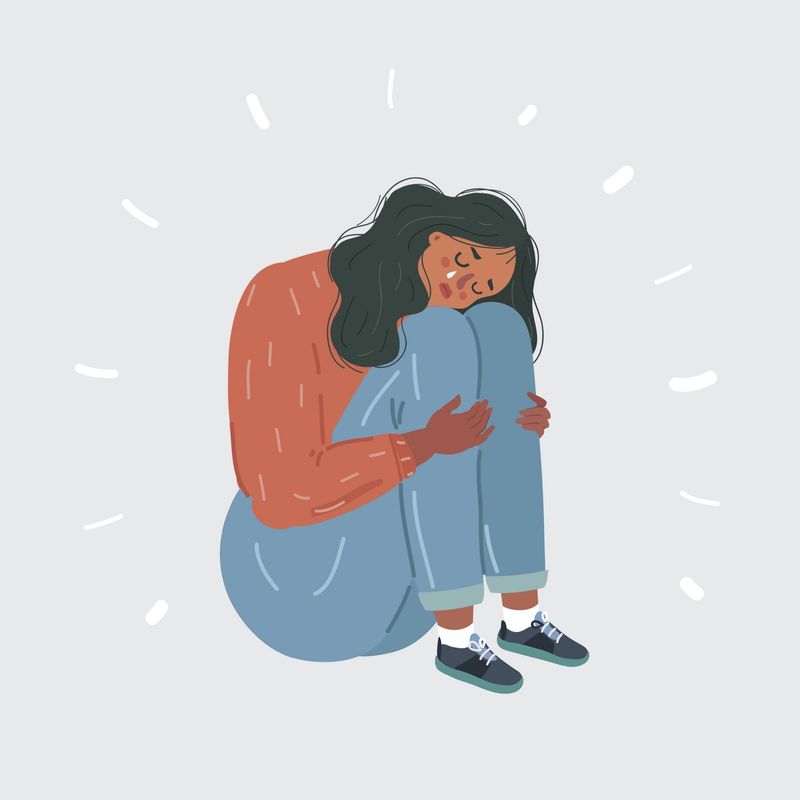
Living alongside someone whose version of events keeps shifting is exhausting in a way that is hard to explain to people who have not felt it. You stop trusting your own memory. You replay conversations at two in the morning trying to figure out where the truth went. You adjust yourself constantly, shrinking your expectations, swallowing your questions, hoping that if you ask less and give more, things will finally feel stable.
That kind of sustained vigilance takes a real toll. Longitudinal research on intimate partner aggression has linked persistent psychological aggression to depression symptoms, poorer mental health, and physical health problems including bodily pain. A separate study tracking couples across nine years found that partner aggression was associated with rising depressive symptoms over time. And research on recurrent intimate partner violence found cumulative links to emotion-regulation difficulties, meaning it becomes harder over time to manage your own internal world when you are constantly managing someone else’s deceptions.
These findings do not mean that every difficult relationship produces identical effects, or that distress alone proves abuse is present. People respond differently based on their history, their support systems, and the severity and frequency of what they are experiencing. But if you have noticed that you feel worse about yourself now than you did before this relationship, that your sleep, your health, or your concentration have suffered, that you spend more energy managing his reactions than living your own life, those are not small things. They are signals worth taking seriously, not because they prove a clinical label applies, but because they tell you what staying is actually costing you.
The real question is whether honesty is followed by accountability

There is a meaningful difference between a person who lies and a person who, when confronted with the harm their lie caused, chooses to own it. Accountability is not a grand gesture. It does not require a dramatic confession or a tearful speech. What it actually looks like is quieter and more consistent: the person acknowledges what happened, answers your reasonable questions without turning them into an attack on you, respects the boundary you set in response, and then behaves differently over time.
Trust-repair research supports this standard. Studies on apology and trust repair find that apologies can help restore trust, but primarily when they communicate genuine trustworthiness and are followed by reliable conduct. Research on how implicit beliefs influence trust recovery suggests that some people believe trust can be rebuilt incrementally through demonstrated behavior, while others find that a serious violation shifts their confidence in ways that take much longer to recover. Neither response is wrong.
And earlier work on integrity-based trust violations confirms that words alone, no matter how sincere they sound in the moment, are not enough to re-establish trust after a meaningful breach.
Tears are not a track record. Promises are not proof. You are allowed to wait and watch behavior before deciding what the relationship is. You are also allowed to decide that the pattern you have already witnessed is enough information, that you do not owe anyone another chance to fail you in the same way.
Neither choice requires the other person’s agreement or blessing. The standard you use to evaluate this relationship belongs entirely to you.
When denial turns your questions into a crime

You remember what was said. You have a text, a voicemail, a clear memory of a promise made in the kitchen on a Tuesday. You bring it up carefully, not accusingly, just as a question. And somehow, by the end of the conversation, you are the one who is unreasonable.
You are too sensitive, too suspicious, too focused on the past. You leave the room wondering whether you imagined the whole thing.
That particular experience has a name. Gaslighting, used precisely, refers to a repeated pattern of denial or distortion that gradually undermines a person’s confidence in her own memory, perception, or right to ask questions. Current analysis of gaslighting emphasizes that the term should not be applied to ordinary disagreements, forgetfulness, or a partner who simply remembers things differently. Related commentary reinforces that defensiveness or refusing to agree is not automatically gaslighting either.
The distinction lies in repetition, strategy, and the cumulative effect on your sense of reality.
When you notice that your questions are consistently met with counterattacks, that you routinely leave conversations doubting your own judgment, or that you have started pre-apologizing for bringing things up, those are observable effects worth paying attention to. Recognized descriptions of psychological aggression include behavior that destabilizes, controls, or punishes. If you also notice fear, isolation from people you used to trust, monitoring of your movements or phone, financial restriction, or pressure to give up reasonable privacy, those are additional signals that the pattern goes beyond dishonesty alone.
Your permission to stop bleeding does not require one more confession

Here is something nobody tells you often enough: you do not need a final admission to protect your own peace. You do not need him to agree that what happened was wrong. You do not need a perfect explanation, a satisfying confrontation, or the moment he finally sees what he has put you through. Waiting for that moment can cost years.
WHO guidance on first-line support for survivors centers listening, validating, and supporting a person’s autonomy without pressuring her to disclose more or move faster than she is ready to. That principle applies here. Your timeline is yours. Your decision about what to do next is yours.
A boundary is not a punishment you hand someone else. It is a decision about what you are willing to keep participating in.
There is a kind of loyalty that holds a relationship together because both people are genuinely trying. And then there is a kind of loyalty that has quietly turned into self-erasure, where you keep adjusting, absorbing, and excusing because you are afraid of what it means if you stop. Those are not the same thing, even when they look similar from the outside. You are allowed to step back.
You are allowed to limit access to your time, your energy, and your emotional world. You are allowed to seek counsel, reconsider the relationship, or simply stop performing certainty you no longer feel. None of those choices require the other person’s permission, understanding, or approval.
If the lies come with control, protect yourself before you announce anything

Not every relationship where someone lies is an abusive relationship. But when deception travels alongside other behaviors, the picture changes. Surveillance of your phone or location. Cutting you off from friends or family.
Controlling access to money. Threats, whether loud or quiet. A history of physical or sexual violence. These are not just relationship problems.
They are recognized forms of coercive control.
ACOG guidance on intimate partner violence recommends assessing immediate safety, helping create a safety plan, and connecting people with shelters, legal aid, counseling, and crisis resources. Their clinical guidance is equally clear that safety planning must be individualized, because leaving is not always immediately safe. U.S. Department of Justice protocols on intimate partner violence identify separation-related escalation, threats, weapons, stalking, and strangulation as factors that can increase danger when a person attempts to leave.
Announcing a breakup or confronting a controlling partner without a plan can sometimes raise the risk rather than reduce it.
If any of this sounds familiar, the most important first step is not a dramatic exit. You can document incidents privately in a safe place, if doing so will not be discovered. You can tell one trusted person what is happening. You can reach out confidentially to a specialist who understands these situations without being pressured to make any decision before you are ready.
The National Domestic Violence Hotline’s safety planning tool is available confidentially and can help you think through your specific circumstances.
One more thing worth knowing. The Hotline’s guidance on couples therapy with an abusive partner warns that joint counseling can give an abusive partner a new setting in which to shift blame or weaponize what you disclose. When coercive control is present, individual survivor-centered support and safety planning are safer choices than couples therapy. You deserve support that is built around your safety, not around preserving the relationship at any cost.
You are allowed to choose peace before the other person understands

Your worth is not something a dishonest person gets to determine by withholding the truth. You do not have to extract a confession, earn an apology, or wait for understanding that may never come before you are allowed to feel settled in yourself again.
Needing time is not weakness. Needing a safety plan is not weakness. Needing support from someone who has no stake in keeping you where you are is not weakness. These are the things a clear-eyed person does when she finally starts taking her own life seriously.
You have probably given more grace, more patience, and more quiet suffering to this than anyone will ever fully know. What you are allowed to give yourself now is something simpler: the decision that your reality, your health, and your peace are not negotiable currencies in someone else’s game. Love that is real does not ask you to abandon all three just to keep it comfortable.