

A Strong Woman Doesn’t Chase Revenge – She Walks Away and Lets Life Answer
Most women who have been hurt badly enough know the pull of wanting the person who caused that pain to feel it too. That impulse is not a character flaw – it is a very human response to being wronged. What changes over time, for many women, is the quiet recognition that staying emotionally locked in that fight costs more than the person who started it ever will. This article is about what it looks like to choose yourself instead, without pretending that anger is wrong or that walking away is always simple.
Strength Does Not Require Retaliation—or Silence

Anger after being hurt is not a weakness to apologize for. You are allowed to feel it, name it, and act on it in ways that align with your safety and your values. The premise that a truly strong woman never seeks any form of redress is too absolute to hold up in real life, and this article will not pretend otherwise.
Strength looks different depending on the situation. Reporting misconduct, documenting harm, seeking legal remedies, asking for support from people you trust, or confronting someone directly in a safe context – none of those are acts of vengeance. They are acts of accountability. The meaningful distinction is not between a woman who stays perfectly silent and one who lashes out; it is between a woman whose choices are guided by her own values and safety versus one whose entire attention is organized around making someone else suffer.
Research on abusive supervision found that in certain workplace contexts, retaliation sometimes buffered harm by restoring a sense of interpersonal justice. That is a narrow finding in a specific professional setting, not a general endorsement of revenge in intimate relationships. Still, it matters that the evidence is not black and white.
What the research does support is that retaliation as a sustained organizing goal – the kind that keeps you mentally rehearsing confrontations and waiting for someone to finally get what they deserve – tends to keep you emotionally tethered to the person who hurt you. The APA definition of assertiveness frames direct, respectful communication of needs as distinct from aggression. You can be clear, firm, and self-protective without making punishment the centerpiece of your recovery.
Choosing distance and self-protection is not the same as choosing silence. It is choosing where to put your energy.
Repeated Rumination Can Keep the Injury Psychologically Present

There is a difference between the anger that moves through you and the loop that keeps pulling you back in. Replaying what he said, rereading old messages, rehearsing the perfect thing you should have said, imagining his face when the consequences finally catch up with him – these are not the same as processing what happened. They can become a way of staying inside the injury rather than moving through it.
Research on rumination associates this kind of repetitive mental replay with poorer psychological outcomes, and related studies suggest that dwelling on revenge-related thoughts can keep the emotional wound more active than it would otherwise remain. Additional findings connect repetitive negative thinking to prolonged distress following interpersonal harm. None of this means that every moment of anger is a problem, or that occasional intrusive thoughts signal something pathological about you.
Normal grief over a painful relationship includes waves of fury, sadness, and disbelief. That is not the same as a repetitive loop that reopens the wound every time it starts to close. The loop is not protecting you – it is keeping you company in a room you are ready to leave.
Disengaging from that loop is not about denying what happened or forcing yourself to feel fine before you are. It is a gradual decision to reclaim your own attention. Each time you catch yourself back in the mental rehearsal, you are not failing – you are noticing. And noticing is where the shift begins.
Walking Away Means Setting a Boundary, Not Avoiding Every Difficult Conversation

Purposeful distance is not the same as going silent on everything that ever bothered you. In a relationship where direct communication is safe and the other person is capable of hearing it, naming what you will and will not accept can be more useful than quietly withdrawing. Research on interpersonal conflict suggests that pure avoidance can leave anger unresolved and may actually feed the rumination cycle rather than quiet it. Strategic distance is different from suppressing legitimate concerns indefinitely.
A boundary, practically speaking, describes what you will do – not what the other person must do. Ending a phone call when insults begin is a boundary. Limiting communication to necessary logistics around shared children or finances is a boundary. Declining to respond to a message until you are ready is a boundary.
Cleveland Clinic guidance on boundaries frames them as clear limits on your own participation and availability, not attempts to control another person’s behavior.
A boundary is not a threat and it is not a punishment. It is a description of where your participation ends.
The APA defines assertiveness as expressing feelings and needs directly while maintaining respect for others – and notes that a lack of assertiveness can contribute to anxiety and depression over time. Saying clearly what you will no longer accept is not aggression. It is self-respect made audible. You do not need the other person to agree with your boundary for it to be real.
You only need to follow through on it yourself.
Forgiveness Can Be Private Without Restoring His Access

Forgiveness is one of the most misused words in conversations about painful relationships. It gets handed to survivors like an obligation – as though releasing resentment is something you owe the person who caused the harm, or a prerequisite for healing that you have to earn by feeling generous enough. That framing gets it backwards.
Psychological models of forgiveness, including foundational work by McCullough and colleagues, describe it as a shift in motivation – reducing the desire to avoid or retaliate – rather than an act of restored trust or renewed contact. You can release the wish to see someone punished without ever speaking to them again, without excusing what they did, and without giving them any access to your life.
Research on forgiveness and well-being finds associations between forgiveness-related processes and greater life satisfaction and fewer negative emotions. The evidence is largely correlational, and it does not mean forgiveness automatically heals trauma or that you can simply decide to feel it on a timeline. Trauma-informed perspectives on forgiveness specifically caution against using forgiveness research to pressure survivors into minimizing abuse or moving on before they are ready.
Forgiveness, if it comes, is something you do for your own interior life – not a gift you extend to someone who has not asked for it and may not deserve it. You can pursue therapy, seek accountability, document what happened, or consult a lawyer while still choosing not to make punishment the organizing center of your days. Those things are not in conflict. Letting go of the need for him to suffer is not the same as pretending he did not hurt you.
Letting Life Answer Means Releasing the Need to Witness His Regret

The phrase “letting life answer” is a metaphor, not a guarantee. Withdrawing access, refusing to participate in degrading patterns, and redirecting your attention toward your own life may have real consequences for someone who depended on your presence, your tolerance, or your silence. Access lost, trust eroded, behavior that becomes more visible without you there to absorb it – those are possible outcomes. They are not promised ones.
Some people do not regret what they did. Some never see it clearly. Some move on without a moment of visible consequence. Building your recovery around the hope that he will eventually feel what you felt is still giving him the center of your story.
It keeps his reaction as the measure of whether you are okay.
The APA describes patterns in harmful relationships as involving manipulation, coercive control, disrespect, and behavior that undermines the other person’s well-being. Removing yourself from that pattern changes what you experience day to day. Whether it changes him is a separate question – one that matters far less to your actual life than it might feel like right now.
Your recovery does not depend on him noticing your absence, regretting his choices, or suffering an equivalent loss. The emotional conclusion you are looking for does not live in his response. It lives in the quiet, gradual experience of organizing your life around your own standards again – not around waiting for a reaction that may never come.
Abuse and Stalking Require a Safety Plan, Not a Dramatic Exit
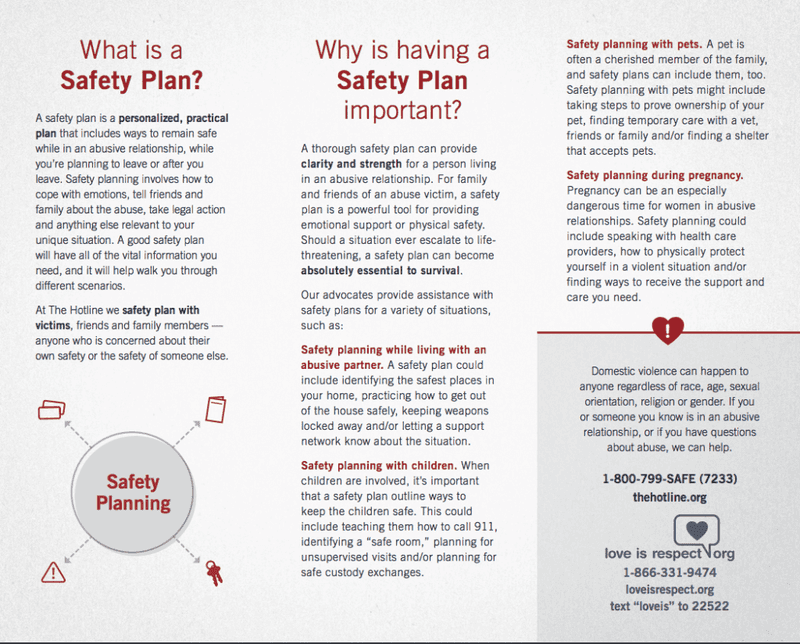
Not every painful relationship is the same, and the advice that applies to an ordinary but disappointing breakup does not automatically apply to a situation involving coercive control, threats, monitoring, or repeated unwanted contact. That distinction matters enormously, because the steps that feel empowering in one context can create danger in another.
CDC data on intimate partner violence documents the serious physical and psychological harm associated with coercive and violent relationship patterns. CDC prevention guidance and clinical evidence on leaving abusive relationships are consistent on one point: separation can increase danger in some situations, and a woman should never be shamed for staying temporarily or pressured into an immediate departure she is not yet safe to make.
If the relationship involves patterns like monitoring your location or devices, controlling your finances, isolating you from support, making threats, or showing up where you are without permission, a safety plan matters more than a powerful exit statement. The National Domestic Violence Hotline and its personalized safety planning tool can help you think through steps that fit your specific circumstances – including identification and financial documents, technology privacy, transportation, housing, children, pets, medications, and custody considerations.
Repeated unwanted contact, following, monitoring, or unwanted appearances after a relationship ends are not signs that someone cannot let go romantically. The Department of Justice defines these behaviors as stalking, and stalking-specific safety planning is available through the Hotline. Changing communication channels, blocking contact, or going no-contact may be the right decision in some situations – but in others, those steps can have safety or evidence-preservation implications. The decision is worth coordinating with an advocate or legal professional rather than making alone based on general advice.
You are not weak for staying when leaving is not yet safe. Strength in this context is measured by the quality of your plan, not the speed of your departure.
Your Recovery Becomes the Answer When You Stop Abandoning Yourself

You are allowed to feel angry. You are allowed to seek support, pursue accountability, and define closure in whatever form actually fits your life – not the version that looks most graceful from the outside. Closure for some women comes through private reflection; for others, it requires a direct conversation, a legal resolution, or simply enough time and distance that the wound stops pulling.
Strength does not require silence, instant forgiveness, or a perfectly executed exit. It requires that you stop organizing your life around someone else’s behavior.
Purposeful distance is valuable not because it punishes the person who hurt you, but because it stops giving them the center of your attention. Your safety, your standards, your support system, and your own self-trust are the things worth building toward now. The most honest version of “letting life answer” is simply this: when you stop carrying someone who was never going to carry you back, your life has room to become something that belongs entirely to you.