
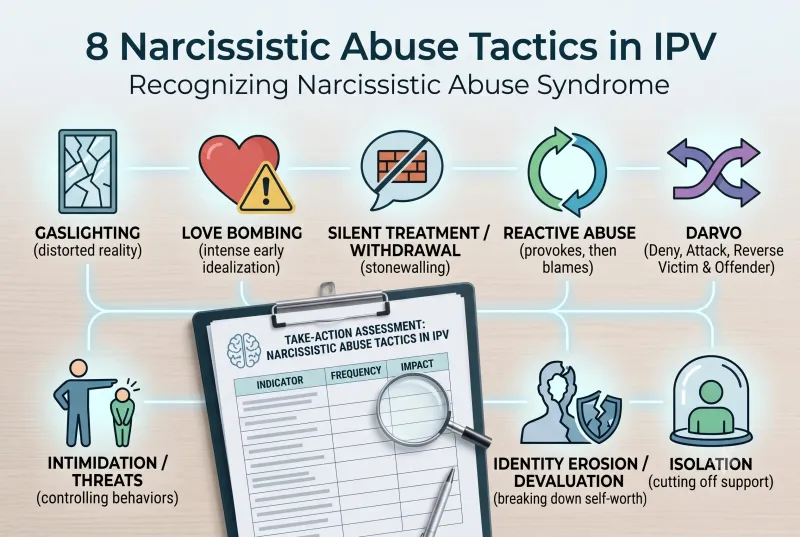
Narcissists Don’t Just Break Your Heart – They Train You to Doubt Yourself
Something quiet happens in certain relationships – something that doesn’t show up as a bruise or a dramatic blow-up, but still leaves a mark you carry everywhere. You stop trusting the little voice inside you that used to feel steady. If you’ve found yourself apologizing more than you used to, second-guessing your own memory, or wondering whether you’re just “too sensitive,” you’re not alone, and you’re not imagining it.
The Pattern Matters More Than the Narcissism Label

When a relationship starts to hurt in ways that are hard to explain, it’s tempting to reach for a label. Calling someone a narcissist can feel like finally having a word for something that has been tearing you apart quietly for years. The word gets used a lot online – sometimes helpfully, sometimes loosely – and it’s worth knowing that narcissistic personality disorder is a clinical diagnosis that requires a psychological evaluation and a persistent pattern across many areas of life. A writer, a friend, or even a very perceptive partner cannot make that diagnosis from relationship anecdotes.
What that means for you is actually freeing, not limiting. You don’t need a diagnosis to name what has been happening. The U.S. Department of Justice defines domestic violence around patterns of power and control, not around any perpetrator’s mental health label.
A partner’s pattern of humiliation, intimidation, monitoring your movements, cutting you off from friends or family, controlling money, or using threats to shape your behavior is serious and worth taking seriously – regardless of what category it fits into clinically.
Research has found a statistically significant but weak and variable association between narcissistic traits and intimate-partner violence perpetration, according to a 2024 systematic review and meta-analysis. That finding matters because it tells us two things at once: narcissistic traits are not a reliable predictor of abuse, and abusive behavior is not limited to people who carry any particular label.
The behavior is what harms you. The label is secondary. Intimate-partner abuse can affect people of any gender and can occur in same-sex relationships, in marriages, and after a relationship ends. If the pattern of control or cruelty is there, that pattern deserves your attention – whether or not anyone ever assigns it a diagnosis.
What matters most right now is what the behavior has done to you, and what support might help you find solid ground again.
Control Can Shrink Your Choices One Ordinary Moment at a Time
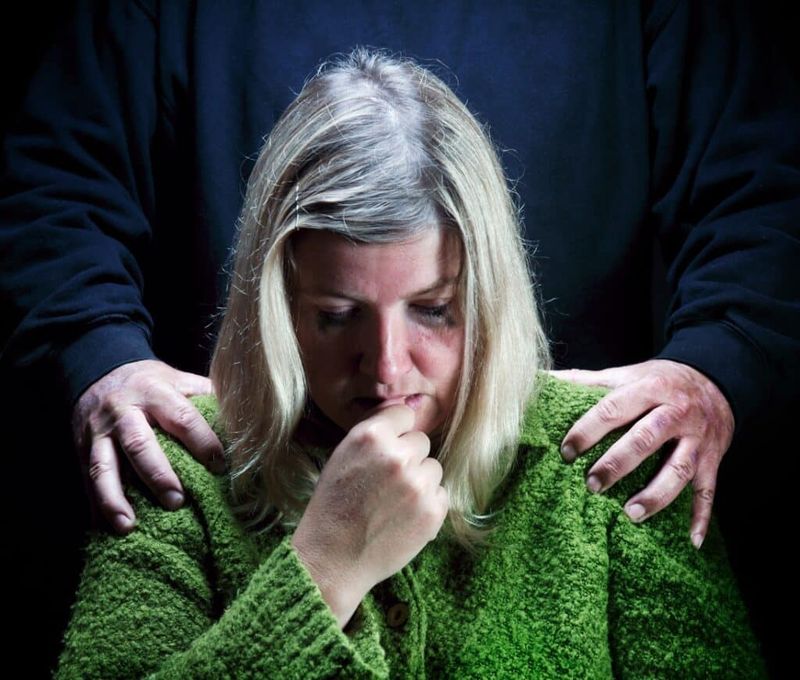
Coercive control rarely announces itself. It doesn’t arrive with a speech or a warning. Instead, it shows up in small decisions that seem reasonable at first – a partner who wants to know where you are “because he worries,” who discourages a friendship “because that person isn’t good for you,” who handles the finances “because he’s better at it.” One ordinary moment at a time, the circle of what feels available to you quietly narrows.
The CDC recognizes psychological aggression as behavior intended to harm a partner mentally or emotionally or to exert control, and the forms it takes are wider than most people expect. Monitoring your movements or your phone. Restricting contact with people who matter to you. Making financial decisions without your input or cutting off your access to money.
Humiliating you in private or in front of others. Destroying property to make a point. Threatening self-harm to keep you from leaving or speaking up. Each of these behaviors, on its own, might be explained away.
Together, they create an environment where your choices belong to someone else.
The scale of this is not small. The CDC’s 2023-2024 National Intimate Partner and Sexual Violence Survey data brief reports that nearly 1 in 3 U.S. women – approximately 30.2%, or 38.6 million people – experienced psychological aggression by an intimate partner over their lifetimes. That survey covers both expressive aggression and coercive control or entrapment. You are not an outlier.
You are not dramatic. What you have experienced is something millions of people recognize.
The cruelest part of coercive control is that it can feel like love while it is happening. Concern dressed as monitoring. Jealousy framed as devotion. Financial management sold as protection.
The WHO identifies emotional abuse and controlling behaviors as forms of intimate partner violence precisely because the harm is real even when there are no visible marks. Noticing the pattern, even before you know what to do about it, is a meaningful act of self-awareness.
Repeated Reality-Denial Can Make Memory Feel Unsafe

You bring up something that hurt you – a comment made at dinner, a tone that felt dismissive, a promise that wasn’t kept. What happens next is disorienting. The partner doesn’t say “I’m sorry” or even “I disagree.” Instead, they say it didn’t happen that way. That you misheard.
That you’re too sensitive. That you always do this. Before you know it, you’re the one apologizing – not for bringing something up, but for apparently remembering your own life incorrectly.
That pattern has a name in everyday conversation: gaslighting. The National Domestic Violence Hotline describes gaslighting as a form of manipulation in which someone causes another person to question their own memory, perception, and sanity. Behaviorally, it looks like repeated attempts to discredit what you saw, heard, or felt – paired with blame-shifting that redirects accountability back onto you. One disagreement about memory doesn’t make a pattern.
Ordinary forgetfulness exists. People miscommunicate. But when someone consistently rewrites events in ways that always protect them and always implicate you, something different is happening.
The question worth sitting with is not whether you can prove a diagnosis. The question is whether someone in your life repeatedly works to make you distrust your own perceptions. Emotional abuse includes behaviors that undermine a person’s sense of self-worth and distort their view of reality, and reality-denial is one of the clearest examples of that. It doesn’t require a label.
It requires your attention.
Confusion after chronic conflict is not evidence that you are irrational. It can be the natural result of being told, over and over, that your own account of your life is wrong. When memory starts to feel like unsafe territory, that experience is worth talking through with someone you trust – a friend, a counselor, or an advocate who understands these dynamics. Your perceptions deserve careful, patient attention, not constant cross-examination.
Self-Doubt and Self-Blame Can Become the Aftermath

After enough time inside a controlling or psychologically abusive relationship, something shifts in how you talk to yourself. You start editing ordinary requests before you make them – softening them, preemptively apologizing, asking yourself whether you’re being unreasonable before you’ve even spoken. You stop expecting to be heard and start expecting to be managed. The internal voice that used to say “that wasn’t okay” gets quieter, and the one that says “maybe it was my fault” gets louder.
This isn’t a personality flaw. Research links psychological abuse with erosion of self-esteem and self-efficacy, and isolation with reduced access to the social support that might otherwise help a person reality-check their experiences. When the people who could affirm your perceptions are slowly cut off, and the person closest to you insists those perceptions are wrong, the math is not complicated. You begin to believe what you hear most often.
A prospective study of American women found that those who reported intimate partner violence later showed more depressive symptoms and functional impairment, along with lower self-esteem and life satisfaction. These are associations, not a guaranteed progression – not every survivor’s experience follows the same path. But the findings do confirm that the harm is real, measurable, and worth treating seriously. What you feel in your body and your confidence is not imaginary.
A separate study found that self-blame is associated with poorer self-esteem among women who have experienced intimate-partner abuse. Self-blame is an aftermath of abuse, not evidence that you caused it. The instinct to ask “what did I do wrong?” can feel like honest self-reflection, but in the context of repeated humiliation and control, it is more often a sign of how thoroughly the pattern has gotten inside you. You were shaped by an environment designed, consciously or not, to make you responsible for someone else’s behavior.
That is the injury. It is not your character.
Tender Moments Do Not Erase a Controlling Pattern
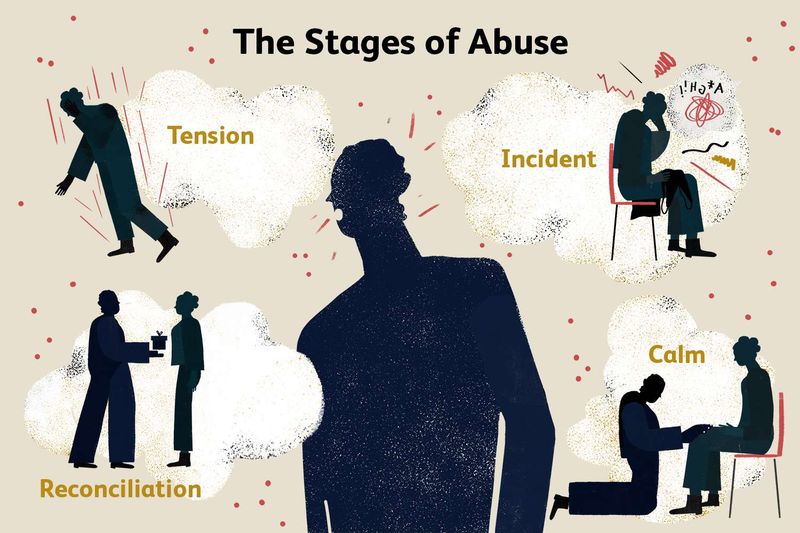
One of the most confusing parts of a controlling relationship is that it is not always cold. There are good days. There are moments of real warmth, laughter, tenderness – moments that remind you of why you stayed, or why you started. After a period of cruelty or intimidation, a partner might become affectionate, apologetic, generous with attention or gifts.
The closeness you miss comes back, briefly, and your nervous system relaxes.
Warmth after cruelty is not proof that the cruelty was a misunderstanding. It is part of the pattern. The Hotline identifies overwhelming gifts, praise, or affection followed by manipulation or control as one possible pattern in emotionally abusive relationships. Not every intense romance fits this description, and an article cannot tell you whether your specific relationship does.
What it can tell you is that recurring reconciliation after harm does not cancel the harm – it can make the harm harder to name, because love and pain have become genuinely tangled together.
Feeling attached to someone who has also hurt you is not weakness or stupidity. Attachment doesn’t follow logic, and ambivalence in a complicated relationship is one of the most human experiences there is. You are not staying because you’re broken. You may be staying because the relationship contains real things you value, and because leaving feels far more dangerous or uncertain than it looks from the outside.
Validating the affection doesn’t mean excusing the pattern. Intimate partner violence can range from a single episode to chronic abuse and can exist alongside genuine affection. Both can be true at once. The question is not whether the good moments were real.
The question is whether the overall pattern is one you can live inside safely – and whether you have the support to figure that out on your own terms.
Choose Confidential Support Before a High-Risk Conversation
Recognizing a pattern is one thing. Knowing what to do next is something else entirely, and the answer is rarely “confront him directly” or “leave by Friday.” Both of those paths can feel like obvious next steps, but both carry real risks that depend entirely on your specific situation. The National Domestic Violence Hotline warns that confronting an abusive partner can trigger escalation, and recommends safety planning instead of direct confrontation as a first move. Boundary-setting, as satisfying as it sounds in theory, can sometimes provoke retaliation rather than respect.
Leaving, too, is not as simple as it appears from the outside. The U.S. Office on Women’s Health notes that leaving an abusive relationship can actually increase danger for some survivors, depending on the partner’s history, access to weapons, financial control, immigration status, children, disability, or housing situation. The safest plan is an individualized one – built with someone who understands these dynamics, not assembled alone under pressure.
Confidential support is the place to start. A trusted friend or family member, an individual counselor with experience in trauma and abuse, or a domestic-violence advocate can help you think through your options without pressure or judgment. Individual counseling from a qualified, abuse-informed professional is broadly recommended for survivors. Couples counseling is a different matter.
The Hotline explains that couples therapy is generally not recommended when abuse or coercive control is present, because abuse is not a mutual communication problem, the power imbalance remains in the room, and disclosures made in sessions may later be used against the survivor.
Emotional safety planning can include identifying supportive people, setting achievable goals, and connecting with advocates. Practical safety planning may address housing, finances, children, medication, important documents, transportation, and a safe place to go. Digital safety matters too, because a controlling partner may monitor devices, accounts, or location. Any documentation of abuse should only happen if it can be done safely and lawfully – a domestic-violence advocate can advise you on both.
You don’t have to prove anything to anyone before you deserve help.
Rebuild Self-Trust Without Demanding Certainty Overnight

Rebuilding trust in yourself after a period of repeated reality-denial and control is not a single decision. It is a slow, uneven process that looks different for everyone. A useful place to start is simply noticing: noticing what you feel in your body when something happens, noticing which conversations leave you feeling smaller, noticing which moments feel safe. You don’t have to argue over labels or prove a pattern to anyone.
You just have to pay careful attention to your own experience and treat it as worth taking seriously.
Speaking with a safe person – someone who listens without minimizing, who reflects your experience back without rewriting it – can be genuinely restorative. Abuse-informed counseling and domestic-violence advocacy exist specifically for this: helping survivors reconnect with their own perceptions and make decisions that reflect their actual needs and circumstances. Resources from the U.S. Department of Justice’s Office on Violence Against Women can help you locate local support.
In the United States, the National Domestic Violence Hotline is available at 800-799-SAFE (7233), by text at 88788, and through online chat. If you are in immediate danger, call 911. Resources vary by country, so a local search or advocacy organization can help you find what is available where you are.
There is no fixed timeline for this. Some days the old voice of self-doubt will be louder than the new one. That is not failure. Recovery from repeated psychological harm is not linear, and no one has the right to tell you how long it should take or what the right next step looks like for your life.
The erosion of self-trust is an effect of what was done to you – not evidence that you are irrational, too sensitive, or responsible for someone else’s conduct. Your memories, your needs, and your perceptions are worth careful, patient attention. That attention can start right now, exactly where you are.