
When Aging Challenges Narcissistic Patterns: What May Change and What May Not
Something shifts when the people we have quietly organized our lives around start to change with age. The anger gets louder, the demands feel heavier, and you find yourself wondering if you are finally seeing something that was always there. You are not imagining it, and you are not alone in asking these questions. Understanding what aging can and cannot do to longstanding patterns of behavior may be one of the most grounding things you do for yourself right now.
Aging may challenge narcissistic patterns, but it does not guarantee collapse

Somewhere along the way, you may have started hoping that time would do what years of conversations could not. That age would soften the edges, quiet the demands, or finally make the person in front of you easier to be around. Sometimes that hope is warranted. Sometimes what actually happens is more complicated.
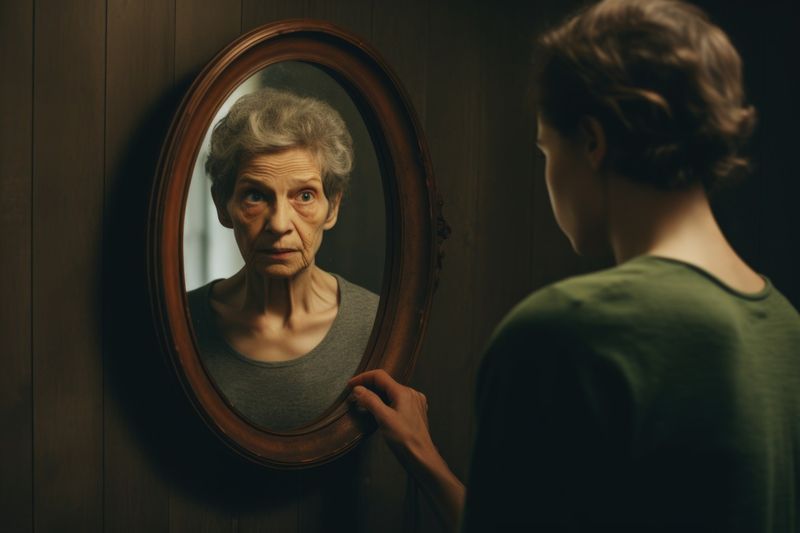
Aging can remove or weaken the things that once made certain people feel powerful: admiration from colleagues, physical confidence, professional status, social authority, the ease of independence. For someone whose sense of self has long depended on being seen as exceptional, those losses may feel genuinely destabilizing. A clinical case study of NPD in an octogenarian describes how age-related changes in health, appearance, cognition, and social roles can threaten an identity organized around grandiosity and external validation.
But here is what the research also shows, and what popular articles rarely mention. A 2024 meta-analysis of narcissistic traits across the life span found that narcissism tends to decline on average from childhood through later adulthood, not worsen. Longitudinal research tracking people from adolescence into older adulthood found similar declines in maladaptive features like hypersensitivity and willfulness over time.
That does not mean nothing changes, or that your experience is wrong. Individual differences are substantial. People who were relatively higher in narcissistic traits may remain relatively higher than others, even as the average dips. What this article examines is not a guaranteed late-life unraveling, but something more honest: how aging may make longstanding patterns more visible, more rigid, or more distressing in some people, especially when they cannot adapt to what they are losing.
Narcissistic traits are not the same as narcissistic personality disorder
Before you read any further, there is something worth holding onto. Having narcissistic traits, being self-centered, craving admiration, or struggling to take criticism are not the same thing as having narcissistic personality disorder. That distinction matters more than it might seem when you are trying to make sense of someone’s behavior.
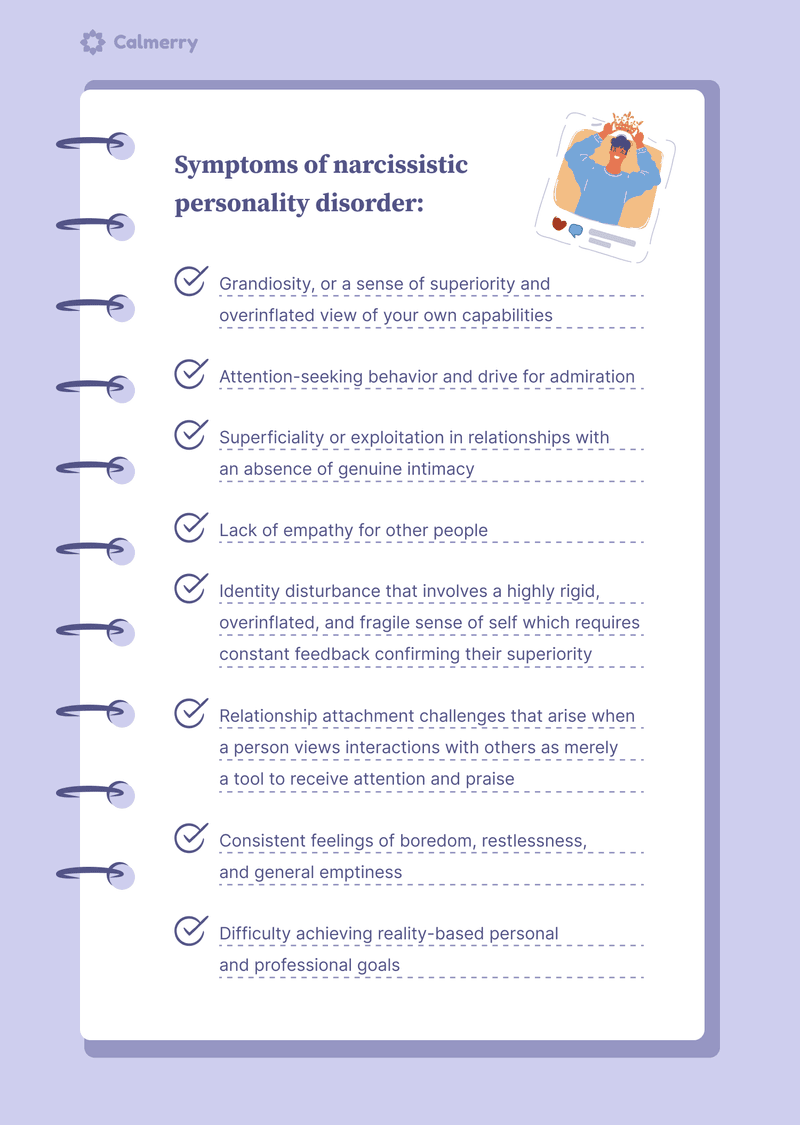
Narcissistic personality disorder, or NPD, is a clinical diagnosis. According to MedlinePlus, it involves a pervasive and long-standing pattern of grandiosity, an intense need for admiration, a sense of entitlement, a tendency to exploit others, and significant difficulty with empathy. The pattern has to be inflexible, show up across many areas of life, and cause real impairment or relationship problems. A diagnosis requires a thorough professional evaluation, not a checklist of frustrating moments.
The American Psychiatric Association describes personality disorders as enduring patterns that deviate significantly from cultural expectations and cause distress or dysfunction. That is a high bar, and it is one that a partner, adult child, or sibling cannot clear on someone else’s behalf based on lived experience alone, however painful that experience has been.
Research on narcissism in the general population often measures traits like entitlement, vanity, admiration-seeking, or sensitivity to criticism. Those measures are useful for understanding personality, but they cannot be treated as equivalent to a clinical diagnosis of NPD. A confident person is not automatically a narcissist. Someone who wants to look good or be praised is not automatically disordered.
The goal here is not to give you a label to apply, but to give you language for what you are experiencing.
Losses of status or independence may strain a fragile source of self-esteem

Picture a man who spent decades being the authority in every room he entered. His career defined him. His physical presence commanded attention. People deferred to him, and he expected them to.
Then retirement arrives, or a health diagnosis, or a moment when his body stops cooperating, and suddenly the room does not respond the way it used to.
For people whose self-worth has long been organized around external sources, such as professional status, physical attractiveness, being the provider, being in charge, or being seen as exceptional, ordinary aging can feel like a personal attack. Clinical material on NPD in later life describes how changes in appearance, cognition, health, and social role can threaten an identity built on grandiosity and the steady supply of admiration from others. When that supply shrinks, the internal scaffolding can become unstable.
The possible responses vary. Some people become more demanding of the people closest to them, as if tightening control at home can replace what they have lost outside it. Others withdraw, grow depressed, or become hypersensitive to any hint of criticism or irrelevance. Some cycle between both.
None of these responses are inevitable, and none of them are your fault.
What matters here is the word “possible.” The strongest evidence for this specific aging mechanism comes from clinical observation and theoretical work, not large-scale causal studies. Not every person who retires or loses physical confidence will respond this way. The mechanism is real for some people, but it is a hypothesis about a pattern, not a rule. Knowing it exists can help you name what you are watching, without requiring you to explain or excuse it.
The behavior may look grandiose, vulnerable, or simply distressed

One of the most disorienting things about living alongside someone with longstanding narcissistic patterns is that the behavior does not always look the same. Some days it is loud and entitled. Other days it is wounded and withdrawn. You end up wondering which version is real, and whether you are reading the situation correctly at all.
On the more visible end, recognized patterns associated with narcissistic traits include disproportionate anger or humiliation in response to criticism, persistent demands for favorable treatment, a tendency to exploit others for personal gain, constant attention-seeking, dismissing another person’s feelings as irrelevant, and reflexively blaming others when something goes wrong. You may recognize several of these from your own life without needing a clinical term to name them.
But there is another side that gets less attention. Narcissistic vulnerability involves hypersensitivity to criticism, deep shame, fragile self-worth, a fear of rejection, and intense reactions when someone pulls back affection or attention. A person in this presentation may not look arrogant at all. They may look depressed, wounded, or in need of constant reassurance.
Clinical reviews of pathological narcissism describe how these two expressions, grandiose and vulnerable, can exist in the same person and shift depending on circumstances.
Here is the part that requires honesty. Aging-related losses affect many people, not only those with narcissistic patterns. Grief, illness, retirement, reduced mobility, and social isolation can cause irritability, defensiveness, sadness, or withdrawal in people who have no personality disorder at all. Depression is common in older adults and often goes unrecognized.
No single behavior proves NPD, confirms an age-related unraveling, or tells you with certainty what is driving what you are seeing. What you can do is pay attention to patterns over time, and to how those patterns affect you.
A sudden personality change may signal a medical problem, not a hidden character
When someone you have known for years suddenly becomes more suspicious, more forgetful, more disinhibited, or more aggressive, it is easy to tell yourself that you are finally seeing who they really are. Years of frustration can make that story feel true. But a sudden shift in personality or behavior in an older adult deserves a different question first: could something medical be happening?
Rapid or fluctuating changes in mood, memory, suspicion, impulse control, or social behavior can have physical causes that have nothing to do with personality structure. Possible explanations include delirium from infection or medication interaction, untreated depression, metabolic or endocrine imbalances, and neurological conditions including various forms of dementia. The National Institute on Aging recommends professional assessment of cognitive and behavioral changes in older patients, precisely because those changes can signal treatable conditions when caught early.
NIA guidance on behavioral changes in dementia notes that personality shifts, increased agitation, suspicion, and emotional dysregulation can all accompany cognitive decline, and that these changes reflect disease processes rather than deliberate choices. That context matters, both for the person experiencing them and for the people around them.
A medical explanation does not mean you are required to absorb danger or harm. If someone becomes threatening, financially controlling, physically intimidating, or verbally abusive, those behaviors are a safety concern regardless of what is causing them. The two things can be true at once: a person may need medical evaluation, and you may need support and protection. Seeking one does not cancel out the other.
If behavior changes rapidly and significantly, bringing it to a doctor’s attention is the most grounded first step you can take.
Ask what happens when you express a need or set a limit

You do not need a diagnosis to evaluate what is happening in your relationship. There is a simpler, more honest question available to you, and it has nothing to do with proving anything to anyone else. What happens when you say no? What happens when you name a need, disagree with something, or hold a limit?
In a relationship where the dynamic is relatively balanced, disagreement is uncomfortable but manageable. One person expresses a need, the other may not love it, but there is room to work it out without someone being punished for asking. Patterns associated with narcissistic traits include expecting compliance, reacting to disagreement with disproportionate anger or withdrawal, and persistently dismissing the other person’s feelings as irrelevant or manipulative. Over time, you may find yourself editing what you say, managing his reactions before you even speak, or simply giving up on having needs at all.
Personality disorders by definition involve patterns that are inflexible and that cause significant impairment in relationships. You do not need to be able to name the disorder to notice the pattern. If expressing a reasonable need consistently leads to humiliation, blame, silent treatment, threats, or a complete reversal where you end up apologizing for asking, that pattern matters on its own terms.
The CDC defines psychological aggression as communication intended to harm a partner mentally or emotionally or to exert control. That definition does not require a diagnosis. Repeated humiliation, coercion, exploitation, and retaliation are relationship safety concerns regardless of what label, if any, applies to the person doing them. The question is not whether you can prove NPD.
The question is whether you are free to be a person with needs inside this relationship.
Set boundaries around your actions, and make safety the priority
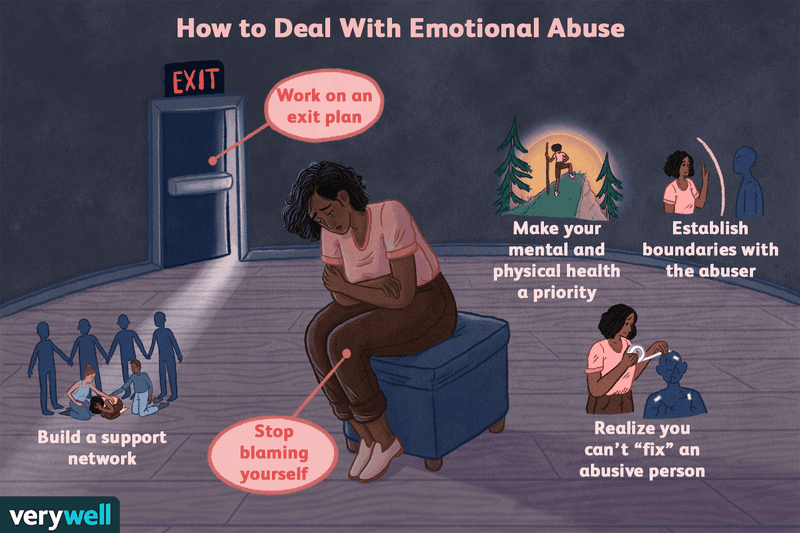
A boundary does not work the way most of us were taught to think it does. It is not a rule you announce and then wait for someone else to follow. It is a description of what you will do, not what you are demanding they do. That shift in framing is small, but it changes everything about how you protect yourself without needing the other person to agree, cooperate, or even understand.
A workable boundary sounds like this: “If you insult me during a conversation, I will end the conversation and leave the room.” Not “you are not allowed to insult me,” which puts the control in their hands. Your action, your decision, your follow-through. The National Domestic Violence Hotline’s guidance on emotional safety planning emphasizes that when asserting a limit leads to gaslighting, retaliation, or emotional abuse, planning for your own safety becomes the priority, not continuing to assert the limit.
Emotional abuse includes behaviors intended to control, isolate, humiliate, or undermine another person’s sense of reality. If you are experiencing that, the answer is not a better-worded boundary statement. It is support from someone outside the relationship, whether that is a counselor, a trusted friend, a hotline, or a legal advocate.
When intimidation, financial control, threats, stalking, sexual coercion, or physical danger are part of the picture, CDC guidance on intimate partner violence prevention recommends individualized safety planning and access to coordinated support services, including housing help and legal protections. Additional CDC resources on IPV prevention outline the range of survivor-centered services available. Confronting someone about narcissism is not a safety strategy. Getting support before any confrontation is.
Revenge, public exposure, silence tactics, or strategies designed to make someone unravel are not only ineffective, they can increase risk in relationships already involving control or threats.
Your clarity does not depend on someone else’s collapse

There is a version of this story that ends with age exposing everything, the other person finally crumbling under the weight of who they have always been, their behavior becoming so obvious that no one can deny it anymore. That version is satisfying to imagine. The evidence, however, does not promise it.
Clinical reviews of pathological narcissism describe treatment as a gradual process with limited but real evidence of improvement for some people. Research on therapeutic approaches suggests that change is possible for some individuals, though it cannot be demanded by a partner and cannot be rushed by external pressure. Psychotherapy is the primary treatment approach for personality disorders, and no medication specifically targets a personality disorder itself. Whether someone seeks help, commits to it, and changes is entirely outside your control.
Your clarity does not have to wait for their collapse. You can recognize a harmful pattern without diagnosing it. You can respond to repeated harm without waiting for age to confirm what you already know. You can seek support, set limits around your own actions, reduce your exposure to behavior that costs you, and build a life that does not require his transformation as a prerequisite.
What you have lived through is real. The exhaustion is real. The confusion is real. And the part of you that finally started asking questions deserves to be taken seriously, not because someone else is unraveling, but because you are done waiting to matter.
Clarity is not a gift age gives you by exposing someone else. It is something you choose for yourself, one honest question at a time.