Some Fathers Are Always Around but Never Truly There for Their Child
Some children grow up in full houses that still feel hollow. Their father is at the dinner table, on the couch, in the next room, and yet something essential is missing, something that has no easy name but leaves a mark that lasts for years. If you have felt that particular kind of loneliness, or watched a child you love feel it, you are not imagining things.
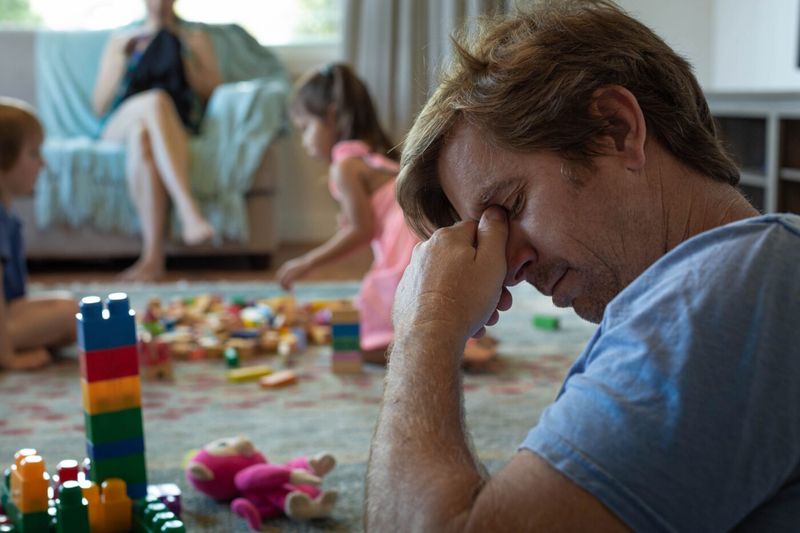
A father can be in the room and still leave a child emotionally alone

Picture a seven-year-old running into the living room, cheeks flushed, holding a drawing she made at school. Her father is right there in the armchair. She holds the picture up and says, “Dad, look what I made.” He glances over, says “Mm,” and goes back to the television. She stands there a moment longer, then quietly sets the drawing on the floor and walks away.
That scene plays out in thousands of variations every day, and what makes it painful is not that the father was away on a business trip or deployed overseas. He was there. His physical presence was never in question. What was missing was something harder to see but impossible not to feel: the willingness to turn toward his child and actually meet her.
Physical presence, emotional availability, and safe involvement are three separate things, and conflating them leads to real confusion. A systematic review of longitudinal studies on father involvement found that active engagement with a child, not simply living in the same household, is the form of involvement most consistently linked to positive developmental outcomes. A father who shares a home but rarely initiates warmth, curiosity, or real conversation may be present in every logistical sense while remaining relationally absent.
The reverse is also true, and worth saying plainly. A father who no longer lives with his child can still call, listen, show up at games, and repair after conflict. A nonresident father who remains warm and reliable is doing something real. Cohabitation and emotional availability are not the same, and neither automatically signals the other.
What matters most to a child is not the floor plan of the home but whether the person she reaches for actually reaches back.
Children learn about connection through repeated moments of response
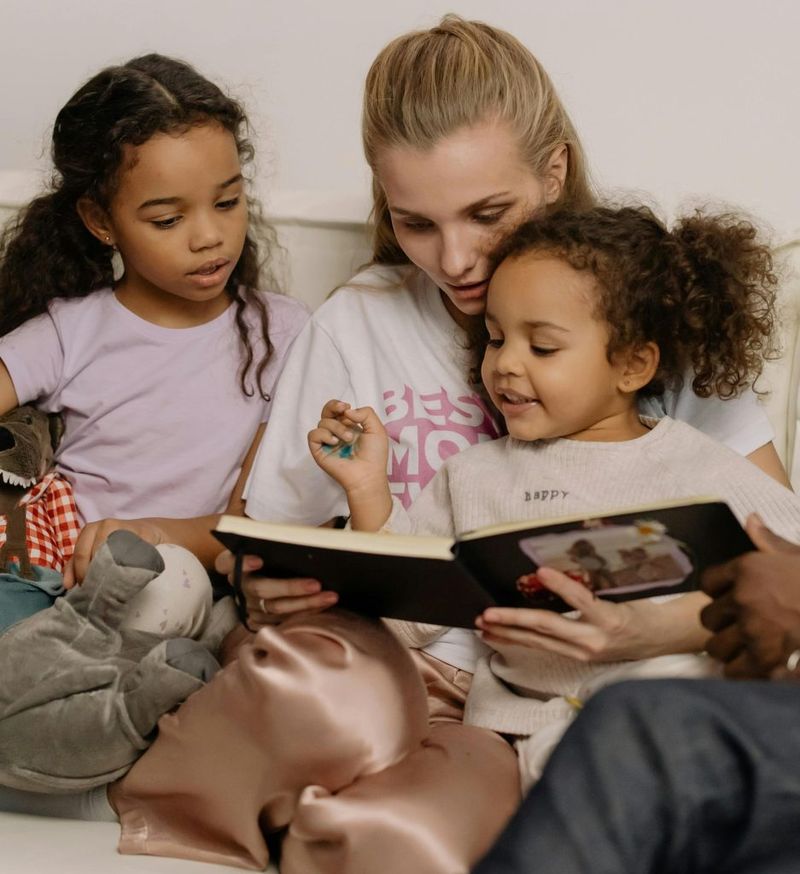
Long before a child can talk about her feelings, she is already learning what happens when she expresses them. She cries and someone comes. She babbles and someone babbles back. She points at something interesting and an adult follows her gaze, names it, shares the moment with her.
These small, repeated exchanges are how children begin to understand that their inner world matters and that other people can be counted on.
Harvard’s research on serve-and-return interaction describes this process clearly: a child sends a signal, a caregiver notices it, responds supportively, and the back-and-forth exchange builds neural connections that support language, social skills, and emotional security. The key word is “repeated.” A single warm moment does not build a sense of safety. What builds it is the pattern, the reliable experience of reaching out and being met.
Emotional availability shows up in ordinary, unglamorous actions: noticing when a child is upset before she can say so, listening without looking away, staying present when she is excited about something you find boring, coming back after a disagreement to repair the connection. None of these require grand gestures. They require attention and a willingness to be interrupted by someone else’s feelings.
When a father’s responses are persistently absent, dismissive, or unpredictable, a child loses repeated opportunities to learn that her signals carry weight. Harvard’s science of neglect research and guidance from the National Child Traumatic Stress Network both note that persistent nonresponse from a caregiver can increase stress and reduce the relational learning children need. This is not about one distracted afternoon or a parent going through a hard week. The concern is the pattern, the steady, predictable absence of response that teaches a child, quietly and without words, that her feelings are not worth attending to.
Material care matters, but it does not replace emotional responsiveness

He pays the mortgage. He drives her to soccer practice. He makes sure there is food in the refrigerator and a winter coat that fits. By most external measures, this father is doing his job.
And in an important, concrete sense, he is. Material provision is real. It matters. It keeps a child fed, sheltered, and physically safe, and that is not nothing.
But watch what happens when she comes home from school with red eyes from crying. He asks if she finished her homework. When she tries to tell him a friend said something that hurt, he says, “You’re too sensitive,” and goes back to his phone. When she gets an A on a test, the only response is, “You should have gotten them all right.” She has everything she needs and almost nothing she is longing for.
CDC guidance on child abuse and neglect identifies rejecting, shaming, name-calling, and withholding love as examples of emotional abuse, and distinguishes these from emotional neglect, which involves a persistent failure to respond to a child’s emotional and psychological needs. Formal definitions and legal thresholds vary by jurisdiction and require qualified professional assessment, but the descriptive concern is recognizable: a child whose feelings are routinely ignored, mocked, or treated as inconvenient is not receiving emotional care, even if every material need is covered.
The Child Welfare Information Gateway’s definition of neglect, alongside NCTSN provider guidance, emphasizes that neglect is assessed in relation to persistence, severity, and a child’s specific needs, not from isolated incidents. A quiet, reserved father or one from a culture where emotional expression is less verbal is not automatically neglectful. The difference lies in whether his child consistently feels seen and safe, or consistently feels invisible and dismissed.
The pattern may affect adjustment and beliefs about closeness, but it does not write the future
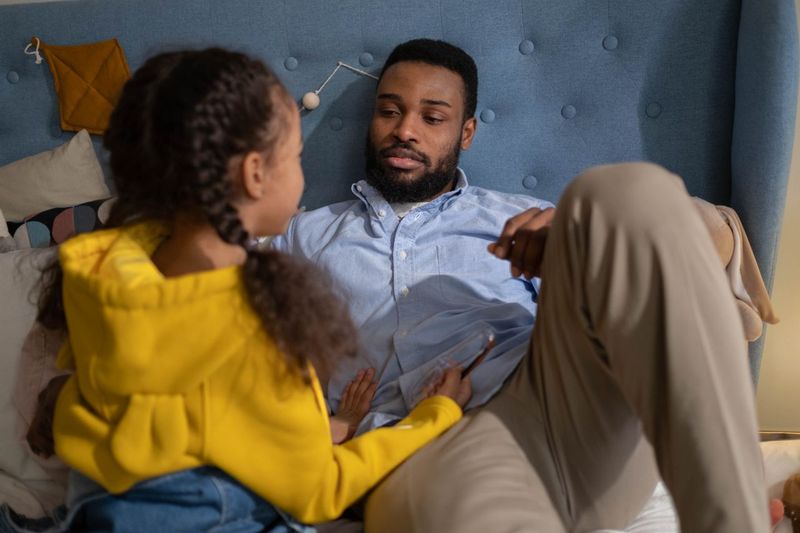
Growing up beside a father who rarely responds to your emotional signals does leave traces. Research in developmental psychology has tried to map those traces carefully, and the findings are worth knowing, as long as you hold them with appropriate care.
A meta-analytic review of paternal sensitivity studies found associations between father responsiveness and children’s cognitive functioning, language development, executive function, emotion regulation, and fewer behavioral problems. These associations are not uniform across every study or every outcome, but the pattern is consistent enough to take seriously. A father’s attentiveness, or the absence of it, can shape how a child learns to manage her inner world.
Children who experience repeated rejection or dismissal from a parent may begin to adapt in ways that make sense in the short term but carry costs. Some learn to hide needs that have never been welcomed. Some begin to doubt whether their feelings deserve attention. Some develop a quiet, persistent uncertainty about whether closeness is safe or reliable.
A nine-country longitudinal study on perceived parental rejection found that children who felt rejected by a father showed increases in behavioral and emotional difficulties and decreases in school performance over three years. The effects were small and broadly consistent, not dramatic or universal.
A meta-analysis of 72 studies on parent-child attachment found that more secure attachment was associated with better emotion regulation and more positive coping strategies, while avoidant and ambivalent patterns showed different associations. Some adults who grew up with an emotionally unavailable parent may recognize patterns in how they approach closeness, but the research does not establish that a particular adult will inevitably struggle in relationships or seek out unavailable partners. Those are possible patterns some people recognize in themselves, not a predetermined script.
A systematic review on child maltreatment and adult resilience reinforces what developmental evidence consistently shows: outcomes depend on timing, severity, temperament, other caregiving relationships, socioeconomic conditions, and access to support. The absence of a father’s warmth can explain a great deal about a child’s experience. It does not decide who she becomes.
Watch what happens when the child reaches for him
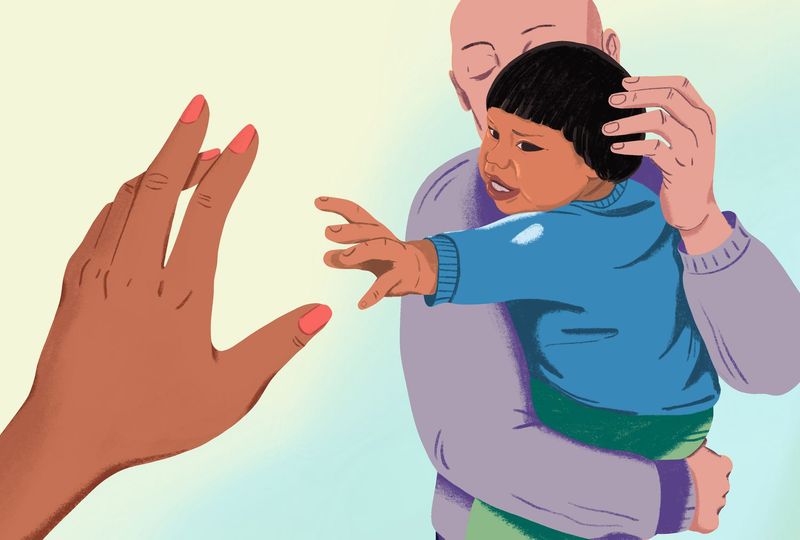
One of the clearest ways to understand a relationship is to watch what happens at its edges, the moments when someone needs something and reaches toward another person. With a child and her father, the most revealing question is simple: what happens when she is upset, excited, afraid, or proud?
Pay attention to the pattern, not the highlight reel. A father who occasionally shows up for a big recital or buys an impressive birthday gift may genuinely love his child. But if those moments are surrounded by weeks of deflection, dismissal, or flat indifference to her inner life, the occasional gesture does not substitute for daily responsiveness. Harvard’s guidance on serve-and-return interaction and its practical steps for parents and caregivers both emphasize that repeated, predictable responsiveness, not occasional intensity, is what builds a child’s sense that relationships are dependable.
Notice whether he listens when she speaks or redirects the conversation back to himself. Notice whether he repairs after conflict, coming back to acknowledge her feelings even when he was wrong, or whether ruptures are simply left to dissolve on their own. Notice whether she edits herself around him, going quiet on topics that once made her eyes light up.
If you want to understand how she experiences the relationship, ask her open-ended questions without steering the answer. “What is it like talking to Dad when something is bothering you?” is very different from “Does Dad make you feel bad?” Validate what she shares without rushing to label it: “It makes sense that you feel lonely when you try to talk and he doesn’t respond.”
Emotional reserve, quietness, or cultural difference in expression is not the same as persistent rejection. The concern rises when a child faces repeated humiliation, mockery, intimidation, or a consistent withholding of warmth that the CDC identifies as emotionally harmful behaviors. One pattern is personality. The other is a child learning, over and over, that her feelings are a burden.
One steady adult may offer protection, but no one person must repair everything
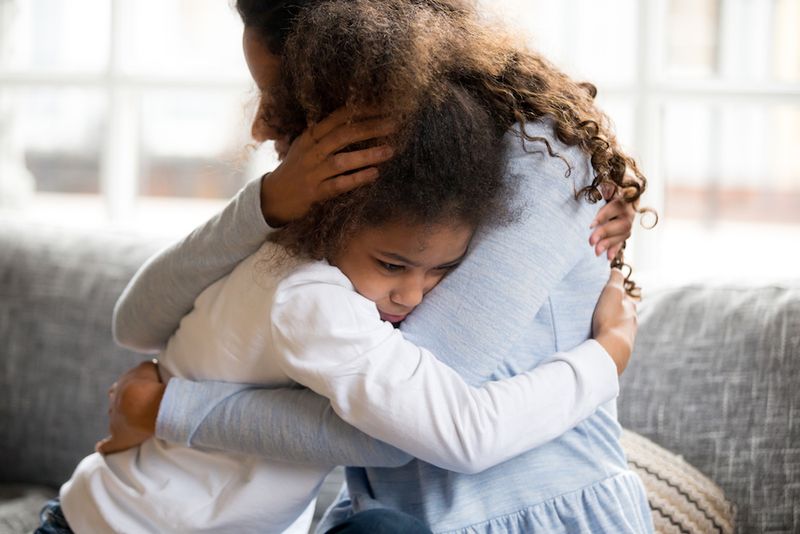
Children are surprisingly good at finding the one person in a room who actually sees them. Sometimes that person is a mother. Sometimes it is a grandmother, an aunt, a teacher who notices, a coach who remembers names, a school counselor who keeps the door open. The relationship does not have to be dramatic to be meaningful.
It just has to be consistent.
A reliable, caring adult can be one of the most important things a child has. Federal child-welfare guidance captured in protective factors frameworks for child welfare identifies safe, stable, nurturing relationships as central to children’s resilience, and notes that at least one committed, supportive relationship is commonly associated with better outcomes for children facing adversity. That relationship does not have to be with a father.
In practice, being that steady adult looks like believing the child when she says something hurt. It looks like making room for whatever she is feeling without immediately trying to fix it or minimize it. It looks like responding predictably, so she learns that reaching out is worth the risk. Community-based child welfare research emphasizes that children benefit from broader networks of support, not just individual caregivers.
One person’s warmth can offer real protection. It is honest, though, to say that one supportive adult does not automatically fill every gap or guarantee a particular outcome. Children’s needs vary, and some situations call for more than one caring relationship can provide on its own. Professional support, school resources, family therapy, and broader social connections may all be part of what helps a child feel less alone.
No one person should have to carry that weight by herself, either.
Seek support before asking a child to confront the problem

When you start to see the pattern clearly, the instinct can be to do something immediately. To name it out loud to the father. To ask the child to explain how she feels so he will finally understand. That impulse comes from love, but it is worth slowing down before putting a child in the middle of something she did not create and cannot resolve.
A child should never be asked to carry the work of changing a parent’s behavior. If distress is affecting her sleep, her appetite, her school performance, her friendships, or her willingness to talk about how she feels, that is a signal to bring in professional support. SAMHSA’s guidance on child trauma advises seeking trauma-informed professional help when children do not recover with ordinary family support. A pediatrician, school counselor, licensed mental-health professional, or family therapist can help assess what the child needs and create a plan that does not put her in an impossible position.
CDC guidance on children’s mental health encourages parents to seek evaluation when emotional or behavioral concerns persist, and emphasizes that early support tends to be more effective than waiting to see if things improve on their own. Repair between a child and her father is possible when a father becomes genuinely responsive and consistent over time, but that change has to come from him, and it cannot be engineered by asking a child to do the emotional labor of prompting it.
If there is any intimidation, coercive control, threats, violence, sexual abuse, or immediate danger in the home, the priority is safety, not conversation. Safety planning should come first, with the help of a qualified professional or crisis service. In the United States, Childhelp’s National Child Abuse Hotline offers call, text, and chat support around the clock and can connect you with local resources. No child should be asked to disclose, confront, or navigate an unsafe relationship without that kind of support in place first.
The absence can explain the ache without deciding who the child becomes
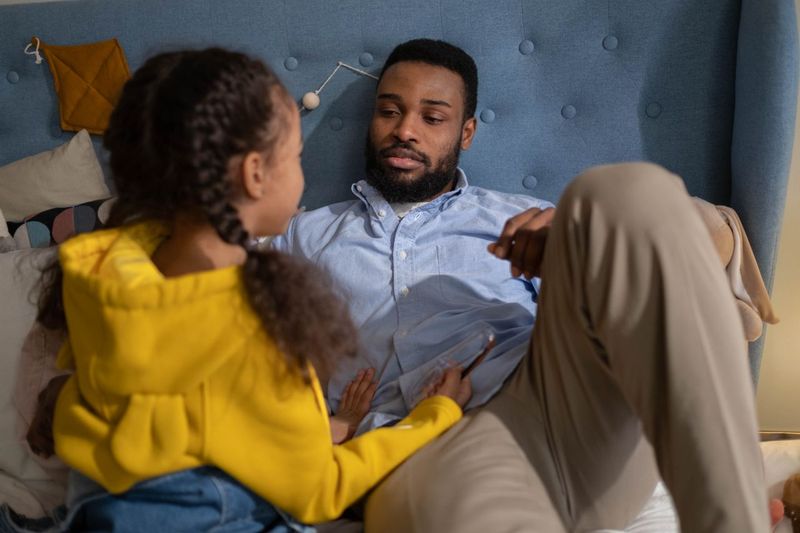
Growing up beside someone who was never quite reachable leaves a specific kind of loneliness. Not the loneliness of an empty house, but the loneliness of a full one, where you learned to stop bringing your feelings to the table because nobody ever picked them up. If you recognize that feeling in yourself, or in the child you are trying to protect, that recognition is real and it deserves to be honored.
Research on attachment and emotion regulation and SAMHSA’s trauma recovery guidance both point toward the same quiet truth: later relationships, responsive care, and appropriate support can matter. There is no fixed timetable for that, and no guaranteed path. But the story is not over at childhood’s end.
A father’s emotional limitations explain the ache. They do not measure the child’s worth. She was not too much. She was not too sensitive.
She was a child doing exactly what children are supposed to do, reaching toward the person who was supposed to reach back. That he could not or would not meet her there says something about him, not about what she deserved.
You are allowed to grieve what was missing without letting it decide what comes next.