

Why You Still Feel Guilty After Setting a Boundary With Your Mother
You finally said it. You told your mother you needed more space, or that you wouldn’t be answering calls after 9 p.m., or that a certain topic was simply off the table. And then, almost instantly, the guilt showed up, quiet and heavy, like it had been waiting right outside the door. That feeling doesn’t mean you did something wrong, but it does mean something worth understanding.
Guilt can arrive before you decide whether the boundary is fair

Picture the moment after you end the call. You told her you couldn’t talk every night, or that you wouldn’t be sharing details about your marriage anymore, and the line went quiet before she said goodbye. Before you’ve even set the phone down, something tightens in your chest. You haven’t had a single second to decide whether the boundary was fair, reasonable, or even necessary, and the guilt is already there.
That sequence matters. Guilt arriving this fast is an emotion responding to anticipated consequences, not a verdict on whether you did something wrong. For some people, the fear of a mother’s disappointment, anger, or withdrawal is enough to make ordinary self-protection feel like a betrayal. Cleveland Clinic guidance on guilt and interpersonal pressure notes that people often feel anxious or guilty when they fear another person’s anger, rejection, or disappointment, and that the feeling deserves attention without automatically establishing moral wrongdoing.
This article will not assume that every boundary you set is the right one, or that every difficult reaction from your mother is manipulative. Relationships are complicated, love is real, and legitimate responsibilities exist on both sides. What the article will do is help you separate what you feel from what you are actually responsible for.
Guilt is information, not a verdict. It tells you that something matters to you, that you care about the relationship, that you are paying attention. What it cannot tell you, on its own, is whether you owe an apology or whether you owe yourself the thing you just asked for. That distinction is worth sitting with before you call her back and take it all away.
You may have learned to carry responsibilities that belonged to adults
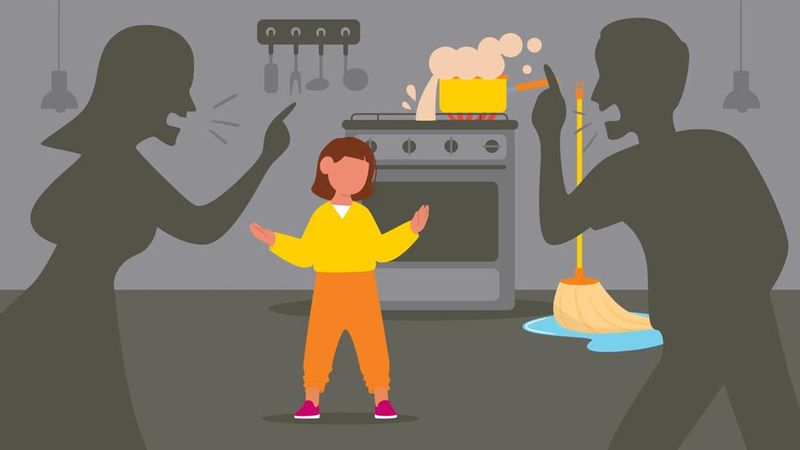
Some of us grew up in households where the emotional weight was distributed unevenly. Maybe you were the one who noticed when your mother was sad before she said a word. Maybe you softened bad news, kept the peace between her and a sibling, or sat with her feelings long after your own bedtime. You weren’t doing it because you were told to.
You were doing it because it felt necessary, and because love, for you, looked like making sure she was okay.
Psychologists call this parentification, and it describes a pattern where a child takes on adult-like responsibilities, whether that means managing a parent’s emotions, acting as a confidante, mediating conflict, or caring for siblings. Research on parent-child role confusion shows how blurred family boundaries can reduce the space a child has for her own needs, leaving her unusually tuned in to a parent’s emotional state and inclined to treat her own desires as secondary or even dangerous.
A meta-analysis of twelve studies on childhood parentification found a modest but statistically reliable association between these early experiences and psychological difficulties in adulthood. A more recent systematic review of parentification outcomes found something worth noting alongside that: some people also reported competence, meaning, and resilience, particularly when the responsibilities felt manageable, supported, or fair. This is not a single story with one ending.
If you grew up feeling responsible for your mother’s emotional world, setting a limit with her now can feel like dismantling something that kept her safe. That feeling is not irrational. It is the echo of a role you learned early, one that made sense in a child’s world even if it costs you something as an adult. Recognizing that pattern as a possible contributor to your guilt is not the same as blaming her for your childhood.
It is simply giving yourself an honest starting point.
The same guilt can come from love, obligation, grief, or pressure

Before you decide what your guilt means, it helps to ask where it is actually coming from. Not every uncomfortable feeling after a hard conversation signals a toxic relationship or a pattern of emotional manipulation. Sometimes guilt shows up because you love her and you can see that she is hurt. Sometimes it arrives because your culture or faith places a specific weight on filial duty that a boundary feels like it violates.
Sometimes it is grief, the quiet ache of realizing the relationship you wanted with her is not the one you have.
A study on guilt in adult mother-child relationships found that roughly one in five adult children reported guilt toward an aging mother, and that guilt was connected to ambivalence and to the ongoing exchange of support between them. Guilt, in other words, can be part of a loving and complicated relationship, not only a symptom of a damaging one.
A different kind of guilt appears when it follows a repeated pattern: criticism every time you assert a preference, withdrawal of warmth when you say no, threats, humiliation, or punishment for having ordinary needs. Guidance from the National Domestic Violence Hotline on emotional abuse describes patterns like controlling, isolating, frightening, and using guilt to coerce compliance as distinct from ordinary conflict or hurt feelings. One disappointed response, one sad voicemail, one difficult conversation does not establish that kind of pattern.
A few honest questions can help you locate where your guilt is rooted. What responsibility did you actually accept in this situation? What practical consequence follows if you say no? What reaction are you most afraid of?
And does this relationship regularly treat your autonomy as an injury to her? The answers won’t come all at once, but they are more reliable than the guilt itself as a guide to what you owe.
A boundary states what you will do, not what your mother must feel

One of the most common misunderstandings about boundaries is that they are a kind of demand. That by saying “I won’t discuss this,” you are ordering your mother to stop caring, stop hurting, or agree that you are right. You are not. Cleveland Clinic’s guidance on boundaries and therapy language is clear that a healthy boundary is a decision about your own behavior, not a tool for controlling another person or cutting everyone off.
You can decide what you will talk about, how long you will stay, when you will pick up the phone, and what you will do if the conversation becomes insulting or overwhelming. Those are yours to decide. What you cannot decide is how she will feel about those choices. She may feel hurt.
She may feel rejected. She may feel angry, or confused, or sad, and some of those reactions may be completely understandable given how close you have been. Her feelings are real, and they are also hers to manage.
A mother’s upset after a limit is set can reflect many things: defensiveness, grief over a changing relationship, genuine misunderstanding about what you meant, stress from her own life, or a longstanding pattern of expecting compliance. One reaction, even a sharp or tearful one, does not prove that the boundary was cruel, and it does not prove that the relationship is irreparable. Research on intergenerational estrangement shows that adult relationships between parents and children can move through periods of distance and reconnection over time, shaped by values, conflict, and relational dynamics on both sides.
Respectful relationships, including the ones that matter most, sometimes require clarification, adjustment, and honest conversation about what each person needs. A boundary is not a wall you build once and never touch again. It is a decision you make about yourself, and it can be revisited as circumstances change.
Make the limit specific enough for you to follow through

Vague limits are the hardest to hold. “I need more space” sounds clear in your head, but it leaves too much room for the conversation to circle back, for her to ask what that means, and for you to end up explaining yourself for an hour without anything actually changing. The more concrete you can make a limit, the easier it becomes to follow through when the pressure rises.
Cleveland Clinic’s practical guidance on responding to guilt and pressure recommends taking time before replying, choosing whether a response is even necessary, stating the request precisely, and standing by the decision rather than reversing it automatically because the other person is upset. That pause before you respond is not avoidance. It is the moment that interrupts the reflex to appease.
Specific, behavior-based language sounds like this: “I’m not going to talk about my marriage today. If it comes up again, I’ll end the call.” Or: “I can come for two hours, but I won’t be staying overnight.” Or: “If the conversation becomes insulting, I’ll leave and we can try again another time.” Each of these connects a clear limit to an action you control, which means you can actually follow through without waiting for her to agree that the limit is fair.
You do not have to respond to every guilt-inducing message the moment it arrives. Moving communication to text or email, shortening calls, or simply waiting before you reply are all ways of making a limit workable without a dramatic confrontation. Cleveland Clinic’s guidance on difficult parental relationships supports ending a conversation when insults begin and returning to it another time, rather than staying in a moment that has already become unproductive. Repeated clarification may sometimes be useful; it may sometimes reflect a wish for approval.
Both can be true, and only you can read which one is driving it in a given moment.
Interpret patterns, not one reaction, and put safety before confrontation
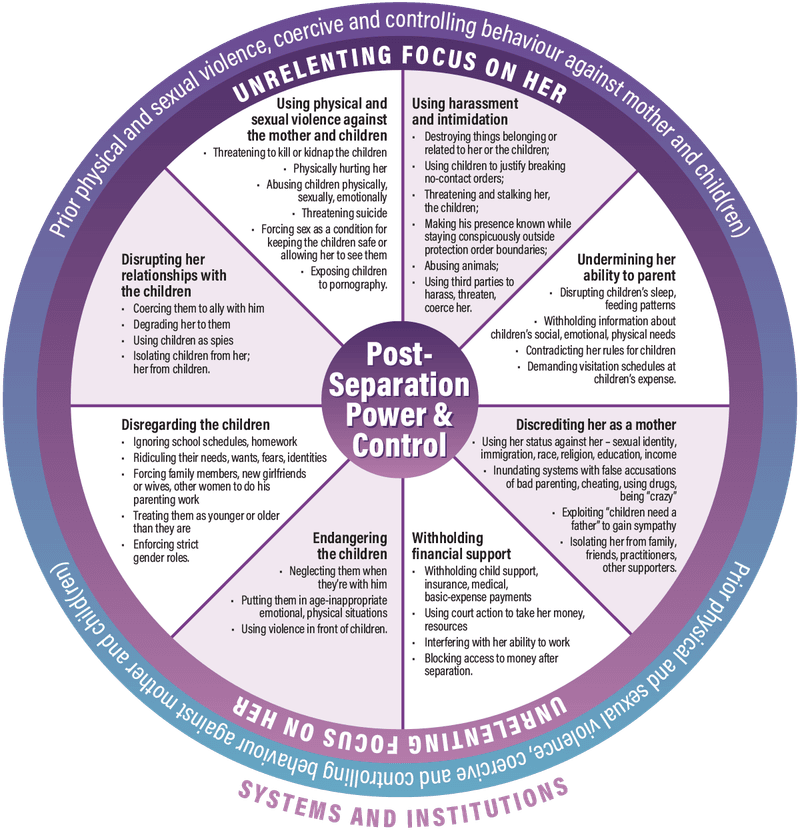
A single hard conversation is not a pattern. Your mother crying after you decline a visit, or sending a hurt text when you don’t call back immediately, may be painful, but it is not by itself evidence of emotional abuse or coercive control. What you are looking for, when you are trying to understand the fuller picture, is repetition: does this happen every time you assert a preference? Does warmth disappear reliably when you say no?
Are there threats, humiliation, or attempts to isolate you from other relationships?
The National Domestic Violence Hotline’s description of emotional abuse includes patterns such as controlling, isolating, frightening, gaslighting, threatening, and using guilt or shame to pressure compliance. The NHS safeguarding guidance on domestic abuse similarly distinguishes coercive control from ordinary conflict. One awkward reaction lands differently than a sustained pattern of retaliation or intimidation.
Practical options exist between full confrontation and complete silence. Shortening calls, switching to written communication, ending a conversation when it turns cruel, limiting visits to structured settings, or pausing contact for a defined period can all make a boundary workable without requiring a single defining showdown. Cleveland Clinic’s guidance on difficult parental relationships supports these graduated approaches, and they are especially worth considering when caregiving, financial dependence, shared housing, medical needs, immigration status, or childcare make a clean exit unrealistic or unsafe.
If your situation involves threats, stalking, physical violence, weapon access, financial control, or any form of retaliation, a private confrontation is not the safest starting point. Those circumstances require individualized safety planning and outside support. U.S. readers facing abuse or threats can reach The National Domestic Violence Hotline’s confidential support resources for guidance specific to their situation. A note of caution: if someone else may have access to your device or browsing history, consider how you search for and store that information.
You can love your mother and still choose a safer amount of contact

Loving her and needing limits are not opposites. You can miss the version of her you wished for, feel genuine tenderness for who she is, honor real obligations, and still decide that certain conversations are off the table, that visits need to be shorter, or that some amount of distance is the only way you can stay in the relationship at all. Those things can all be true at the same time.
A recent qualitative study of people who created distance from family relationships found that relief and grief often arrived together, and that outcomes for overall wellbeing were mixed rather than uniformly positive. A boundary, or a period of reduced contact, may not feel peaceful right away. It may bring sadness alongside the relief, and that sadness is not a sign that you made the wrong choice.
Contact can be structured, limited, paused, or reconsidered over time. A boundary is not the same as estrangement, and choosing less contact is not the same as choosing none. You do not need to prove that your mother is a bad person before you are allowed to protect your own time, privacy, emotional energy, or peace of mind. The guilt you feel does not require you to surrender a reasonable, safe limit.
It may simply mean that you love her, that the relationship is complicated, and that you are still figuring out where you end and where she begins.
If the guilt stays intense, if limits keep collapsing under pressure, or if you find it genuinely difficult to separate what you are responsible for from what you are only afraid of, talking with a therapist can help. Not because something is wrong with you, but because some of this is hard to sort out alone. You are allowed to stop carrying what was never yours to carry.