
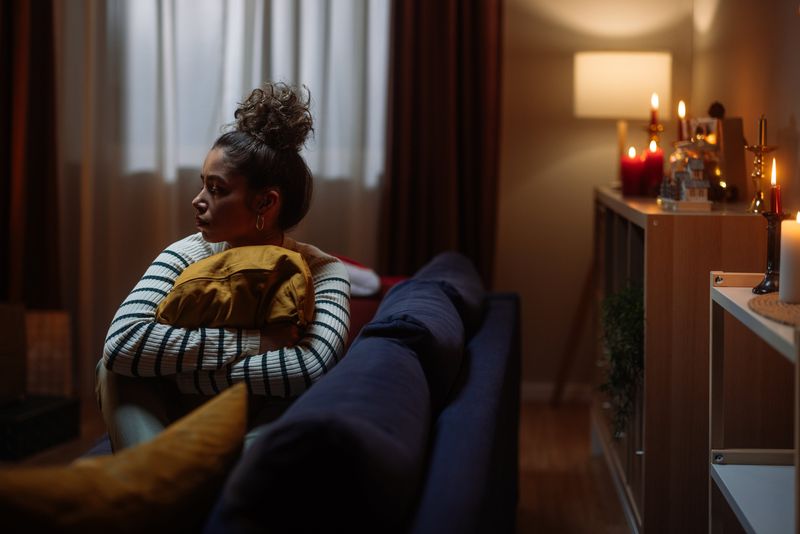
When Calm Finally Comes: Why Leaving an Unhealthy Relationship Can Feel Like the First Breath You’ve Taken in Years
Something quiet happens when a woman stops bracing for the next argument, the next silent treatment, the next moment where her feelings are turned against her. The calm she finds is not always about being alone. Sometimes it is simply about no longer living inside a relationship that costs more than it ever gave back. That distinction matters, and it is worth sitting with.
Peace may follow the end of a specific kind of relationship
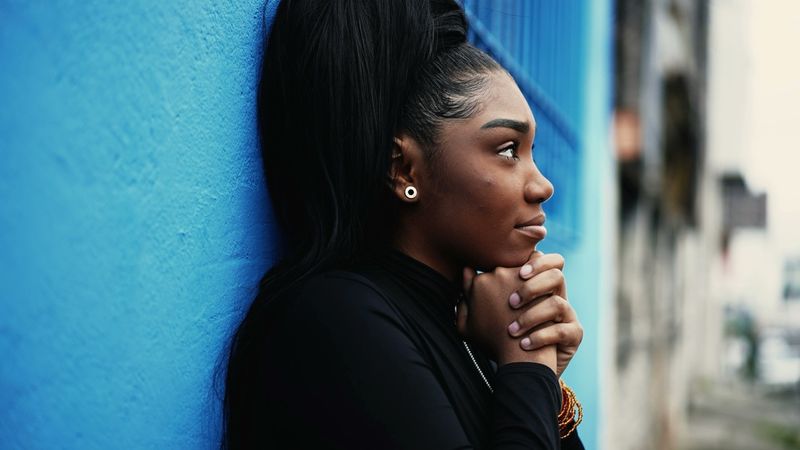
You probably know the feeling even if you have never named it out loud. You spend the morning calculating whether he is in a good mood before you say anything. You choose your words like you are defusing something. By the time you have avoided three potential arguments before 9 a.m., you are already exhausted, and the day has barely started.
That specific kind of tiredness is what many women describe lifting when they step away from a relationship built on chronic tension, control, or relentless emotional inequality. The relief is real. But it is worth being precise about where it comes from, because the source matters.
Research comparing single and partnered adults consistently finds that the picture is complicated. Partnered people report higher average happiness in many studies, but those averages blur enormous differences within each group. A woman in a safe, reciprocal relationship and a woman monitored, criticized, and emotionally overworked every day are both counted as “partnered.” Averaging their experiences tells you almost nothing useful.
The peace that some women feel after leaving is not proof that being without a man is inherently better. It is evidence that being free from a particular set of conditions – fear, surveillance, invalidation, the endless labor of keeping someone else calm – can feel like putting down a weight you forgot you were carrying.
Longitudinal research on women who separated from abusive partners found meaningful improvement in depression and post-traumatic stress symptoms over time, particularly during the first year after separation. That improvement was real and significant. It was also incomplete, and it applied specifically to women leaving abusive dynamics, not to every woman who ends any relationship.
This article is about that specific experience: the relief that can follow the end of a harmful, coercive, or persistently unfair relationship. It is not a case against healthy partnership. It is an honest look at why certain relationships cost so much, and why walking away from them can feel, for some women, like the first genuinely quiet morning in a very long time.
Control can make ordinary life feel like a constant emergency
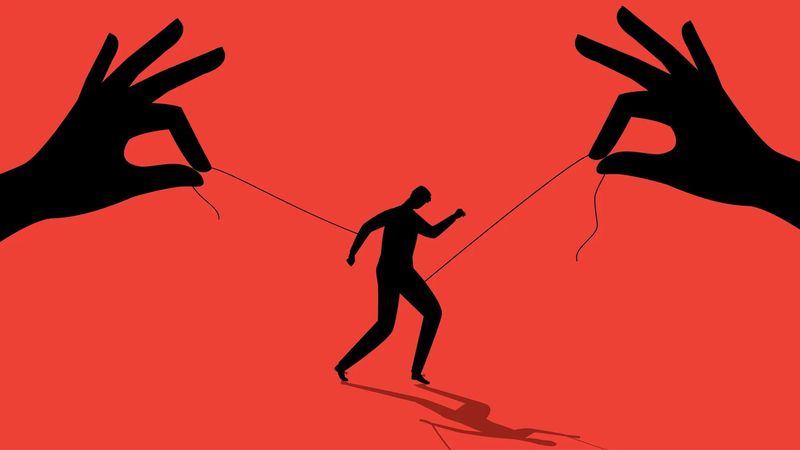
Intimate partner violence does not always announce itself with a raised fist. The CDC defines it to include physical and sexual violence, stalking, and psychological aggression intended to harm or control a partner. That last category is the one that can go on for years before a woman fully recognizes it for what it is.
Psychological control looks like checking your phone without asking. It looks like showing up at your workplace unannounced, “just to see you.” It looks like a sulk so long and cold that you eventually apologize for something you did not do, just to make the house breathable again. Dominance, jealousy, possessiveness, and isolation are recognized patterns in controlling relationships, and they work precisely because they are woven into everyday life rather than reserved for obvious moments of crisis.
When jealousy is framed as love, when checking up on you is framed as caring, when your discomfort is dismissed as oversensitivity, ordinary life starts to feel like a constant emergency you have to manage alone.
None of this is what disagreement or ordinary incompatibility looks like. Two people can argue about money, parenting styles, or whose family they spend the holidays with and still treat each other as equals. The difference is accountability and safety. Healthy relationships involve the ability to express a need without fearing retaliation, the freedom to maintain friendships and privacy, and a partner who responds to hurt with genuine accountability rather than blame or punishment.
Removing that constant state of alert is why separation from a controlling relationship can feel so disorienting at first. Your nervous system has been on high alert for so long that quiet feels strange. Mutual respect and equal voice are not luxury features of a relationship. They are the baseline.
When they have been missing for years, their absence becomes the background noise of your entire life, and you stop noticing it until it is finally gone.
Recognizing these patterns in your own experience is not the same as diagnosing a partner with a personality disorder. Terms like coercive control describe specific behaviors, not clinical labels. What matters is how those behaviors make you feel: smaller, more careful, less like yourself over time.
Unequal work can make partnership feel like another job

Picture a Saturday morning. You are already mentally running through the grocery list, the pediatrician appointment, the permission slip that needs signing, and whether there is anything clean for the kids to wear to school on Monday. Your partner is still asleep. When he wakes up, he will ask what you need him to do, as if the entire architecture of the household were invisible to him until you narrate it.
American Time Use Survey data from 2025 show that women were more likely than men to do household activities on any given day, and on days they participated, women spent about 2.8 hours on those tasks compared to 2.1 hours for men. Among adults living with children under six, women spent roughly one hour more per day on primary childcare than men. Those are measured activities: cooking, cleaning, household management, direct care of young children.
What the data cannot fully capture is the mental weight of being the person who always knows what needs to happen next, who tracks every appointment, who notices when the shampoo is running out, who plans for the thing three weeks from now while managing the thing happening right now.
That experience, sometimes called the mental load, sits alongside the measured tasks but is not identical to them. The survey counts hours. It does not count the number of times you woke up at 2 a.m. running through tomorrow’s logistics, or the low-grade resentment that builds when your contributions are treated as natural while your partner’s occasional help is celebrated.
For some women, living alone or stepping back from a relationship where they were chronically over-functioning brings a noticeable reduction in daily labor. Fewer tasks, less coordination, more time that belongs to them. That is a real and understandable relief. It does not prove that all partnerships are unequal or that all men are unwilling partners.
It does reflect a pattern that shows up consistently enough in household data to take seriously.
Unequal responsibility is a legitimate reason to evaluate a relationship, even when nothing about it rises to the level of abuse. A mismatch in how much each person carries is worth naming honestly rather than absorbing indefinitely.
A dating pause does not prove that women have rejected love
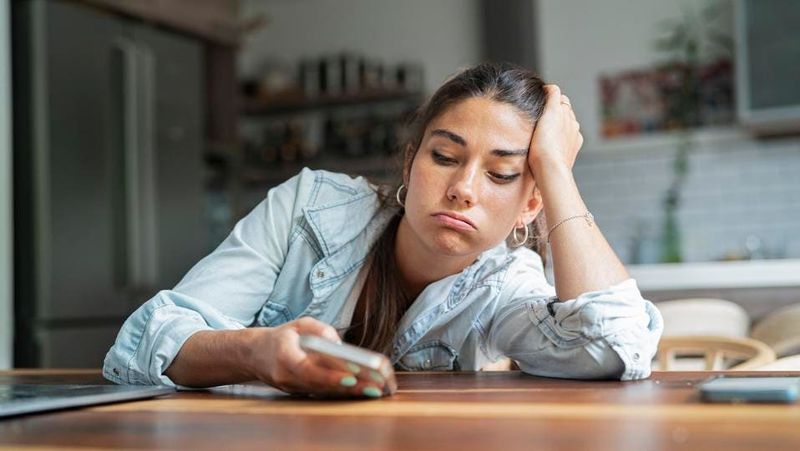
A lot of headlines lately suggest that women are done with men, done with love, done with the whole project of partnership. The actual data are more nuanced, and more interesting, than that framing suggests.
A 2022 Pew survey found that 56% of single U.S. adults were not looking for a relationship or even casual dates. Among those who were not looking, enjoying being single and having other priorities were commonly cited reasons. That is a meaningful number worth paying attention to. What it does not show is a permanent, coordinated withdrawal from love, a women-specific movement, or a measure of anyone’s emotional peace.
A snapshot of who is currently looking tells you nothing about who might be open to something real under different circumstances. A woman who has deleted her apps, stopped accepting setups from well-meaning friends, and started spending her weekends exactly as she pleases is not necessarily someone who has closed the door on love forever. She may be someone who got tired of performing availability for people who were not actually available to her.
Dating-app fatigue and a genuine rejection of love are not the same thing, and collapsing them flattens a much more honest story.
Pew’s research on online dating found that 53% of users described their experiences as positive and 46% as negative – a genuinely mixed picture. Women were more likely than men to report negative experiences, and women were significantly more likely to say they felt overwhelmed by the volume of messages they received. That is not evidence that women do not want connection. It is evidence that the current infrastructure for finding it can be exhausting and, for many women, not particularly safe-feeling.
Choosing to step back from apps, rejecting casual sex that does not interest you, or taking a deliberate break after burnout are distinct choices. None of them are identical to deciding that love itself is not worth pursuing. Giving yourself permission to stop performing openness you do not feel is not giving up. Sometimes it is the most honest thing you can do.
Leaving can bring relief, grief, and unfinished recovery
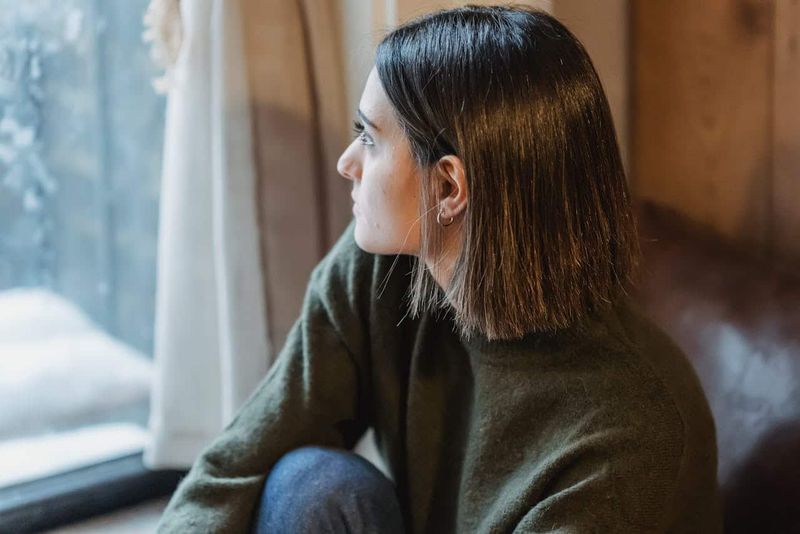
There is a version of the breakup story that goes like this: she left, she healed, she thrived. And sometimes that is roughly how it unfolds. But for many women, especially those leaving relationships that involved fear, control, or sustained emotional harm, the reality is both better and harder than that clean arc suggests.
Longitudinal research tracking women who had separated from abusive partners found significant improvement in depression and PTSD symptoms over time, with the most notable gains in the first year after separation. That improvement was real. Recovery was also incomplete: many women continued to experience substantially elevated symptoms and chronic pain compared to women in the general population, even years later. Leaving is not a cure.
It is often the beginning of a longer process.
Grief after leaving is not a sign that you made the wrong choice. It is a sign that you were genuinely attached to something, even when that something was also hurting you.
For relationships that were not abusive, the emotional math is different but still complicated. Research on relationship dissolution has found that ending an unsuitable relationship can reduce role strain and free up emotional resources. Other studies find short-term declines in life satisfaction after a relationship ends, regardless of who initiated it or how necessary it was. Both things can be true at once: the relationship needed to end, and its ending still hurts.
How recovery unfolds depends on a lot of factors that have nothing to do with willpower or clarity of vision. Social support, financial stability, who initiated the separation, whether there is ongoing contact, and whether abuse continues after leaving all shape the experience significantly. The consequences of intimate partner violence, including depression, PTSD, chronic pain, and sleep disruption, can persist long after a woman is physically safe.
Acknowledging that complexity is not discouraging. It is honest. You are allowed to feel relief and grief simultaneously. You are allowed to know you made the right decision and still have hard days.
Recovery is rarely linear, and the fact that it takes time does not mean it is not happening.
Singlehood is not isolation, and partnership is not proof of connection

One of the most persistent myths about being single is that it is synonymous with being alone. And one of the most persistent myths about being partnered is that it guarantees you will not be lonely. Neither is true, and the gap between those assumptions and lived experience is where a lot of quiet suffering hides.
A 2024 peer-reviewed study found that many single adults achieve happiness levels comparable to coupled adults, particularly when they have satisfying friendships, high self-esteem, values that support independence, or low desire for a romantic relationship. The study also noted that standard comparisons between married and single adults can be skewed by self-selection – people who are already happier and healthier may be more likely to attract and sustain partnerships – and by social bias that treats couplehood as the default measure of a successful life.
You can be single and deeply connected. You can be partnered and profoundly lonely. Relationship status is not the same as social support, and social support is one of the strongest predictors of well-being that research consistently finds.
Research on relationship status and well-being finds that the association between being partnered and higher well-being is partly mediated by social support and partly shaped by social discrimination against single people. A single woman with close friendships, meaningful work, family ties, and community is not living a diminished life. A partnered woman who has been gradually isolated from friends, whose opinions are dismissed at home, and who feels unseen by the person sleeping next to her is not living a connected one.
The more useful comparison is not men versus solitude. It is a safe, reciprocal relationship versus a harmful one. A healthy partnership, one where both people feel heard, respected, and genuinely free to be themselves, can support well-being in real and lasting ways. The problem is never partnership as a concept.
The problem is partnership that costs more than it gives, that shrinks you rather than steadies you, that mistakes control for closeness.
Choosing to be single for now, or indefinitely, or until something genuinely good presents itself, is a legitimate life. So is staying open. Neither choice requires defending.
Use self-trust and safety, not slogans, to decide what comes next

Slogans feel satisfying. “Choose peace.” “Know your worth.” “You don’t need anyone.” They make good captions, and sometimes they carry a grain of real truth. But when you are actually inside a difficult relationship, trying to figure out what to do next, a slogan is not enough. What you need are honest questions and, if the situation calls for it, real support.
Start with what your body already knows. Do you feel calmer or more frightened around this person? Can you say no to something without it becoming an event? Are responsibilities in the relationship negotiated openly, or do they silently accumulate on your side?
When you bring up something that hurt you, does your partner respond with genuine accountability or with blame, deflection, or a counter-attack that leaves you comforting them? Healthy relationship guidance centers on mutual respect, free expression of needs, consent, and equal voice, not because those are idealistic standards but because their absence has a measurable cost.
A mismatch in what two people are willing to offer is a valid reason to end a relationship, even when no one has been abusive. You do not owe anyone indefinite access to your life at the expense of your own.
If coercion, violence, stalking, or threats are part of your situation, the calculus changes entirely. Announcing a breakup or challenging a controlling partner can escalate danger rather than resolve it. Generic advice about setting limits and walking away does not account for that reality. What does account for it is a confidential conversation with someone trained to help.
The National Domestic Violence Hotline offers personalized safety planning for people who are experiencing abuse, considering leaving, or already separated and still at risk. Their guidance is built around your specific circumstances, not a script.
If you are not in danger but are simply tired, or uncertain, or have been carrying more than your share for longer than you can remember, that is also worth taking seriously. Knowing what a respectful relationship looks like is not about holding out for perfection. It is about knowing the difference between something that is genuinely hard and something that is quietly making you less yourself.
Choosing peace is not the same as choosing to be alone forever. For many women, it means raising the standard for what they will accept, and staying there, until something real enough comes along to meet it.