
You Can’t Call Yourself a Good Father While You’re Breaking Their Mother
There is a story a lot of families live inside quietly: a father who lights up around his kids, who shows up to games and reads bedtime stories, but who makes their mother shrink a little more each day. The title of this article is meant as a challenge, not a verdict on any one man’s heart. What it points to is something research backs up clearly: the climate a father creates around the children’s mother is part of the environment those children are growing up in, and fear, humiliation, and coercion inside that environment carry real costs for kids. If something in that sentence landed close to home, keep reading.
What the Title Gets Right—and What It Cannot Prove
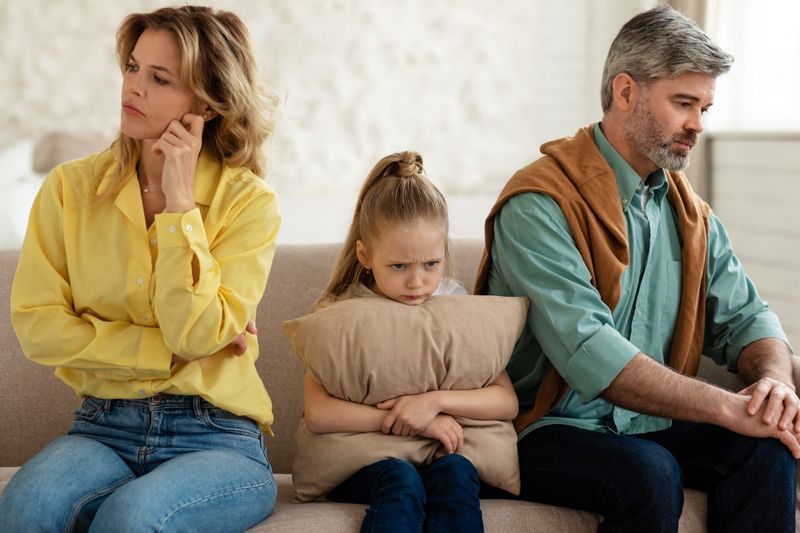
The title hits hard because it names something many women have felt but struggled to say out loud: that a man’s warmth toward his children does not exist in a vacuum separate from how he treats their mother. His playfulness on Saturday morning, the birthday gifts, the way he calls himself a devoted dad – none of those things erase the family climate those children actually live inside every day.
Here is where the title has to be qualified, though, and qualifying it is not the same as softening it. Research cannot reach inside a person and measure what he privately feels. A large meta-analysis of 169 studies on interparental conflict and child adjustment shows consistent links between hostile, frightening, and controlling conflict and children’s emotional and behavioral difficulties – but those findings describe patterns and associations, not a universal test that strips a man of his identity as a parent based on any single behavior.
What the evidence does support is this: the defensible question is not whether he loves his children in some private corner of his heart, but whether his conduct helps create the safety and stability they need to grow. The CDC’s framework on intimate partner violence makes clear that psychological aggression – insults, humiliation, monitoring, and coercive control – is part of the same spectrum as physical violence in terms of its effects on family well-being.
Research on protective parenting also confirms that a warm relationship with one parent can buffer some harm – but that buffer has real limits when the interparental environment is consistently frightening or coercive. Affection and safety are not interchangeable. And you do not need to prove what he feels before you take seriously what you and your children are living through.
“Breaking Their Mother” Means Observable Harm, Not a Moral Slogan
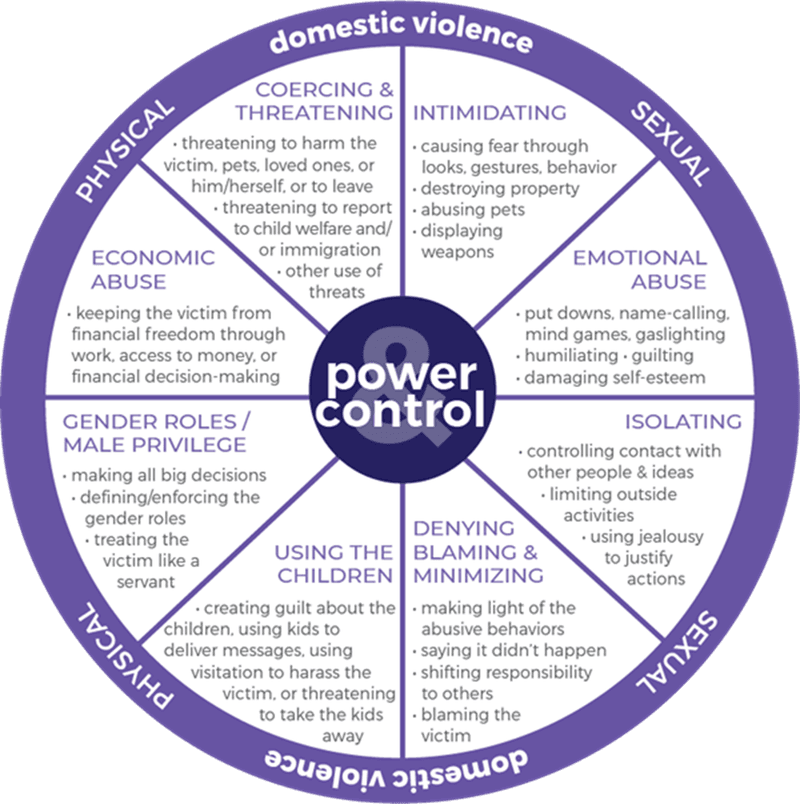
“Breaking their mother” is not a clinical term and it is not a legal one. It is an emotional phrase that deserves to be translated into something concrete, because the behaviors it describes are specific, recognizable, and documented – and naming them clearly is the first step toward seeing the pattern for what it is.
CDC guidance defines psychological aggression as verbal or nonverbal communication intended to harm a partner mentally or emotionally, or to exert control. That covers a wide territory: insults delivered in front of the children, humiliation disguised as a joke, constant monitoring of your phone or location, threats about what will happen if you leave, isolation from friends or family, and economic control that keeps you financially dependent.
It also includes the things that are harder to name in a single word: using the children to deliver messages, asking them to report back on what you said or did, making them comfort him after he has frightened or hurt you, or threatening to take them away as leverage. The U.S. Department of Justice describes domestic violence as a pattern used to gain or maintain power and control – one that can be physical, sexual, emotional, economic, psychological, or technological, and that often involves manipulation through children.
The distinction that matters most here is between a regrettable argument followed by genuine accountability and repair, versus a repeated pattern in which fear, coercion, and retaliation are the tools that keep you in line. One is a hard moment between two imperfect people. The other is a system. You likely already know which one you are inside – because one leaves you shaken for days, monitoring his mood, and adjusting your behavior to prevent the next incident.
Children Can Be Affected Even When They Do Not See the Assault
One of the most persistent myths about domestic abuse and children is that if the children were not in the room, they were not affected. That is not how it works. Kids are extraordinarily sensitive instruments. They hear the tone of a voice through a closed door.
They notice when you flinch. They see the bruise you tried to cover. They feel the silence that fills the house after something happened that no one will explain.
UK government guidance on children’s experiences of domestic abuse recognizes that children can be harmed even when they are unaware of specific incidents or are not physically present – through the instability, fear, and distress that permeates the household. Children do not need a front-row seat to an assault to carry its weight.
Some children become hypervigilant, scanning every room for signs of danger, reading adult moods the way a weather forecaster reads the sky. Research on children exposed to intimate partner violence identifies anxiety, depression, trauma symptoms, sleep disruption, difficulties at school, and problems trusting others as associated risks. The research coming from emotional security theory describes children becoming self-blaming, avoidant, or actively involved in trying to stop or manage what is happening between their parents – a burden no child should carry.
CDC data on adverse childhood experiences and related public health findings consistently link household violence and chronic instability with a range of long-term health and emotional outcomes. These are associations and elevated risks, not predetermined sentences. Age, temperament, the severity and duration of what they are exposed to, and the presence of a safe, stable caregiver all shape how children are affected. But “not in the room” has never meant “not affected,” and you already knew that, even if no one said it plainly until now.
Additional research on children’s coping responses shows that some children try to manage parental conflict directly – placing themselves between adults, attempting to de-escalate, or trying to protect the parent being harmed. That is not resilience. That is a child doing an adult’s job because no adult made it safe enough for them not to.
A Warm Father-Child Bond Can Help Without Erasing Ongoing Harm
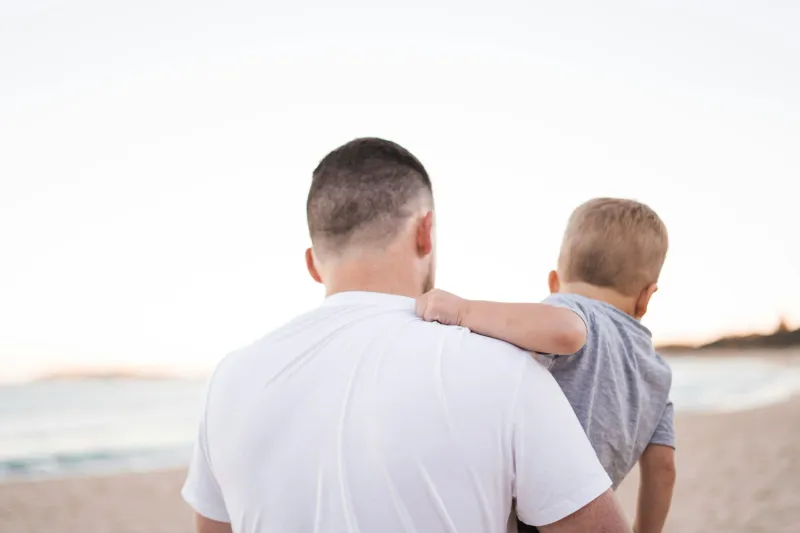
He is wonderful with the kids. You have probably heard that from other people, or said it to yourself on the harder days as a reason to doubt what you are experiencing. And it may be completely true. A father’s warmth, his genuine delight in his children, his presence at the dinner table – those things have real value, and research does not dismiss them.
Child Welfare Information Gateway guidance on domestic violence and children identifies a warm, responsive relationship with a nonabusive caregiver as one of the most important protective factors available to children living in high-conflict or abusive households. Research on protective factors for children points to caregiver well-being, social support, and children’s own self-regulation skills as buffers that can reduce some of the adverse effects of exposure to violence.
But a warm bond with a father does not cancel out what is happening between the adults. A study examining parent-child relationship quality and interparental conflict found that even a high-quality relationship between a father and his children did not fully mitigate the harm caused by severe interparental conflict on children’s emotional insecurity and mental health. The love he shows the children and the fear or humiliation he creates around you are not on a scale that balances out.
The point is not that his relationship with the children is meaningless. Child welfare research is clear that supportive relationships are protective, and your relationship with your children matters enormously too. The point is that resilience in children is not a reason to leave them inside a frightening environment. Children can carry more than they should have to carry – and still deserve better than being asked to.
Fatherhood Includes How He Participates in the Family’s Power Structure
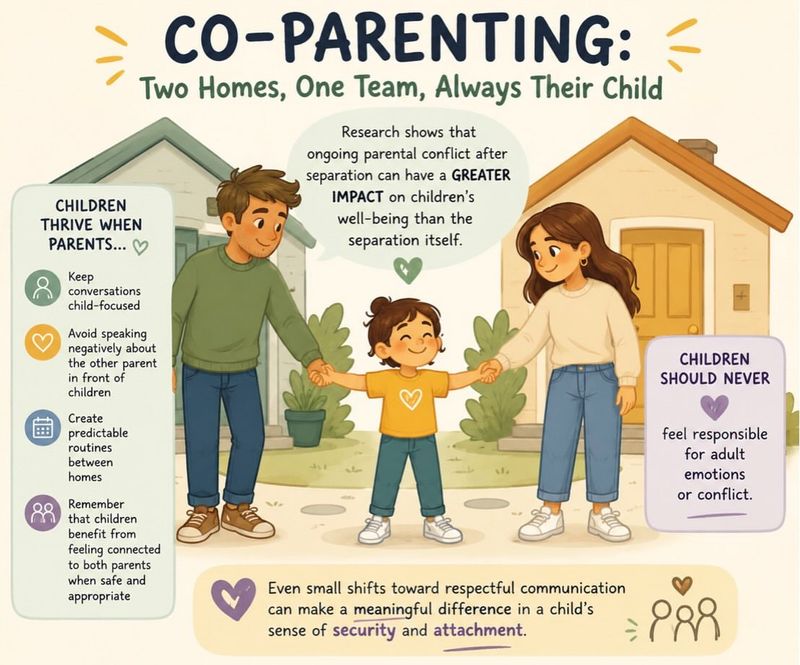
Fatherhood is not a performance measured in hours logged, gifts given, or the warmth visible in family photos. What it actually looks like day to day is shaped by something less visible: the power structure he either builds or refuses to build inside the family. How he handles disagreement, how he responds when you set a limit, whether repair is something that genuinely happens or something he performs until the next incident – those things define the environment his children are growing up inside.
Coparenting research shows that interparental conflict directly affects the quality of father involvement – not just the quantity of time spent with children, but the actual quality of that engagement. Studies on cooperative coparenting find that when parents are able to function as a team – communicating respectfully and supporting each other’s roles – fathers tend to be more consistently and meaningfully involved with their children. Intimidation and coercive control do not just harm you; they can make cooperative coparenting unsafe or functionally impossible.
The difference between a hard conversation and a controlling one is not volume. It is whether you feel free to disagree without fearing what comes next. Research distinguishing constructive from destructive conflict is consistent: a sharp but respectful disagreement followed by genuine repair is categorically different from a pattern of hostility, retaliation, threats, or degradation. One is two adults working through something hard.
The other is one person using conflict as a tool to maintain the upper hand.
Additional findings on conflict patterns support the idea that sustained behavioral change – not promises, not apologies followed by repetition, but observable, consistent change over time – is a practical, safety-oriented sign that something is genuinely different. That is not a universal scientific formula for repair. It is simply the only evidence that carries weight when safety is at stake.
When Abuse Is Present, Safety Matters More Than the Image of an Intact Family

Somewhere along the way, many women absorb a message that staying together is always better for the children. That message is not neutral, and in situations where abuse is present, it can be actively dangerous. Exposure to domestic abuse is itself a risk to children – not a lesser concern to be weighed against the benefit of having two parents under one roof.
The National Domestic Violence Hotline’s guidance on supporting children emphasizes individualized safety planning that covers home, public settings, and times when children may be unsupervised with an abusive partner. Separation can reduce exposure to violence and conflict for some families – but it does not automatically end coercive control. Harassment, threatening communications, manipulation during custody exchanges, and pressure applied through the children can continue and sometimes escalate after separation.
You are not required to make a single, immediate decision about your relationship before you are ready and able to do so safely. The Hotline’s guidance for supporters is explicit about survivor autonomy: no one should be told to confront the abusive partner, leave immediately, report to authorities, or seek a protective order without individualized safety considerations in place. Emotional safety planning resources exist precisely because one-size-fits-all instructions can increase danger rather than reduce it.
Custody and parenting-time arrangements vary significantly depending on where you live and the specifics of your situation. WomensLaw.org explains that a parent who has committed violence may still receive parenting time, sometimes with conditions like supervised visitation or protected exchanges – and protections available to survivors vary by state. Mediation and joint counseling are generally not appropriate or safe in situations involving coercive control, as U.S. Department of Justice guidance makes clear.
Confidential, specialized support – from a domestic violence advocate, a family law attorney familiar with abuse dynamics, or a trauma-informed counselor – is the right starting point, not a conversation with him. The National Domestic Violence Hotline is available at 800-799-SAFE (7233), by text at 88788, or through online chat at thehotline.org. If you are in immediate danger, call 911.
Children Should Not Carry the Responsibility for Stopping the Abuse
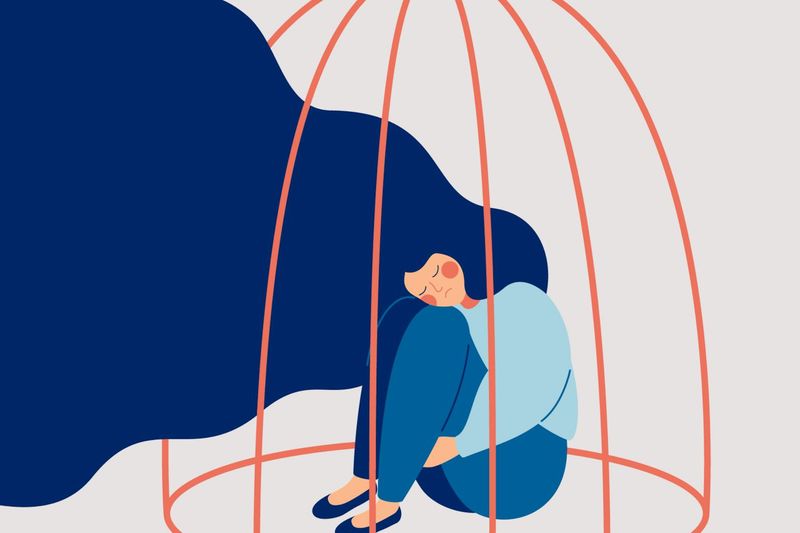
Children who grow up inside abusive households often develop a quiet, exhausting sense of responsibility for what is happening around them. They try to be extra good so he does not get angry. They comfort their mother after an incident. They watch the front door when they hear his car pull up.
Some are directly asked to carry messages between parents, report on what mom said, or keep secrets about things that frightened them. None of that is a child’s job.
The Hotline’s guidance on emotional safety planning with children is direct: children should never be asked to intervene during an incident, defend their mother, spy on an abusive parent, carry messages, or keep secrets about a safety plan. Information shared with a child during safety planning can be revealed to the abusive partner – sometimes without the child understanding the danger that creates. A child’s first responsibility during an incident is their own safety, not protecting you.
What children do need to hear, clearly and often, is that what is happening is not their fault. The Hotline’s child-focused safety resources emphasize reassuring children that they are not responsible for adult conflict and that they are loved and not alone. That message – simple, repeated, believed – is one of the most protective things you can offer them.
If your children are showing signs of distress, a school counselor, a pediatrician, or a child therapist familiar with trauma can provide individualized support. You do not have to have everything figured out before you reach out for help on their behalf. Getting support for them is not a sign that things are beyond repair. It is a sign that you are paying attention.
The Question Is Not Whether He Performs Love, but Whether the Family Can Be Safe
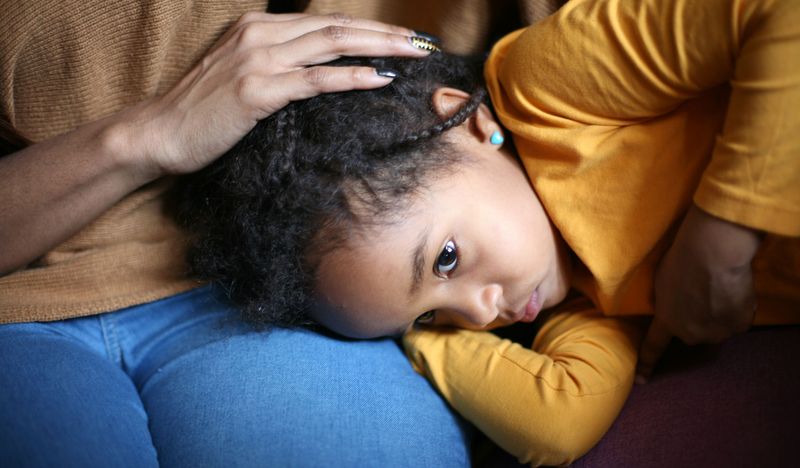
You do not need to prove what he feels in order to trust what you are experiencing. Fear is not a misunderstanding. Humiliation is not a misreading of his intentions. Coercion does not become acceptable because he also coaches the soccer team or because the children adore him on weekends.
The research on interparental conflict and child outcomes is consistent: the quality and safety of the family climate matters for children’s development in ways that cannot be separated from how parents treat each other. CDC guidance on intimate partner violence frames this as a public health issue precisely because its effects extend beyond the two adults involved. The children’s futures are not predetermined – protective relationships, access to support, and stability all matter. But that possibility of a different future is not an argument for staying inside an unsafe present.
Research on resilience and protective factors confirms that your well-being as their mother is one of the most significant resources your children have. Protecting yourself is not separate from protecting them. It is the same act. A father’s love for his children, if it is real, eventually has to show up in how he treats the person they depend on most.
Performance is not the same as safety, and your children deserve both.