
A Man Who Breaks a Woman Is Never as Strong as He Wants to Look
When a man humiliates, controls, or intimidates the woman he is supposed to love, he may look powerful from the outside. But power built on fear is not the same thing as strength, and that difference matters more than most people say out loud. If someone’s behavior has left you questioning your own worth, your own memory, or your own right to feel safe, this article is for you. What happened to you was not a reflection of your value – it was a reflection of his choices.
Cruelty May Look Powerful, but It Does Not Prove Healthy Strength

There is a difference between a man who commands respect and a man who demands it through fear. Healthy strength looks like self-control when emotions run high, accountability when something goes wrong, and genuine care for the person standing in front of you. Cruelty – humiliating a partner, punishing her for ordinary independence, or using intimidation to get compliance – is not any of those things.
When a man uses domination to hold a relationship together, what he has created is not love. He has created a system where one person is always smaller, always bracing, always adjusting to avoid the next explosion. That may produce compliance, but compliance is not the same as respect, and fear is not the same as devotion.
DOJ guidance on domestic violence describes intimate-partner abuse as a pattern used to gain or maintain power and control, including emotional, psychological, economic, and physical tactics. Control is not evidence of inner strength – it is evidence that someone chose to take rather than earn.
The title of this article says he is never as strong as he wants to look. That is emotionally true in a meaningful moral sense: cruelty does not demonstrate courage, empathy, or self-mastery. What it actually reflects is a choice to harm. The question worth sitting with is not what is wrong with you for staying or for loving him.
The question is what he chose to do – and what you deserve instead.
Recognize the Difference Between Conflict and Coercive Control
Every relationship has arguments. Two people with different histories, different fears, and different needs will sometimes hurt each other, misread each other, or say things they regret. That is ordinary conflict, and it is not the same as abuse. The line between a hard conversation and a harmful pattern is crossed when one person uses fear, punishment, or control to keep the other person in line.
The CDC defines intimate-partner violence as including physical violence, sexual violence, stalking, and psychological aggression by a current or former intimate partner. A single serious act can be abusive. And coercive control – which is often the most invisible form – operates as an ongoing pattern rather than one dramatic incident.
According to CDC data on psychological aggression, controlling behaviors can include restricting access to money, trying to prevent contact with family or friends, tracking whereabouts, making decisions for the partner, threatening physical harm, threatening suicide, and destroying important belongings. These are not arguments. They are tools used to shrink someone’s world until she has nowhere left to turn.
A systematic review on coercive control distinguishes this ongoing pattern from situational couple conflict, noting that coercive control involves a sustained effort to dominate, monitor, and restrict a partner’s autonomy. If you have been walking on eggshells for months or years – managing his moods, editing yourself before you speak, feeling afraid of his reaction to ordinary things – that is not a communication problem. That is a pattern worth naming.
His Possible Reasons Do Not Become Your Responsibility

At some point, most women in painful relationships ask the same question: why? Why does he do this? Was it his childhood, his past, his fear of losing me? Understanding can feel like the key to fixing things, and for a long time that search for understanding can keep you trying harder instead of protecting yourself.
CDC research on IPV risk factors identifies several things associated with perpetration – desire for power and control, dominance, hostility toward women, attitudes that accept aggression, jealousy, possessiveness, relationship conflict, substance use, and prior exposure to abuse. These are risk factors, not a universal profile. They help explain patterns in data, but they do not predict every individual, and they do not excuse what he chose to do to you.
Research on anger, hostility, and IPV perpetration suggests that emotional dysregulation can be associated with abusive behavior in some cases – but association is not destiny, and explanation is not absolution. His history may inform his behavior, but it does not make his behavior your problem to solve.
Some people will tell you that abusive men are all secretly broken, self-hating, or terrified of strong women. That framing can feel satisfying, but research on personality and partner violence shows no single explanation accounts for all perpetrators. Not every abusive man is a narcissist. Not every controlling man was traumatized.
What they share is a choice – repeated, sustained, and directed at someone who trusted them. You were not responsible for that choice, and you are not responsible for undoing it.
He May Have Harmed Your Safety Without Defining Your Worth

One of the most disorienting things about psychological harm in a relationship is how gradually it works. You do not wake up one morning certain that something is wrong. Instead, you find yourself apologizing more, explaining yourself more, trusting your own instincts less. The damage is often invisible to everyone except you – and sometimes even invisible to you for a long time.
Repeated psychological aggression can affect how safe you feel, how clearly you think about yourself and your situation, and how much access you have to the parts of your life that once gave you confidence. The WHO reports that violence against women can increase the risk of depression, anxiety, post-traumatic stress symptoms, sleep difficulties, substance-use problems, suicidal behavior, chronic pain, gastrointestinal problems, and reproductive-health complications. These are possible outcomes, not guaranteed ones – every woman’s experience is her own.
WHO research on the health consequences of intimate-partner violence also makes clear that psychological aggression is serious even when it never becomes physical. You do not need a bruise to have been harmed. You do not need a dramatic incident to have a reason to seek support.
SAMHSA notes that trauma responses vary widely – some people experience lasting effects, others do not, and recovery is shaped by many factors including support systems and prior history. None of that variation makes one person’s pain more valid than another’s. What matters is this: he may have harmed your confidence, your trust, your sense of safety, or your connection to yourself. He did not determine your value.
Those are not the same thing.
Naming the Pattern Can Help You See It More Clearly

Confusion is one of the most common effects of sustained psychological aggression – and it is not a sign that you are weak or gullible. When someone you love repeatedly tells you that what you felt did not happen, that your reaction was the problem, that you are too sensitive or too demanding, your sense of reality can quietly shift. That is not a character flaw. That is what happens when someone uses your trust as a tool against you.
The National Domestic Violence Hotline describes emotional abuse as a pattern that can include insults, humiliation, threats, isolation, and behaviors designed to control and destabilize a partner’s sense of self. When someone repeatedly denies saying things you clearly remember, distorts events to make you doubt yourself, or turns your own uncertainty against you – that is the pattern often called gaslighting. One forgotten conversation is not gaslighting. A sustained habit of making you question your own mind is something different entirely.
Love does not feel like surveillance. Concern does not feel like a leash. An apology that leads to change is different from an apology that buys time. CDC communication resources on IPV distinguish psychological aggression from ordinary relationship friction, noting that coercive patterns involve ongoing attempts to control rather than resolve.
Naming what happened to you is not about building a legal case or proving something to anyone else. It is about giving yourself permission to see clearly – to stop explaining away the fear you felt in your own home, and to stop treating your own perceptions as the problem. That clarity, even when it comes slowly, is yours.
Build a Safety Plan Instead of Following a Dramatic Exit Script

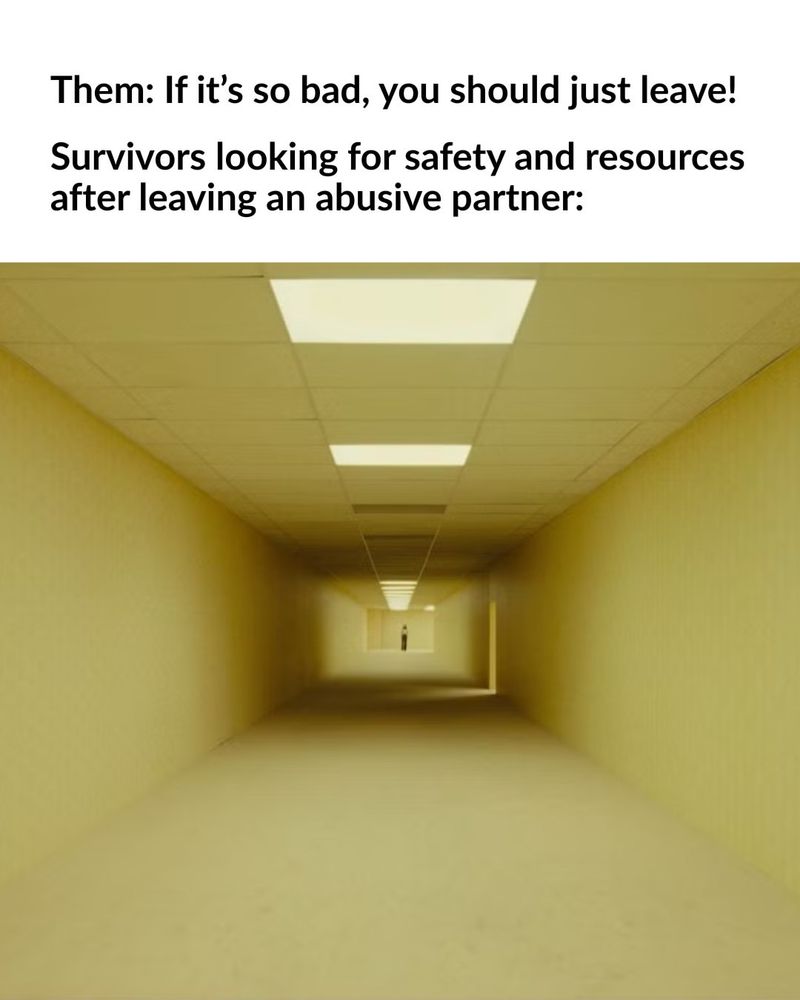
Movies and well-meaning friends often make leaving sound simple: pack a bag, walk out the door, never look back. But for many women, the reality is more complicated – and more dangerous. Research on homicide risk in intimate relationships has documented that separation can be a period of heightened danger for some survivors, particularly when coercive control, threats, stalking, firearms, strangulation, or children are involved.
ACOG clinical guidance on intimate-partner violence recommends assessing the immediate safety of a woman and her children and helping develop a personalized safety plan – not issuing a blanket instruction to leave tonight. ACOG’s patient guidance also emphasizes that a safety plan is individualized, because no two situations are the same.
DOJ guidance on separation in the context of domestic violence cautions against approaches that do not account for the specific dangers a woman may face when leaving or creating distance from an abusive partner. The DOJ’s overview of domestic violence also notes that firearms significantly increase the risk of death or serious injury.
Technology safety matters too. The National Domestic Violence Hotline’s tech-safety guidance warns that an abusive partner may monitor your phone, browsing history, social media accounts, location, calls, or texts. Do not clear your search history, change passwords, or take other digital steps without first consulting an advocate – those changes can alert a monitoring partner. Use a safer device, such as a library computer or a trusted friend’s phone, to seek help privately.
The Hotline’s guidance on documenting abuse notes that records can support medical, legal, or safety planning – but only when they can be stored somewhere an abusive partner will not find them. Their stalking safety-planning resource offers specific steps if monitoring or tracking is part of your situation. If you are in immediate danger in the United States, call 911. The National Domestic Violence Hotline is available at 800-799-SAFE (7233), online at thehotline.org, or by text – check current availability and use a device your partner does not have access to.
His Cruelty Does Not Author Your Future
Whatever he said about you – that you were too much, not enough, lucky to have him, impossible to love – those words were not a verdict. They were a tactic. He may have harmed your trust, your confidence, your sense of safety, or your connection to who you were before him. He did not write the final word on your worth.
WHO guidance on responding to intimate-partner violence places responsibility for abusive conduct firmly on the person using it – not on the partner who stayed, loved, hoped, or tried to make it work. You do not owe anyone proof that you survived well. You do not need to become inspiring to justify what you went through.
ACOG’s patient guidance encourages women to seek support at a pace and in a way that feels safe – not on someone else’s timeline, and not in a way that increases risk. SAMHSA affirms that trauma responses and recovery needs differ from person to person, and that there is no single correct way to heal.
You are allowed to stop carrying responsibility for his behavior. You are allowed to want safety, dignity, and a life that does not require you to make yourself smaller to keep the peace. A man who breaks a woman may believe that control is power – but a life you build on your own terms, at your own pace, is something he never had the authority to take from you.