
Desorganizado Temeroso Evitativo Estilo de apego
Disorganized fearful avoidant attachment style is the rarest and the most challenging among the attachment styles. It’s marked by un anhelo de relaciones íntimas profundas y significativas imposibilitado por el miedo y la evitación de la conexión emocional.
Este tipo de apego puede describirse como el que presenta características tanto del estilo ansioso como del evitativo, lo que da lugar a Necesidad unida a evitación. Quieres conectar con la gente y buscas relaciones, pero en cuanto tu pareja se acerca demasiado, te echas atrás por miedo al rechazo.
The most painful aspect of this attachment style is that you always expect to be hurt, but you still can’t help and look for love. You sometimes choose partners who will inevitably make your worst fears come true or you ruin your relationships yourself in fear of what’s to come.
15 Signos De Un Estilo De Apego Evitativo Temeroso Desorganizado

El estilo de apego temeroso-evitativo desorganizado es uno de los tres estilos de apego inseguro. (La terminología relativa a los estilos de apego se vuelve un poco confusa, así que consulta la descripción general de los estilos de apego que figura a continuación).
Este estilo de fijación puede dañan tus relaciones y te dejan sintiéndote solo al hacerte evitar la cercanía que tanto anhelas. You’re at risk for social anxiety and depression, and may have trouble seeking relationships altogether.
Estos son los signos del estilo de apego temeroso evitativo desorganizado.
1. Miedo a la intimidad
People with a dismissive attachment style feel that there’s something fundamentally wrong with them. This stems from the abuse or neglect they suffered. Temes la intimidad because you’re afraid that your partner will reject you when they see what you’re really like.
En cuanto tu pareja se acerca, te cierras en banda o te alejas. En lugar de hablar con tu pareja sobre vuestra relación, tu solución es marcharte.
2. Miedo al rechazo
El apego desorganizado es frecuente en niños cuyos padres tenían problemas propios sin resolver, como abuso de sustancias, problemas económicos o apego desorganizado propio.
Tu miedo al rechazo proviene de los sentimientos que experimentabas de niño cuando pedías consuelo a tus padres y en su lugar recibías miedo. This is why you’re always waiting for the other shoe to drop in relationships and for your partner to abandon you.
3. Visión negativa de sí mismo
Ignoras tus puntos fuertes y te centras en tus defectos, por lo que tu percepción de ti mismo está distorsionada. Esto provoca sentimientos de vergüenza sobre quién eres, lo que te lleva a comportamientos que te hacen daño a ti y a los demás, lo que confirma aún más tus creencias.
Your negative view of yourself often isn’t rooted in reality, but instead stems from childhood feelings of rejection and other traumatic experiences you’ve been through.
4. 4. Baja autoestima
Una imagen negativa de uno mismo conduce a una baja autoestima y esto influye directamente en todos los ámbitos de tu vida. Your focus is entirely on yourself and your personal problems, which is another reason why you’re unable to connect to others. Buscas a personas que confirmen la opinión negativa que tienes de ti mismo, pero temes que saquen a la luz tus defectos.
RELACIONADO: 50 citas inspiradoras sobre la autoestima que aumentarán tu confianza (y te alegrarán el día)
5. Sentirse indigno de amor
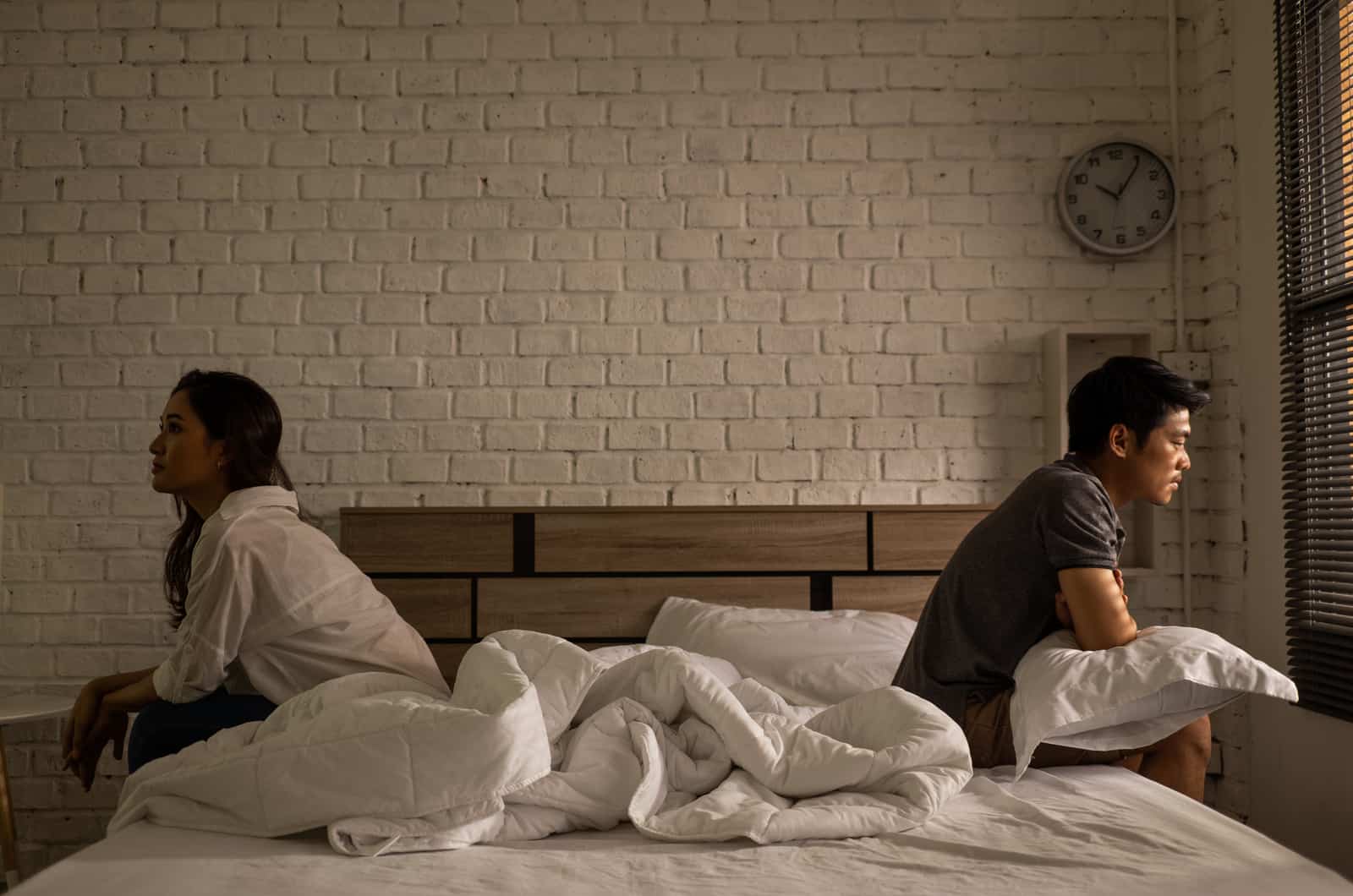
You feel flawed and not good enough to be loved or that you don’t deserve to be. When someone gets close to you, you engage in self-sabotaging behaviors to push them away.
Lo haces porque lo sientes, si tu pareja llega a conocer tu verdadero yo, te rechazará de todos modos. Sentimientos de ser indigno de amor are caused by the trauma you’ve been through, and have nothing to do with reality.
6. Deseo de amor
Even though you feel like you don’t deserve love, you still deeply yearn to have it. However, you don’t know how to deal with relationships once they get past the honeymoon stage and you never learn to manage conflict without escalation.
Your craving for love combined with the belief that you don’t deserve it is what lays behind your behavior in relationships: alejas a tu pareja en cuanto se acerca para evitar que te haga daño.
7. Buscar la aprobación de los demás
La imagen que tienes de ti mismo es tan negativa que la única forma de sentirte bien contigo mismo es obtener la aprobación de los demás. Esto, sin embargo, es una solución a corto plazo y rápidamente se vuelve insuficiente, así que hay que seguir buscando más formas de obtener validación. El resultado son diversos comportamientos negativos que le perjudican tanto a usted como a sus seres queridos.
8. Inconsistencia en las relaciones románticas
La falta de coherencia en las relaciones es consecuencia directa de la combinación de querer acercarse y, al mismo tiempo, tener miedo de ello.
Cuando tu pareja es incapaz de predecir cómo te sientes y cómo vas a reaccionar ante su acción, eso le disuade de abrirse. La incoherencia impide que las relaciones avancen, hasta que acaba por alejar a la otra persona.
9. Evitar el compromiso
Su creencia de que si te abres a los demás you’ll get hurt determines how you act when a partner gets too close. Te niegas a comprometerte porque estarías dando a la otra persona el poder de hacerte daño. For you, it feels like it’s safer to keep your distance, but eventually this is what ends up hurting you anyway.
10. Interiorización de los problemas de relación

You feel as if you’re to blame for all problems in your relationship. Your deeply-rooted feelings of guilt and shame caused by childhood trauma lead you to believe that you are the reason why you’re not getting love, so in relationships you view problems as proof that you’re unlovable.
11. Relaciones abusivas
Las personas con un estilo de apego desorganizado suelen estar implicadas en relaciones poco saludables, lo que incluye ser la víctima o el maltratador en las relaciones abusivas.
El miedo al abandono es uno de los factores por los que sus emociones volátiles e impredecibles, incluida la ira, pueden escalar hasta la violencia, pero también es la razón por la que permanecen en relaciones abusivas en las que son la víctima.
12. Falta de confianza
You believe that you don’t deserve to be loved, so you’re often suspicious of other peoples’ intentions.
Because your caregivers responded by hurting you when you expected them to love you, you’re always expecting the same thing to happen in your other relationships. Esto se traduce en comportamientos como actuar de tal manera que podría alejar a su pareja para ponerla a prueba.
13. Incapacidad para empatizar
This doesn’t imply a lack of empathy – it shows how you react in situations in which you’re supposed to respond to other people’s feelings.
Por ejemplo, cuando tu pareja está enfadada, te desconectas y, en lugar de consolarla, la ignoras. This kind of behavior is caused by being overwhelmed and incapable of dealing with your own and other people’s feelings.
14. Incapacidad para comunicar las necesidades
You believe that your feelings and needs are irrelevant, so you don’t know how to let people know how you feel or ask for what you need. Le cuesta apoyar a sus seres queridos y pedir apoyo cuando lo necesita. Evitas expresar sentimientos y necesidades por miedo a ser juzgado y, en última instancia, rechazado.
15. Humor impredecible
Interpretas las situaciones de un modo que refuerza tus creencias, de modo que, en lugar de la realidad, tus acciones reflejan tus miedos. Any kind of conflict makes you believe that you’re the problem, that your partner can’t possibly love you and that you’re about to be abandoned.
Your unpredictable moods are also caused because you assume that your partner must know things without you telling them, so when they don’t, you feel let down and act out.
¿Qué es la teoría del apego?

It’s well-known that attachment patterns formed in early childhood greatly affect adult relationships, but this wasn’t always common knowledge.
En la década de 1950, el psiquiatra John Bowlby examinó las relaciones de los bebés con sus cuidadores. Sugirió que un niño necesita una relación afectuosa con sus padres and that the opposite would have negative consequences on the child’s mental health. He developed teoría del apego para describir sus hallazgos.
Mary Ainsworth, a developmental psychologist, observed how young children behave when they’re separated from their caregivers using an experiment called the Strange Situation Procedure. She concluded that los niños desarrollan un estilo de apego seguro o inseguro, dependiendo de si la figura de apego está disponible cuando el niño la necesita.
Estilos de apego en niños y adultos
Since bonds we make as adults depend greatly on how we form attachment to someone, it doesn’t seem surprising that another team of psychologists decided to research just that: apego a la pareja romántica en las relaciones románticas adultas.
Cindy Hazan y Phillip Shaver descubrieron que los adultos también presentan diferencias en sus estilos de apego y que hay cuatro estilos de apego adulto, correspondientes a las que presentan los niños pequeños e influidas por experiencias tempranas o traumas infantiles.
El tipo de estilo de apego de los adultos influye en las parejas que eligen y en cómo actúan en las relaciones. Las personas con estilos de apego inseguro tienen ciertas creencias sobre las relaciones íntimas y buscan parejas cuyo comportamiento confirme esas creencias.
ESTILO DE SUJECIÓN SEGURO
1. Fijación segura
• Secure attachment in children es el resultado de experiencias infantiles positivas y de una estrecha relación con un cuidador. Pueden confiar en su cuidador para satisfacer sus necesidades.
• Adults with the secure attachment style are comfortable expressing their feelings and easily connect to their partners. They’re comfortable expressing their needs and have a healthy attitude towards relationships.
ESTILOS DE APEGO INSEGURO
2. Apego evitativo estilo
Otros términos utilizados son ansioso-evitador y displicente-evitador.
• This attachment style develops in children cuando su cuidador le rechaza repetidamente y no satisface sus necesidades. El niño disimula su angustia evitando o ignorando a su cuidador.
• In adults, the estilo de apego despectivo-evitativo se manifiesta como distancia emocional y autosuficiencia. Ocultan su baja autoestima y su miedo al rechazo evitando la intimidad emocional.
3. Estilo de apego ansioso
Otros términos para este tipo de estilo de apego son ansioso-preocupado y ansioso-ambivalente.
• Children develop this attachment style como reacción ante la incertidumbre de si su cuidador responderá a sus necesidades. Intentan influir en su cuidador mediante la ira o la pasividad.
• Adults with the estilo de apego ansioso are clingy, dependent and seek validation in relationships. They have low self-esteem and worry that they’re not good enough for their partners and experience fear of abandonment.
4. Estilo de apego desorganizado
También conocido como estilo de apego desorientado, estilo de apego temeroso-evasivo and disorganized fearful avoidant attachment style, this is the one we’re most interested in today.
• The disorganized attachment style in children suele ser una respuesta a un trauma o a un abuso.
Un niño sabe que su figura de apego debe satisfacer sus necesidades y proporcionarle cuidados y consuelo, así que cuando el cuidador hace daño al niño, le infunde una sensación de miedo.
It also happens when the caregiver is unpredictable, such as a parent with substance abuse problem, or if the child experiences loss of their caregiver, or their ‘secure base’.
When a child’s caregivers simultaneously provide comfort and cause fear, the child still looks for closeness, but also no longer trusts them and keeps a distance.
- Adultos con el estilo de apego temeroso-evitativo o el estilo de apego temeroso-evitativo desorganizado desean establecer vínculos afectivos pero, como consecuencia de un trauma no resuelto, evitan la intimidad por miedo a resultar heridos. Su comportamiento es incoherente y les cuesta confiar en los demás.
Este estilo de apego a veces está presente junto a trastorno límite de la personalidadtrastorno mental caracterizado por impulsividad, relaciones inestables y dificultad para controlar las emociones.
5 consejos para superar el estilo de apego desorganizado

One of the dangers of disorganized fearful avoidant attachment style is that when a parent has it, they might repeat the cycle they’ve been through and cause it to develop in their children.
Because they’re distant and have a hard time providing emotional support, their children tend to end up the same way.
Para poder establecer relaciones sanas y seguras, primero debes establecer una relación sana contigo mismo. Afrontar su visión negativa de su propia valía y sus inseguridades y aprender a quererse y apreciarse es el primer paso para poder abordar tus relaciones de forma saludable.
1. Terapia
Lo más útil que puede hacer para superar el estilo de apego temeroso evitativo desorganizado es acudir a terapia.
Aprender a permitirte dejar entrar a tu pareja y confiar en que no te hará daño es clave para tus problemas de pareja, pero la cuestión subyacente es su sentido dañado de la autoestima. A therapist can help you set boundaries, assist you while you’re working through your negative emotions and guide you towards emotional wellness.
2. Autoconciencia
Además, trabaja en el desarrollo de la autoconciencia que te permitirá reconocer tus desencadenantes y controlar tus emociones.
Las personas con estilos inseguros tienden a buscar en sus parejas la confirmación de sus temores, por lo que being mindful of your feelings can help you identify whether you’re misunderstanding your partners because of your expectations.
3. Aprende a comprender tus sentimientos
It’s difficult to influence feelings – instead, try to understand what it is that you’re feeling and try to understand why.
Once you’re able to identify what exactly you are feeling and the reason for those feelings, you’ll be able to better control your reactions. If you lashed out at your partner when they canceled your date, you’ll be able to figure out that you reacted that way because you were afraid that they wanted to end things.
4. Enfrentarse al pensamiento negativo
Everyone has an inner critic. Yours is telling you things that aren’t true, such as to hate yourself and that you don’t deserve love.
La mejor manera de afrontarlo es desafiar los pensamientos negativos. Whenever you have a negative thought, try to think of something positive that contradicts it or keep asking yourself questions until you’re able to think of something that proves your negative thinking wrong.
5. Comunicación
Aunque anhelas intimidad, tu estilo de apego dificulta la conexión con tus seres queridos.
Fear of getting hurt only increases the more vulnerable you become, so, understandably, you pull back before you’re able to get close to your partner. Establecer límites y desarrollar habilidades de comunicación en lugar de retraerse puede ayudarle a alcanzar la intimidad de una forma gradual que le resulte más segura.
RELACIONADO: No merezco ser feliz: Cómo afrontar estos pensamientos oscuros
En resumen

Lidiar con un estilo de apego desorganizado, temeroso y evitativo es una lucha constante. Tener miedo de acercarse a alguien y, al mismo tiempo, anhelar vínculos estrechos te afecta de múltiples maneras.
Su sentido herido de autoestima le hace cuestionar constantemente su valor, dándole una visión negativa de sí mismo. y haciéndote sentir que no mereces amor aunque lo anheles. Por eso eliges inconscientemente parejas que crees que cumplirán tu creencia de rechazo inevitable.
En las relaciones, su comportamiento es impredecible o se niega a entablarlas. Porque tu incapacidad para resolver problemas de forma sana va más allá de las relaciones románticas, usted y sus seres queridos están constantemente a merced de la montaña rusa de sus emociones.
Hacer un esfuerzo por comprender tus necesidades emocionales y tus desencadenantes con la ayuda de un profesional es la mejor forma de superar tu estilo de apego y darte la oportunidad de experimentar el amor como te mereces.